Weingartl H M, Derbyshire J B
Department of Veterinary Microbiology and Immunology, University of Guelph, Canada.
J Virol. 1994 Nov;68(11):7253-9. doi: 10.1128/JVI.68.11.7253-7259.1994.
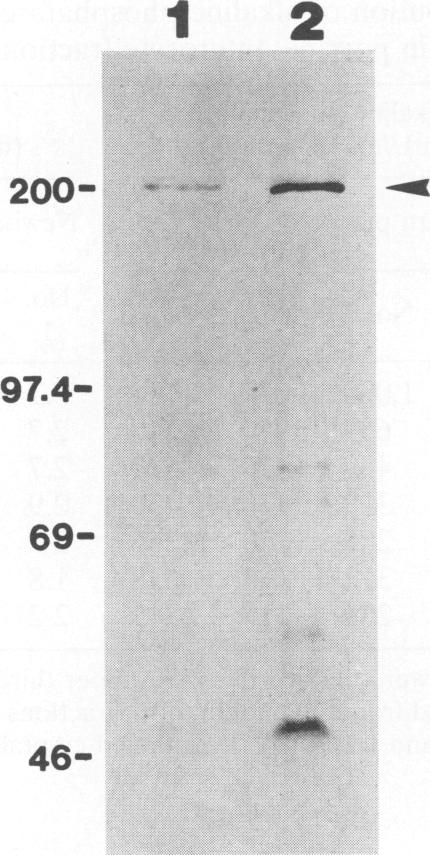
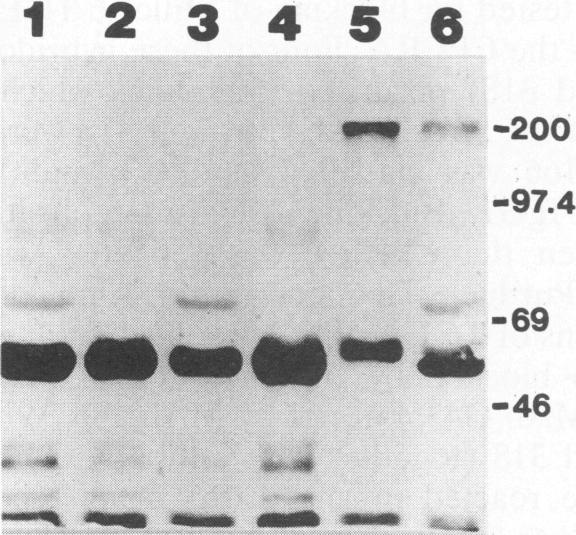
Aminopeptidase-N (APN) has been identified [B. Delmas, J. Gelfi, R. L'Haridon, L. K. Vogel, H. Sjostrom, O. Noren, and H. Laude, Nature (London) 357:417-420, 1992] as a major receptor for porcine transmissible gastroenteritis virus (TGEV). Binding of TGEV to villous enterocytes from the jejuna of newborn pigs is saturable and at a higher level than that of binding of virus to newborn cryptal enterocytes or to enterocytes from older piglets (H. M. Weingartl and J. B. Derbyshire, Vet. Microbiol. 35:23-32, 1993). The distribution of APN in enterocytes in the jejuna of neonatal and 3 week-old-piglets, as determined by the measurement of enzymatic activity and by labeling of the cells with an anti-APN monoclonal antibody, did not correspond with the reported distribution of saturable binding sites on enterocytes. Monoclonal antibodies, which were prepared against plasma membranes derived from enterocytes harvested from the upper villi of newborn pigs, blocked the replication of TGEV, but not the porcine respiratory coronavirus, in ST cells and immunoprecipitated a 200-kDa protein in ST cell lysates. This protein was demonstrated by immunohistochemistry and by fluorescence-activated cell scanning to be present on the villous enterocytes of newborn pigs but to be lacking on the cryptal enterocytes of newborn pigs and on the villous and cryptal enterocytes of 3-week-old piglets. Since this distribution of the protein corresponds to the previously demonstrated distribution of saturable binding sites, we conclude that the 200-kDa protein may be an additional receptor for TGEV which is restricted to the villous enterocytes of newborn pigs and which contributes to the age sensitivity of these animals to the virus.
氨肽酶-N(APN)已被确定[B.德尔马斯、J.盖尔菲、R.拉迪东、L.K.沃格尔、H.舍斯特伦、O.诺伦和H.劳德,《自然》(伦敦)357:417 - 420,1992年]为猪传染性胃肠炎病毒(TGEV)的主要受体。TGEV与新生仔猪空肠绒毛肠上皮细胞的结合是可饱和的,且比病毒与新生隐窝肠上皮细胞或大龄仔猪肠上皮细胞的结合水平更高(H.M.温加特尔和J.B.德比郡,《兽医微生物学》35:23 - 32,1993年)。通过酶活性测定以及用抗APN单克隆抗体标记细胞来确定,新生和3周龄仔猪空肠肠上皮细胞中APN的分布与报道的肠上皮细胞上可饱和结合位点的分布不相符。针对从新生仔猪上部绒毛收获的肠上皮细胞来源的质膜制备的单克隆抗体,在ST细胞中阻断了TGEV的复制,但未阻断猪呼吸道冠状病毒的复制,并在ST细胞裂解物中免疫沉淀出一种200 kDa的蛋白质。通过免疫组织化学和荧光激活细胞扫描证明,这种蛋白质存在于新生仔猪的绒毛肠上皮细胞上,但在新生仔猪的隐窝肠上皮细胞以及3周龄仔猪的绒毛和隐窝肠上皮细胞上不存在。由于这种蛋白质的分布与先前证明的可饱和结合位点的分布相对应,我们得出结论,这种200 kDa的蛋白质可能是TGEV的另一种受体,它仅限于新生仔猪的绒毛肠上皮细胞,并导致这些动物对该病毒具有年龄敏感性。