Inomata K, Nishikawa M, Yoshida K
Department of Biological Science, Faculty of Science, Hiroshima University, Japan.
J Bacteriol. 1994 Aug;176(15):4770-3. doi: 10.1128/jb.176.15.4770-4773.1994.
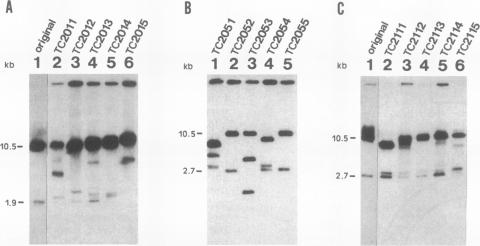
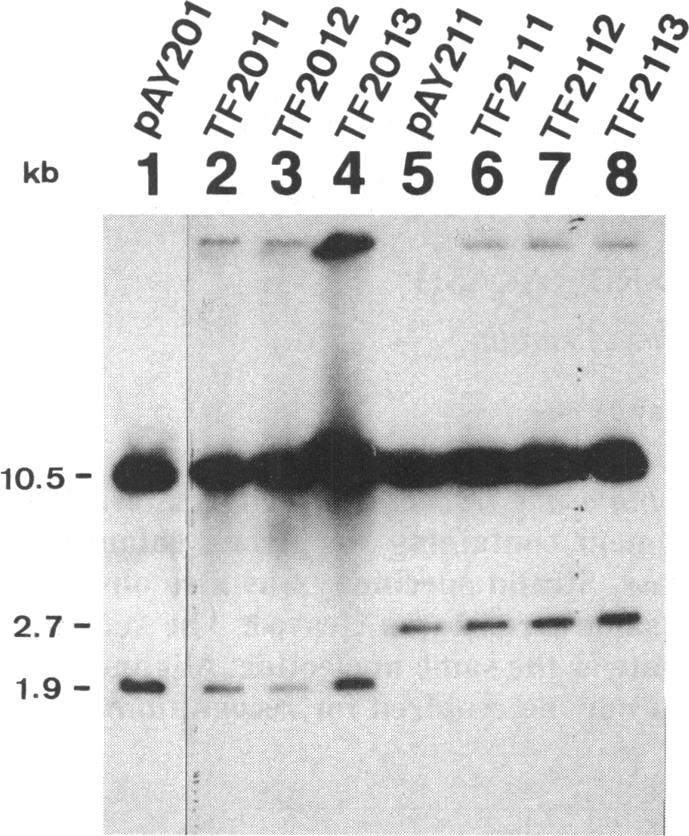
The prokaryote Escherichia coli successfully conjugated with the eukaryote Saccharomyces kluyveri, which is relatively distant from the species S. cerevisiae. To achieve this transkingdom conjugation, we constructed three types of conjugative plasmids, namely integrative, replicative, and centromere vectors, for S. cerevisiae. By transfer of any of the three plasmids from E. coli, an S. kluyveri Ura- mutant was converted to the Ura+ phenotype. This phenotype was easily lost under nonselective conditions. Southern analysis of the transconjugants clearly indicated the presence of the plasmids in many different structures and sizes.
原核生物大肠杆菌成功地与真核生物克鲁维酵母接合,克鲁维酵母与酿酒酵母在物种上相对较远。为了实现这种跨界接合,我们构建了三种用于克鲁维酵母的接合质粒,即整合型、复制型和着丝粒载体。通过从大肠杆菌转移这三种质粒中的任何一种,克鲁维酵母尿嘧啶缺陷型突变体被转化为尿嘧啶野生型表型。在非选择条件下,这种表型很容易丧失。对转接合子的Southern分析清楚地表明,质粒以许多不同的结构和大小存在。