Netter H J, Gerin J L, Tennant B C, Taylor J M
Fox Chase Cancer Center, Philadelphia, Pennsylvania 19111-2497.
J Virol. 1994 Sep;68(9):5344-50. doi: 10.1128/JVI.68.9.5344-5350.1994.
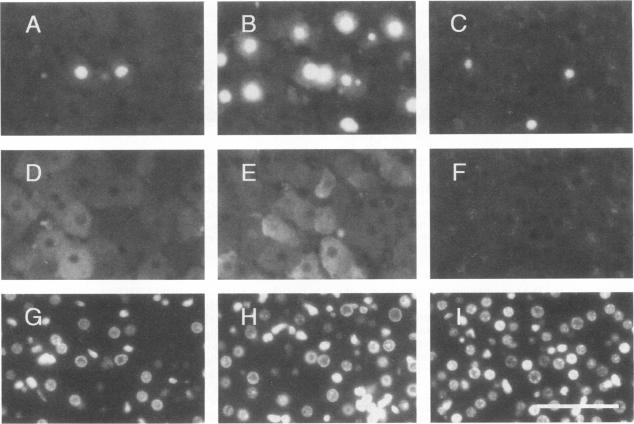
Hepatitis delta virus (HDV) is a subviral agent of humans which is dependent upon hepatitis B virus as a helper for transmission. HDV can be experimentally transmitted to woodchucks by using woodchuck hepatitis virus (WHV) as the helper. We used this model system to study two types of HDV infections: those of animals already chronically infected with WHV and those of animals without any evidence of prior exposure to WHV. At 5 to 10 days after infection with HDV, liver biopsies of these two groups of animals indicated that around 1% of the hepatocytes were infected (HDV antigen positive). Moreover, similar amounts of replicative forms of HDV RNA were detected. In contrast, by 20 days postinfection, the two groups of animals were quite different in the extent of the HDV infection. The animals chronically infected with WHV showed spread of the infection within the liver and the release of high titers of HDV into the serum. In contrast, the animals not previously exposed to WHV showed a progressive reduction in liver involvement, and at no time up to 165 days postinfection could we detect HDV particles in the serum. However, if these animals were inoculated with a relatively high titer of WHV at either 7 or even 33 days after the HDV infection, HDV viremia was observed. Our data support the interpretation that in these animals, hepatocytes were initially infected in the absence of helper virus, HDV genome replication took place, and ultimately these replicating genomes were rescued by the secondary WHV infection. The observation that HDV can survive in the liver for at least 33 days in the absence of coinfecting helper virus may be relevant to the reemergence of HDV infection following liver transplantation.
丁型肝炎病毒(HDV)是一种人类亚病毒因子,其传播依赖于乙型肝炎病毒作为辅助病毒。通过使用土拨鼠肝炎病毒(WHV)作为辅助病毒,HDV可通过实验性方式传播给土拨鼠。我们利用这个模型系统研究了两种类型的HDV感染:已慢性感染WHV的动物的感染以及没有任何先前接触WHV证据的动物的感染。在感染HDV后5至10天,这两组动物的肝脏活检表明约1%的肝细胞被感染(HDV抗原阳性)。此外,检测到了相似数量的HDV RNA复制形式。相比之下,感染后20天,两组动物在HDV感染程度上有很大差异。慢性感染WHV的动物肝脏内感染扩散,血清中释放出高滴度的HDV。相比之下,先前未接触过WHV的动物肝脏受累程度逐渐降低,在感染后长达165天的任何时候,我们都未在血清中检测到HDV颗粒。然而,如果在HDV感染后7天甚至33天给这些动物接种相对高滴度的WHV,就会观察到HDV病毒血症。我们的数据支持这样的解释,即在这些动物中,肝细胞最初在没有辅助病毒的情况下被感染,HDV基因组发生复制,最终这些复制的基因组通过二次WHV感染得到拯救。HDV在没有共感染辅助病毒的情况下能在肝脏中存活至少33天这一观察结果,可能与肝移植后HDV感染的再次出现有关。