Evans M J, Metherall J E
Department of Molecular Genetics, University of Texas Southwestern Medical Center, Dallas 75235.
Mol Cell Biol. 1993 Sep;13(9):5175-85. doi: 10.1128/mcb.13.9.5175-5185.1993.
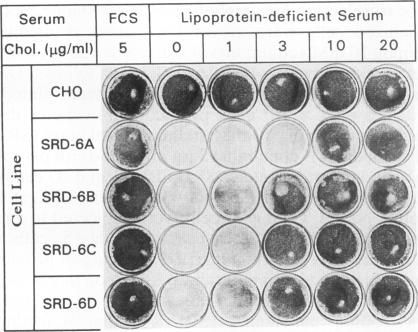
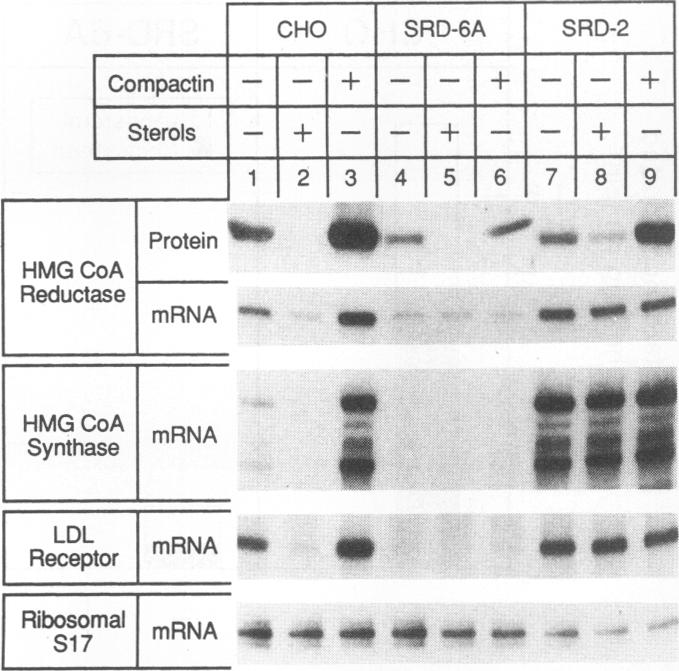
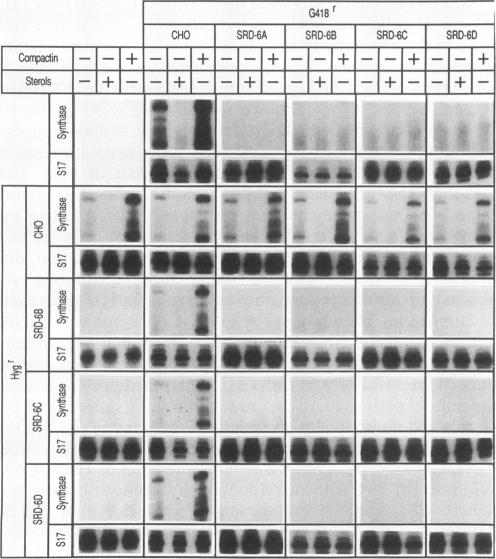
Cholesterol biosynthesis and uptake are controlled by a classic end product-feedback mechanism whereby elevated cellular sterol levels suppress transcription of the genes encoding 3-hydroxy-3-methylglutaryl coenzyme A (HMG-CoA) synthase, HMG-CoA reductase, and the low-density lipoprotein receptor. The 5'-flanking region of each gene contains a common cis-acting element, designated the sterol regulatory element (SRE), that is required for transcriptional regulation. In this report, we describe mutant Chinese hamster ovary (CHO) cell lines that lack SRE-dependent transcription. Mutant cell lines were isolated on the basis of their ability to survive treatment with amphotericin B, a polyene antibiotic that kills cells by interacting with cholesterol in the plasma membrane. Four mutant lines (SRD-6A, -B, -C, and -D) were found to be cholesterol auxotrophs and demonstrated constitutively low levels of mRNA for all three sterol-regulated genes even under conditions of sterol deprivation. The mutant cell lines were found to be genetically recessive, and all four lines belonged to the same complementation group. When transfected with a plasmid containing a sterol-regulated promoter fused to a bacterial reporter gene, SRD-6B cells demonstrated constitutively low levels of transcription, in contrast to wild-type CHO cells, which increased transcription under conditions of sterol deprivation. Mutation of the SREs in this plasmid prior to transfection reduced the level of expression in wild-type CHO cells deprived of sterols to the level of expression found in SRD-6B cells. The defect in SRD-6 cells is limited to transcriptional regulation, since posttranscriptional mechanisms of sterol-mediated regulation were intact: the cells retained the ability to posttranscriptionally suppress HMG-CoA reductase activity and to stimulate acyl-CoA:cholesterol acyltransferase activity. These results suggest that SRD-6 cells lack a factor required for SRE-dependent transcriptional activation. We contrast these cells with a previously isolated oxysterol-resistant cell line (SRD-2) that lacks a factor required for SRE-dependent transcriptional suppression and propose a model for the role of these genetically defined factors in sterol-mediated transcriptional regulation.
胆固醇的生物合成和摄取受一种经典的终产物反馈机制控制,即细胞内固醇水平升高会抑制编码3-羟基-3-甲基戊二酰辅酶A(HMG-CoA)合酶、HMG-CoA还原酶和低密度脂蛋白受体的基因的转录。每个基因的5'侧翼区域都含有一个共同的顺式作用元件,称为固醇调节元件(SRE),它是转录调控所必需的。在本报告中,我们描述了缺乏SRE依赖性转录的突变中国仓鼠卵巢(CHO)细胞系。突变细胞系是根据它们在两性霉素B处理下存活的能力分离出来的,两性霉素B是一种多烯抗生素,通过与质膜中的胆固醇相互作用来杀死细胞。发现四个突变系(SRD-6A、-B、-C和-D)是胆固醇营养缺陷型,并且即使在固醇缺乏的条件下,所有三个固醇调节基因的mRNA水平也持续较低。发现突变细胞系是遗传隐性的,并且所有四个系都属于同一互补群。当用一个含有与细菌报告基因融合的固醇调节启动子的质粒转染时,与野生型CHO细胞不同,SRD-6B细胞表现出持续较低的转录水平,野生型CHO细胞在固醇缺乏的条件下会增加转录。在转染前对该质粒中的SRE进行突变,会使缺乏固醇的野生型CHO细胞中的表达水平降低到在SRD-6B细胞中发现的表达水平。SRD-6细胞中的缺陷仅限于转录调控,因为固醇介导的调控的转录后机制是完整的:细胞保留了转录后抑制HMG-CoA还原酶活性和刺激酰基辅酶A:胆固醇酰基转移酶活性的能力。这些结果表明,SRD-6细胞缺乏SRE依赖性转录激活所需的一种因子。我们将这些细胞与先前分离的抗氧化固醇细胞系(SRD-2)进行对比,SRD-2缺乏SRE依赖性转录抑制所需的一种因子,并提出了一个关于这些遗传定义的因子在固醇介导的转录调控中的作用的模型。