Tremblay M, Meloche S, Gratton S, Wainberg M A, Sékaly R P
Département de Microbiologie, Université Laval, Ste-Foy, Québec, Canada.
EMBO J. 1994 Feb 15;13(4):774-83. doi: 10.1002/j.1460-2075.1994.tb06320.x.
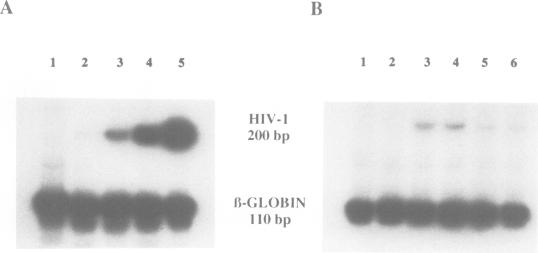
To investigate the role played by the cytoplasmic domain of the CD4 glycoprotein in the process of HIV infection, we have transfected two CD4-negative human T cell lines with cDNAs encoding the full-length CD4 and a truncated form of the molecule, lacking most of the cytoplasmic domain. Levels of viral replication were significantly higher in cells carrying the truncated version of CD4, in comparison with cells expressing the full-length CD4, as measured by the percentage of cells expressing viral p24 protein and the number of infectious particles released into culture supernatants. The extent of viral entry and reverse transcription was similar in each case, as monitored by an enzymatic test and quantitative PCR. Quantitative differences at RNA and protein levels were responsible for changes in viral production. To further characterize the mechanisms responsible for decreased rates of HIV replication in CD4-expressing cells we have treated the different cell lines, very early after HIV infection, with azidothymidine and soluble CD4, two antiviral agents that inhibit replication of HIV at different stages in the virus replicative cycle. Results from these experiments indicate that a cellular signal is mediated by the CD4 molecule, which negatively regulates the expression of viral DNA already present in such cells. This signal would be initiated following oligomerization of the CD4 molecule by the virus itself. Results from experiments with a CD4 construct containing mutations of the cysteine residues which are responsible for association of CD4 with p56lck demonstrate that p56lck is implicated in the transduction of the signal negatively regulating HIV replication.
为了研究CD4糖蛋白的胞质结构域在HIV感染过程中所起的作用,我们用编码全长CD4和一种截短形式分子(缺少大部分胞质结构域)的cDNA转染了两种CD4阴性的人T细胞系。通过表达病毒p24蛋白的细胞百分比以及释放到培养上清液中的感染性颗粒数量来衡量,携带截短型CD4的细胞中病毒复制水平明显高于表达全长CD4的细胞。通过酶促试验和定量PCR监测,每种情况下病毒进入和逆转录的程度相似。RNA和蛋白质水平的定量差异导致了病毒产生的变化。为了进一步表征导致表达CD4的细胞中HIV复制速率降低的机制,我们在HIV感染后很早的时候就用叠氮胸苷和可溶性CD4处理了不同的细胞系,这两种抗病毒药物在病毒复制周期的不同阶段抑制HIV复制。这些实验结果表明,CD4分子介导了一种细胞信号,该信号负向调节此类细胞中已存在的病毒DNA的表达。这种信号将在病毒自身使CD4分子寡聚化后启动。用含有负责CD4与p56lck结合的半胱氨酸残基突变的CD4构建体进行的实验结果表明,p56lck参与了负向调节HIV复制的信号转导。