Staehelin C, Granado J, Müller J, Wiemken A, Mellor R B, Felix G, Regenass M, Broughton W J, Boller T
Botanisches Institut der Universität Basel, Switzerland.
Proc Natl Acad Sci U S A. 1994 Mar 15;91(6):2196-200. doi: 10.1073/pnas.91.6.2196.
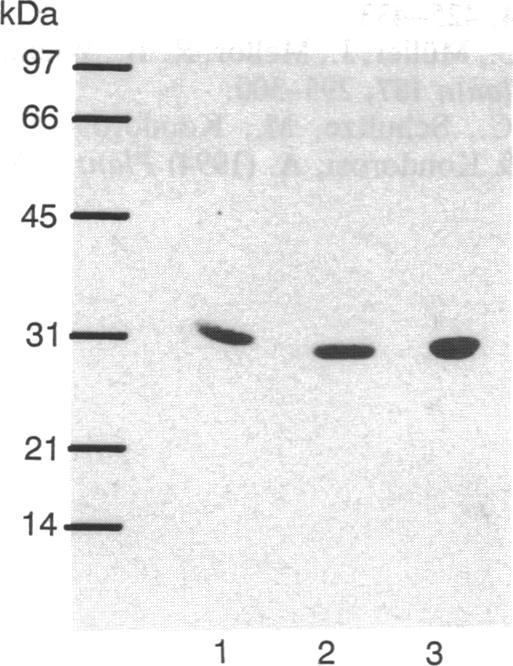
The bacterial genera Rhizobium and Bradyrhizobium, nitrogen-fixing symbionts of legumes, secrete specific lipo-chitooligosaccharides that induce the formation of nodules on their host plants. When preparations of such nodulation-inducing factors (Nod factors) were added to suspension-cultured tomato cells, a rapid and transient alkalinization of the culture medium occurred. Lipo-oligosaccharide preparations from Rhizobium or Bradyrhizobium treated with flavonoids, known inducers of Nod factor synthesis, were up to 100 times more potent in inducing alkalinization than the ones from untreated bacteria. The activity was absent from preparations of the mutant strain Rhizobium sp. NGR234 delta nodABC, unable to produce any Nod factors. Preparations of Nod factors from various bacteria as well as individual, highly purified Nod factors from Rhizobium sp. NGR(pA28) induced alkalinization in the tomato cell cultures at nanomolar concentrations. This demonstrates that Nod factors can be perceived by tomato, a nonhost of rhizobia. Using the alkalinization response as a sensitive bioassay, Nod factors were found to be inactivated by plant chitinases. Root chitinases purified from different legumes differed in their potential to inactivate differently substituted Nod factors produced by Rhizobium sp. NGR(pA28). This indicates that the specificity of the bacterium-host plant interaction may be due, at least in part, to differential inactivation of Nod factors by root chitinases.
根瘤菌属和慢生根瘤菌属细菌是豆科植物的固氮共生体,它们分泌特定的脂壳寡糖,可诱导宿主植物形成根瘤。当将此类结瘤诱导因子(Nod因子)制剂添加到悬浮培养的番茄细胞中时,培养基会迅速发生短暂的碱化。用类黄酮(已知的Nod因子合成诱导剂)处理过的根瘤菌属或慢生根瘤菌属的脂寡糖制剂,在诱导碱化方面的效力比未处理细菌的制剂高100倍。突变菌株根瘤菌NGR234 delta nodABC无法产生任何Nod因子,其制剂没有这种活性。来自各种细菌的Nod因子制剂以及来自根瘤菌NGR(pA28)的单个高度纯化的Nod因子,在纳摩尔浓度下就能诱导番茄细胞培养物发生碱化。这表明番茄(一种根瘤菌的非宿主植物)能够感知Nod因子。利用碱化反应作为一种灵敏的生物测定方法,发现Nod因子会被植物几丁质酶灭活。从不同豆科植物中纯化的根际几丁质酶,在灭活根瘤菌NGR(pA28)产生的不同取代的Nod因子的能力上存在差异。这表明细菌与宿主植物相互作用的特异性可能至少部分归因于根际几丁质酶对Nod因子的差异灭活作用。