Santolini E, Migliaccio G, La Monica N
Instituto di Ricerche di Biologia Molecolare, P. Angeletti Pomezia, Rome, Italy.
J Virol. 1994 Jun;68(6):3631-41. doi: 10.1128/JVI.68.6.3631-3641.1994.
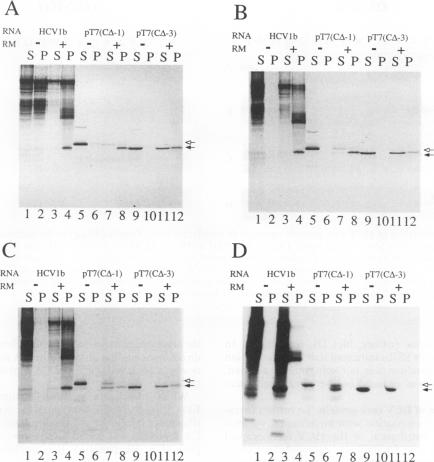
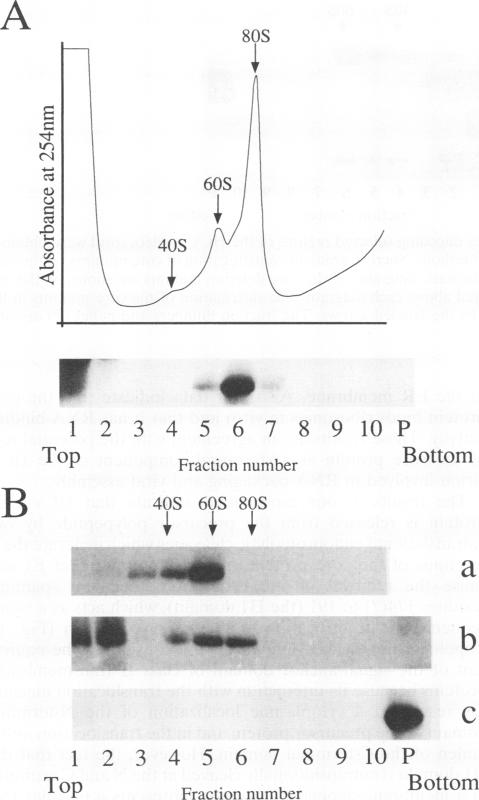
The biosynthesis and biochemical properties of the putative nucleocapsid protein of hepatitis C virus (HCV) were investigated. RNA transcripts for cell-free translation were prepared from truncated form of the cDNA construct encoding the structural proteins of HCV. Processing of the translation products was dependent on microsomal membranes and signal recognition particle, suggesting that release of the 21-kDa core protein from the polyprotein precursor is mediated solely by the signal peptidase of the endoplasmic reticulum (ER) and is achieved by the removal of a putative signal sequence of approximately 18 residues located at its C terminus. The core protein was found to bind membranes in vitro and in transfected cells, as shown by centrifugation analysis of in vitro translation products and transfected-cell lysates. Immunofluorescence of transfected cells showed that the core protein colocalized with the E2 glycoprotein as well as with a cellular ER membrane marker. The nucleocapsid protein expressed by in vitro translation in rabbit reticulocyte lysates cosedimented with the large ribosomal subunit in sucrose gradients. The ribosome binding domain was mapped to the N-terminal region of the core protein. Moreover, the same region was shown to bind RNA in vitro, suggesting that cosedimentation of core protein with ribosomes may be mediated by the RNA binding of the nucleocapsid protein of HCV. These studies indicate that the HCV core protein is a cytoplasmic protein associated with the ER membranes and possesses RNA binding activity.
对丙型肝炎病毒(HCV)假定核衣壳蛋白的生物合成及生化特性进行了研究。从编码HCV结构蛋白的cDNA构建体的截短形式制备用于无细胞翻译的RNA转录本。翻译产物的加工依赖于微粒体膜和信号识别颗粒,这表明21 kDa核心蛋白从多蛋白前体的释放仅由内质网(ER)的信号肽酶介导,并且是通过去除位于其C末端的约18个残基的假定信号序列来实现的。如对体外翻译产物和转染细胞裂解物的离心分析所示,发现核心蛋白在体外和转染细胞中均与膜结合。转染细胞的免疫荧光显示,核心蛋白与E2糖蛋白以及细胞内质网标记物共定位。在兔网织红细胞裂解物中体外翻译表达的核衣壳蛋白在蔗糖梯度中与大核糖体亚基共沉降。核糖体结合结构域定位于核心蛋白的N末端区域。此外,同一区域在体外显示与RNA结合,这表明核心蛋白与核糖体的共沉降可能由HCV核衣壳蛋白的RNA结合介导。这些研究表明,HCV核心蛋白是一种与内质网相关的细胞质蛋白,并具有RNA结合活性。