Wong S, Momoeda M, Field A, Kajigaya S, Young N S
Hematology Branch, National Heart, Lung, and Blood Institute, Bethesda, Maryland 20892.
J Virol. 1994 Jul;68(7):4690-4. doi: 10.1128/JVI.68.7.4690-4694.1994.
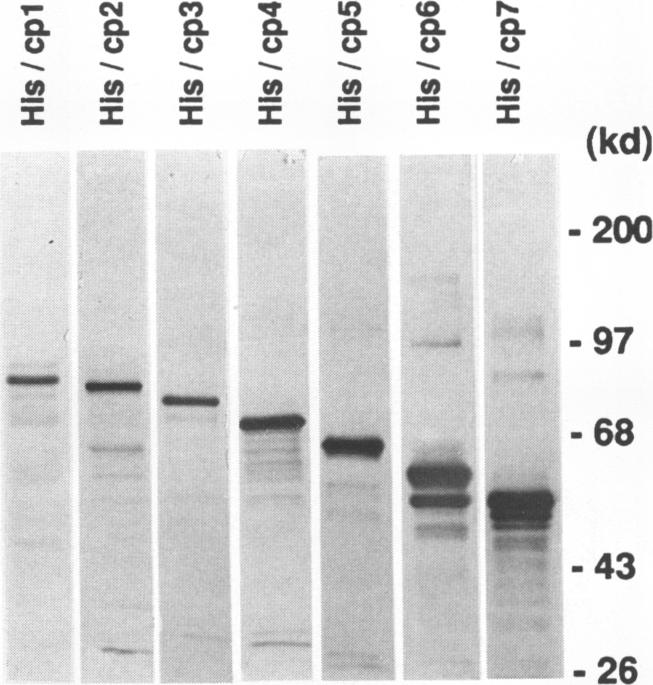
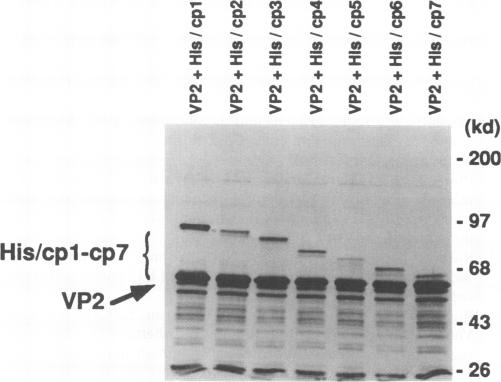
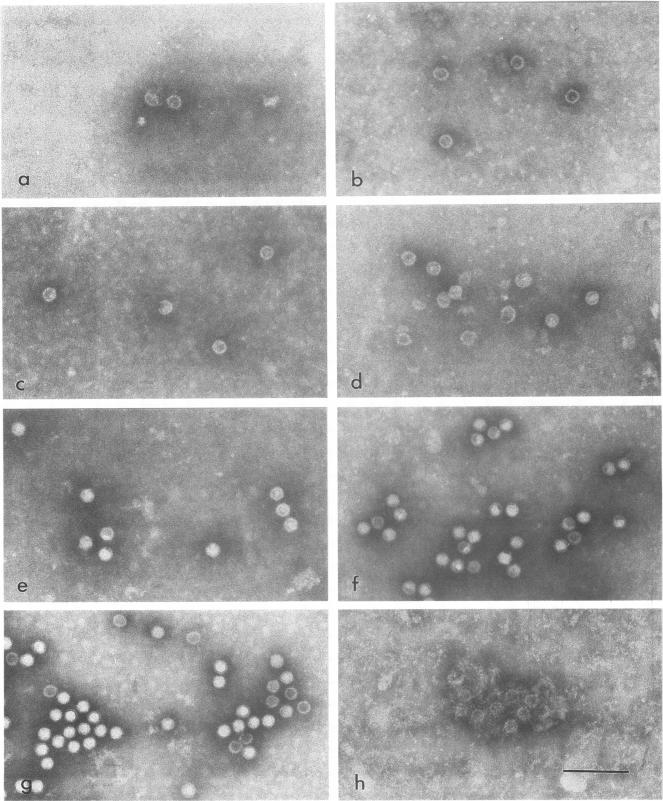
We previously reported that empty capsids of B19 parvovirus were formed by the major capsid protein (VP2) alone expressed in a baculovirus system, but the minor capsid protein (VP1), longer by 227 amino acids, alone did not form empty capsids. We report here further investigations of the constraints on capsid formation by truncated versions of VP1. Studies were performed with recombinant baculoviruses expressed in Sf9 cells. Severely shortened VP1, extended beyond the VP2 core sequence by about 70 amino acids of the unique region, formed capsids normal in appearance; longer versions of VP1 also formed capsids but did so progressively less efficiently and produced capsids of more markedly dysmorphic appearance as the VP1-unique region was lengthened.
我们之前报道过,B19细小病毒的空衣壳仅由杆状病毒系统中表达的主要衣壳蛋白(VP2)形成,但长227个氨基酸的次要衣壳蛋白(VP1)单独不能形成空衣壳。我们在此报告对VP1截短形式对衣壳形成的限制的进一步研究。研究使用在Sf9细胞中表达的重组杆状病毒进行。严重缩短的VP1,在独特区域比VP2核心序列延伸约70个氨基酸,形成外观正常的衣壳;更长版本的VP1也形成衣壳,但效率逐渐降低,并且随着VP1独特区域的延长,产生的衣壳外观畸形更明显。