Sarisky R T, Weber P C
Department of Microbiology and Immunology, Milton S. Hershey Medical Center, Pennsylvania State University College of Medicine, Hershey 17033.
J Virol. 1994 Jan;68(1):34-47. doi: 10.1128/JVI.68.1.34-47.1994.
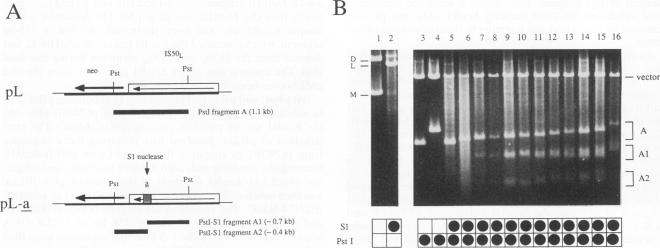
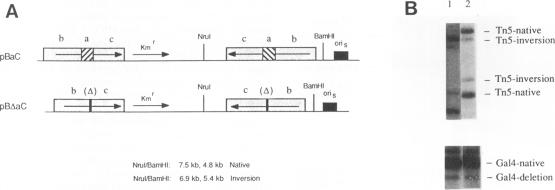
Herpes simplex virus type 1 (HSV-1) genome isomerization occurs as a result of DNA replication-mediated homologous recombination between several sets of inverted repeat sequences present in the viral DNA. The frequency with which this recombination occurs has been demonstrated to be dependent upon DNA homology length rather than specific sequences. However, the smallest of the viral inverted repeats, the alpha sequence, has been shown to function as a recombinational hot spot, leading to speculation that this sequence may represent a specific element through which genome isomerization is mediated. To investigate this apparent paradox, a quantitative transient recombination assay system was developed and used to examine the recombinogenic properties of a panel of alpha sequence mutants. This analysis revealed that the presence of both the pac1 and pac2 elements was both necessary and sufficient for the induction of high-frequency recombination events by the alpha sequence. However, it was the double-strand break promoted by pac1 and pac2 during cleavage and packaging at the alpha sequence, and not the DNA sequences of the elements themselves, which appeared to be critical for recombination. This was illustrated (i) by the inability of the same pac1 and pac2 sequences to mediate inversion events in cells infected with an HSV-1 mutant which was competent for DNA replication-dependent recombination but defective for the cleavage and packaging process and (ii) by the ability of double-strand breaks generated in non-HSV-1 DNA by an in vivo-expressed restriction endonuclease to significantly stimulate the initiation of recombination events in virus-infected cells. Thus, the alpha sequence appears to act as a hot spot for homologous recombination simply because it happens to coincide with the site of the double-strand break which is generated during the cleavage and packaging process, not because it contains discrete sequences which are required for this activity. However, it was found that this enhanced recombinogenicity disappeared when the element was flanked by regions of extensive sequence homology, particularly that of the large inverted repeats which flank the alpha sequence at its natural site in the HSV-1 genome. These findings are consistent with a model for HSV-1 genome isomerization in which recombination is initiated primarily by multiple random double-strand breaks which arise during DNA replication across the inverted repeats of the genome, rather than by a single specific break which occurs at the alpha sequence during the cleavage and packaging process.
1型单纯疱疹病毒(HSV - 1)基因组异构化是由于病毒DNA中存在的几组反向重复序列之间发生DNA复制介导的同源重组所致。已证明这种重组发生的频率取决于DNA同源性长度而非特定序列。然而,病毒最小的反向重复序列,即α序列,已被证明可作为重组热点发挥作用,这引发了一种推测,即该序列可能代表介导基因组异构化的特定元件。为了研究这一明显的矛盾,开发了一种定量瞬时重组检测系统,并用于检测一组α序列突变体的重组特性。该分析表明,pac1和pac2元件的存在对于α序列诱导高频重组事件既是必要的也是充分的。然而,似乎对重组至关重要的是pac1和pac2在α序列处切割和包装过程中促进的双链断裂,而非元件本身的DNA序列。这一点通过以下两点得以说明:(i)相同的pac1和pac2序列无法在感染了一种HSV - 1突变体的细胞中介导倒转事件,该突变体能够进行依赖DNA复制的重组,但在切割和包装过程中存在缺陷;(ii)体内表达的限制性内切酶在非HSV - 1 DNA中产生的双链断裂能够显著刺激病毒感染细胞中重组事件的起始。因此,α序列似乎仅因其恰好与切割和包装过程中产生双链断裂的位点重合而作为同源重组的热点,并非因为它包含该活性所需的离散序列。然而,发现当该元件两侧是广泛的序列同源区域时,这种增强的重组性会消失,特别是在HSV - 1基因组中α序列天然位点两侧的大反向重复序列的同源区域。这些发现与HSV - 1基因组异构化模型一致,在该模型中,重组主要由DNA复制过程中跨越基因组反向重复序列时产生的多个随机双链断裂引发,而非由切割和包装过程中在α序列处发生的单个特定断裂引发。