Uchida K, Szweda L I, Chae H Z, Stadtman E R
Laboratory of Biochemistry, National Heart, Lung, and Blood Institute, National Institutes of Health, Bethesda, MD 20892.
Proc Natl Acad Sci U S A. 1993 Sep 15;90(18):8742-6. doi: 10.1073/pnas.90.18.8742.
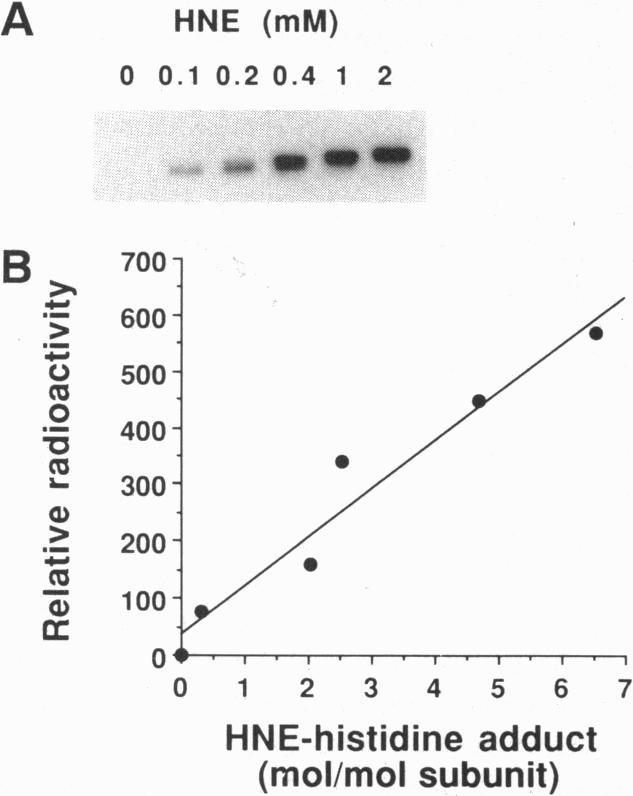
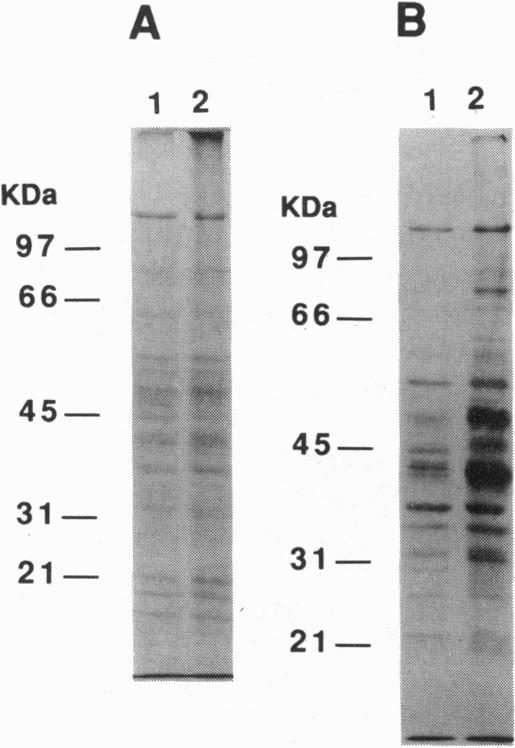
We report here the development of an immunochemical procedure that uses an antibody specific to the 4-hydroxynonenal (HNE) moiety for the detection of HNE-protein adducts. The HNE-specific antibody was prepared by immunizing rabbits with a HNE-keyhole limpet hemocyanin conjugate and purifying the rabbit serum on an affinity gel prepared by covalent attachment of a HNE-conjugated heptapeptide. When various preparations of glyceraldehyde-3-phosphate dehydrogenase containing 0-7.0 equivalent of HNE-histidine residues per subunit were obtained by incubating samples of glyceraldehyde-3-phosphate dehydrogenase with increased amounts of HNE and subjected to immunoblotting with the HNE-specific antibody, the intensities of the blots were directly proportional to the number of HNE-histidine adducts as measured directly by amino acid analysis. Binding of the HNE-conjugated glyceraldehyde-3-phosphate dehydrogenase to the HNE-specific antibody could be completely inhibited by HNE-N-acetylhistidine, HNE-N-acetyllysine, or HNE-glutathione, suggesting that the antigenic determinant recognized by the antibody is the HNE moiety, not the HNE-amino acid conjugates, such as HNE-histidine, HNE-lysine, and HNE-cysteine. The utility of the HNE-specific antibody was demonstrated by its ability to react selectively with a number of HNE-protein adducts in immunoblot analyses of crude homogenates of rat liver hepatocytes that had been exposed to HNE or oxidative stresses with tert-butylhydroperoxide or metal-ion-catalyzed oxidation systems.
我们在此报告一种免疫化学方法的开发,该方法使用针对4-羟基壬烯醛(HNE)部分的特异性抗体来检测HNE-蛋白质加合物。通过用HNE-钥孔血蓝蛋白缀合物免疫兔子并在通过共价连接HNE-缀合的七肽制备的亲和凝胶上纯化兔血清来制备HNE特异性抗体。当通过将甘油醛-3-磷酸脱氢酶样品与增加量的HNE孵育获得每亚基含有0-7.0当量HNE-组氨酸残基的各种甘油醛-3-磷酸脱氢酶制剂,并使用HNE特异性抗体进行免疫印迹时,印迹的强度与通过氨基酸分析直接测量的HNE-组氨酸加合物的数量成正比。HNE-缀合的甘油醛-3-磷酸脱氢酶与HNE特异性抗体的结合可被HNE-N-乙酰组氨酸、HNE-N-乙酰赖氨酸或HNE-谷胱甘肽完全抑制,这表明抗体识别的抗原决定簇是HNE部分,而不是HNE-氨基酸缀合物,如HNE-组氨酸、HNE-赖氨酸和HNE-半胱氨酸。HNE特异性抗体的实用性通过其在对暴露于HNE或用叔丁基过氧化氢或金属离子催化的氧化系统进行氧化应激的大鼠肝脏肝细胞粗匀浆的免疫印迹分析中与多种HNE-蛋白质加合物选择性反应的能力得到证明。