
核因子白细胞介素6通过与非编码区结合抑制人乳头瘤病毒16型的早期基因表达。
NF-IL6 represses early gene expression of human papillomavirus type 16 through binding to the noncoding region.
作者信息
Kyo S, Inoue M, Nishio Y, Nakanishi K, Akira S, Inoue H, Yutsudo M, Tanizawa O, Hakura A
机构信息
Department of Obstetrics and Gynecology, Osaka University Medical School, Japan.
出版信息
J Virol. 1993 Feb;67(2):1058-66. doi: 10.1128/JVI.67.2.1058-1066.1993.
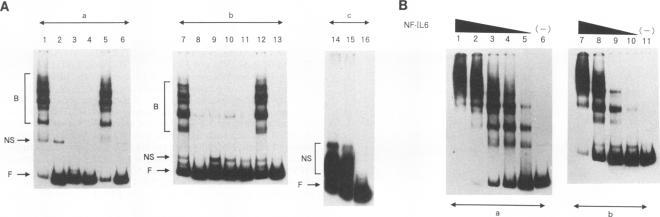
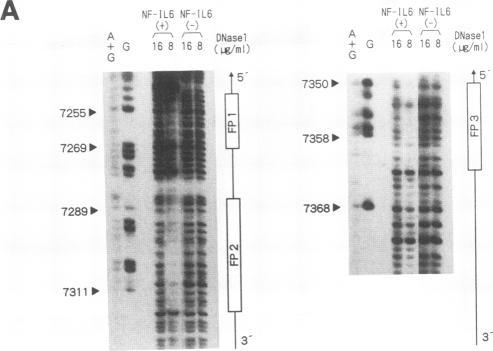
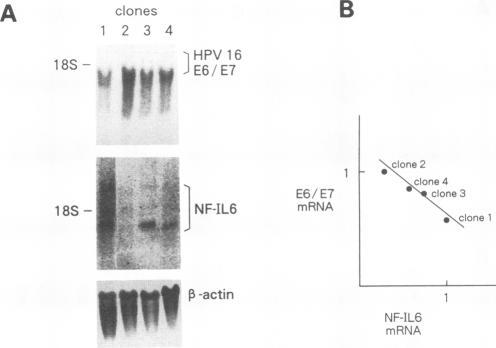
The expression of human papillomavirus type 16 (HPV16) early genes, including E6 and E7 transforming genes, is regulated by several cellular factors binding to the noncoding region (NCR), such as the glucocorticoid receptor, NF-I, and AP1, all of which are positive regulators. We demonstrated that the nuclear factor for interleukin 6 expression (NF-IL6) specifically binds to the HPV16 NCR ranging from nucleotides 7007 to 7766 and represses the early gene expression of HPV16. The responsive element in HPV16 NCR was determined within the region ranging from nucleotides 7454 to 7766. In this region, many binding sites for other cellular transactivators, such as NF-I and AP1, have been detected. Interestingly, three of seven binding sites for NF-I and two of two binding sites for AP1 in this region overlap with the putative NF-IL6 binding sites identified by computer analysis. Competition experiments with the oligonucleotides containing such NF-I or AP1 sites indicated that NF-IL6 certainly binds to them. Furthermore, in a chloramphenicol acetyltransferase assay using mutant NF-IL6 expression vectors, the DNA binding domain of NF-IL6 was shown to be necessary for repression, whereas the functional domain was not. These findings indicate that repression may be caused by competition with other transcriptional activators, such as NF-I and AP1. Thus, NF-IL6 may play a significant role in the regulation of viral transcription as a part of the host's resistance to viral infection.
人乳头瘤病毒16型(HPV16)早期基因的表达,包括E6和E7转化基因,受几种与非编码区(NCR)结合的细胞因子调控,如糖皮质激素受体、NF-I和AP1,这些都是正调控因子。我们证明白细胞介素6表达的核因子(NF-IL6)特异性结合HPV16 NCR中核苷酸7007至7766的区域,并抑制HPV16的早期基因表达。HPV16 NCR中的反应元件在核苷酸7454至7766的区域内确定。在该区域,已检测到许多其他细胞反式激活因子如NF-I和AP1的结合位点。有趣的是,该区域中NF-I的七个结合位点中的三个以及AP1的两个结合位点中的两个与计算机分析确定的推定NF-IL6结合位点重叠。用含有此类NF-I或AP1位点的寡核苷酸进行的竞争实验表明,NF-IL6确实与它们结合。此外,在使用突变型NF-IL6表达载体的氯霉素乙酰转移酶测定中,NF-IL6的DNA结合结构域被证明是抑制所必需的,而功能结构域则不是。这些发现表明,抑制可能是由与其他转录激活因子如NF-I和AP1的竞争引起的。因此,NF-IL6作为宿主对病毒感染抵抗力的一部分,可能在病毒转录调控中发挥重要作用。



 Zotero 插件