Winslow B J, Trono D
Infectious Disease Laboratory, Salk Institute, La Jolla, California 92037-1099.
J Virol. 1993 Apr;67(4):2349-54. doi: 10.1128/JVI.67.4.2349-2354.1993.
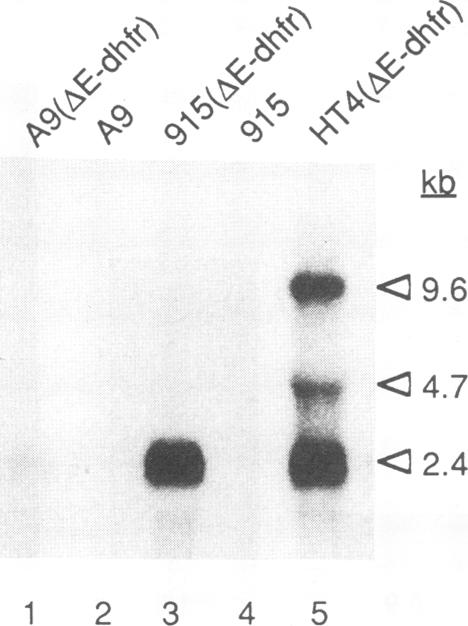
Rodent cells present two blocks precluding the expression of the human immunodeficiency virus type 1 (HIV-1) genome. First, the viral protein Tat is only poorly active in these cells. Second, when the HIV-1 provirus is integrated in the genome of mouse cells, it electively fails to express the viral structural proteins, indicating a block to Rev action. Both defects can be complemented by fusion of the infected mouse cells with uninfected human cells. Because the production of high levels of Rev is dependent on Tat-mediated transactivation and because both Tat and Rev bind the viral transcript, it has been hypothesized that the two blocks found in rodent cells might be linked. In the present work, we demonstrate that overexpression of Rev in mouse cell lines does not relieve their block in HIV-1 structural-gene expression. In addition, we show that this defect is also present in human-mouse cell hybrids which contain human chromosome 12 and support Tat function. On that basis, we conclude that the blocks to HIV-1 Tat and Rev action in mouse cell lines are independent and result from the absence of distinct cellular elements that are critical for HIV-1 gene expression.
啮齿动物细胞存在两个阻碍人类免疫缺陷病毒1型(HIV-1)基因组表达的障碍。首先,病毒蛋白Tat在这些细胞中的活性很低。其次,当HIV-1前病毒整合到小鼠细胞基因组中时,它选择性地无法表达病毒结构蛋白,这表明存在对Rev作用的阻碍。通过将感染的小鼠细胞与未感染的人类细胞融合,可以弥补这两个缺陷。由于高水平Rev的产生依赖于Tat介导的反式激活,并且由于Tat和Rev都与病毒转录本结合,因此推测在啮齿动物细胞中发现的这两个障碍可能是相关联的。在本研究中,我们证明在小鼠细胞系中过表达Rev并不能解除它们对HIV-1结构基因表达的阻碍。此外,我们表明这种缺陷也存在于含有人类12号染色体并支持Tat功能的人-鼠细胞杂交体中。基于此,我们得出结论,小鼠细胞系中对HIV-1 Tat和Rev作用的阻碍是独立的,并且是由于缺乏对HIV-1基因表达至关重要的不同细胞元件所致。