al-Alawi N, Xu G, White R, Clark R, McCormick F, Feramisco J R
Department of Medicine and Pharmacology, UCSD Cancer Center, La Jolla 92093.
Mol Cell Biol. 1993 Apr;13(4):2497-503. doi: 10.1128/mcb.13.4.2497-2503.1993.
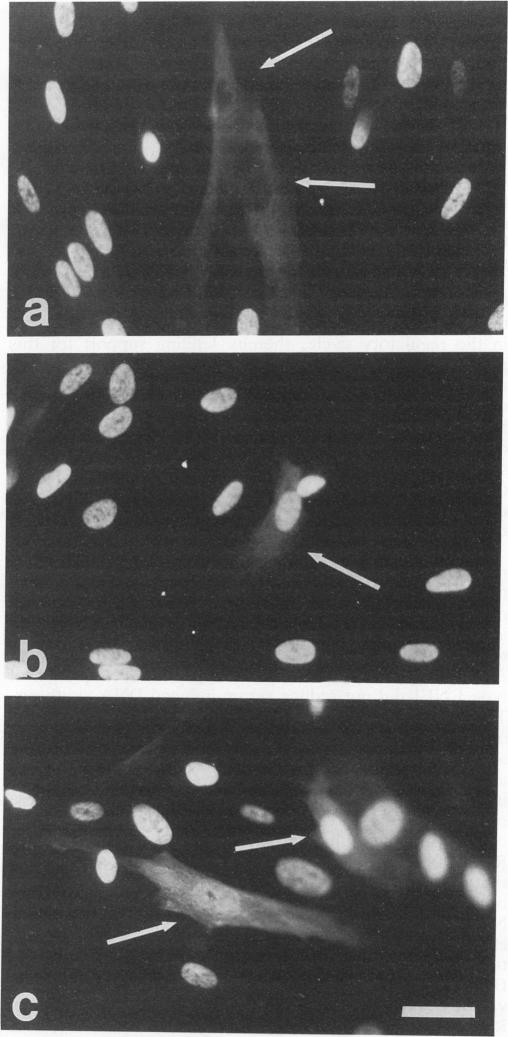
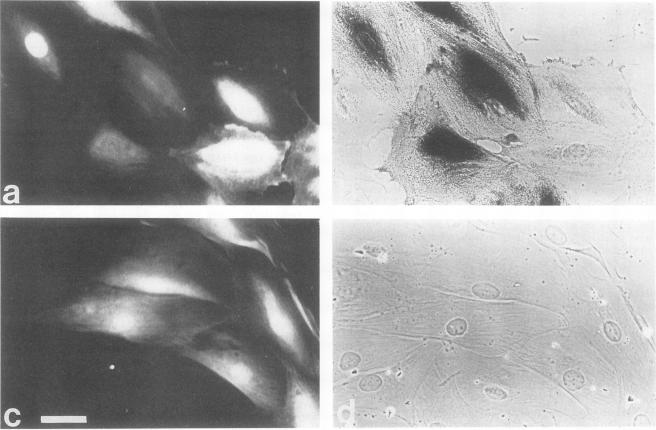
The regulation of the GTPase activity of the Ras proteins is thought to be a key element of signal transduction. Ras proteins have intrinsic GTPase activity and are active in signal transduction when bound to GTP but not following hydrolysis of GTP to GDP. Three cellular Ras GTPase-activating proteins (Ras-gaps) which increase the GTPase activity of wild-type (wt) Ras but not activated Ras in vitro have been identified: type I and type II GAP and type I NF1. Mutations of wt Ras resulting in lowered intrinsic GTPase activity or loss of response to cellular Ras-gap proteins are thought to be the primary reason for the transforming properties of the Ras proteins. In vitro assays show type I and type II GAP and the GAP-related domain of type I NF1 to have similar biochemical properties with respect to activation of the wt Ras GTPase, and it appears as though both type I GAP and NF1 can modulate the GTPase function of Ras in cells. Here we report the assembling of a full-length coding clone for type I NF1 and the biological effects of microinjection of Ras and Ras-gap proteins into fibroblasts. We have found that type I GAP, type II GAP, and type I NF1 show markedly different biological activities in vivo. Coinjection of type I GAP or type I NF1, but not type II GAP, with wt Ras abolished the ability of wt Ras to induce expression from an AP-1-controlled reporter gene. We also found that serum-stimulated DNA synthesis was reduced by prior injection of cells with type I GAP but not type II GAP or type I NF1. These results suggest that type I GAP, type II GAP, and type I NF1 may have different activities in vivo and support the hypothesis that while type I forms of GAP and NF1 may act as negative regulators of wt Ras, they may do so with differential efficiencies.
Ras蛋白的GTP酶活性调节被认为是信号转导的关键要素。Ras蛋白具有内在的GTP酶活性,当与GTP结合时在信号转导中具有活性,但在GTP水解为GDP后则无活性。已鉴定出三种细胞Ras GTP酶激活蛋白(Ras-GAP),它们在体外可增加野生型(wt)Ras的GTP酶活性,但对激活的Ras无此作用:I型和II型GAP以及I型神经纤维瘤病1型(NF1)。野生型Ras的突变导致内在GTP酶活性降低或对细胞Ras-GAP蛋白的反应丧失,被认为是Ras蛋白具有转化特性的主要原因。体外试验表明,I型和II型GAP以及I型NF1的GAP相关结构域在激活野生型Ras GTP酶方面具有相似的生化特性,而且似乎I型GAP和NF1都能在细胞中调节Ras的GTP酶功能。在此,我们报告I型NF1全长编码克隆的组装以及将Ras和Ras-GAP蛋白显微注射到成纤维细胞中的生物学效应。我们发现,I型GAP、II型GAP和I型NF1在体内表现出明显不同的生物学活性。将I型GAP或I型NF1(而非II型GAP)与野生型Ras共同注射,可消除野生型Ras诱导AP-1控制的报告基因表达的能力。我们还发现,预先向细胞注射I型GAP而非II型GAP或I型NF1可降低血清刺激的DNA合成。这些结果表明,I型GAP、II型GAP和I型NF1在体内可能具有不同的活性,并支持以下假说:虽然I型GAP和NF1可能作为野生型Ras的负调节因子,但它们的作用效率可能不同。