Wang C R, Lindahl K F
Howard Hughes Medical Institute, Department of Microbiology, University of Texas Southwestern Medical Center, Dallas 75235-9050.
Proc Natl Acad Sci U S A. 1993 Apr 1;90(7):2784-8. doi: 10.1073/pnas.90.7.2784.
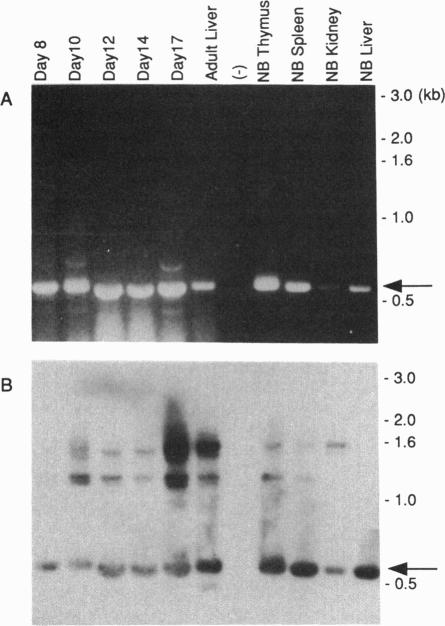
H-2M3 encodes HMT, the major histocompatibility complex (MHC) class I heavy chain of the maternally transmitted antigen (Mta). Like classical MHC class I genes, the expression of M3 can be stimulated by gamma-interferon and its message can be detected from mid-gestational embryos (day 8) through adulthood. HMTb, a nonimmunogenic allelic form of HMT, differs from the common HMTa molecule by four amino acids, of which only two (residues 31 and 95) are located in the alpha 1 and alpha 2 domains that form the peptide-binding groove. Recognition of site-directed mutants by Mta-specific cytotoxic T lymphocytes was hardly affected by the substitution of Met for Val31 but was abolished by the substitution of Gln for Leu95, which is located in the beta-sheet floor of the peptide-binding groove. Thus a single amino acid difference is responsible for the immunological silence of HMTb.