Wisdom R, Verma I M
Molecular Biology and Virology Laboratory, Salk Institute, San Diego, California 92186-5800.
Mol Cell Biol. 1993 May;13(5):2635-43. doi: 10.1128/mcb.13.5.2635-2643.1993.
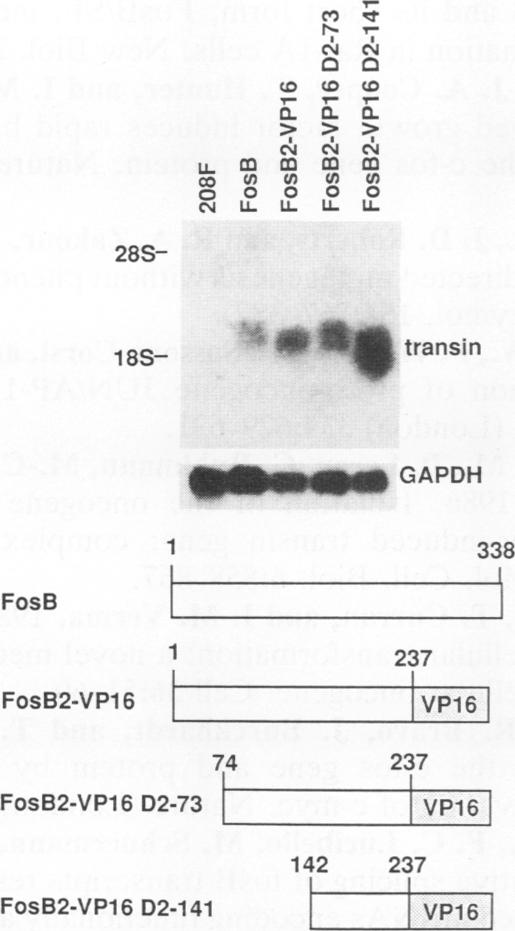
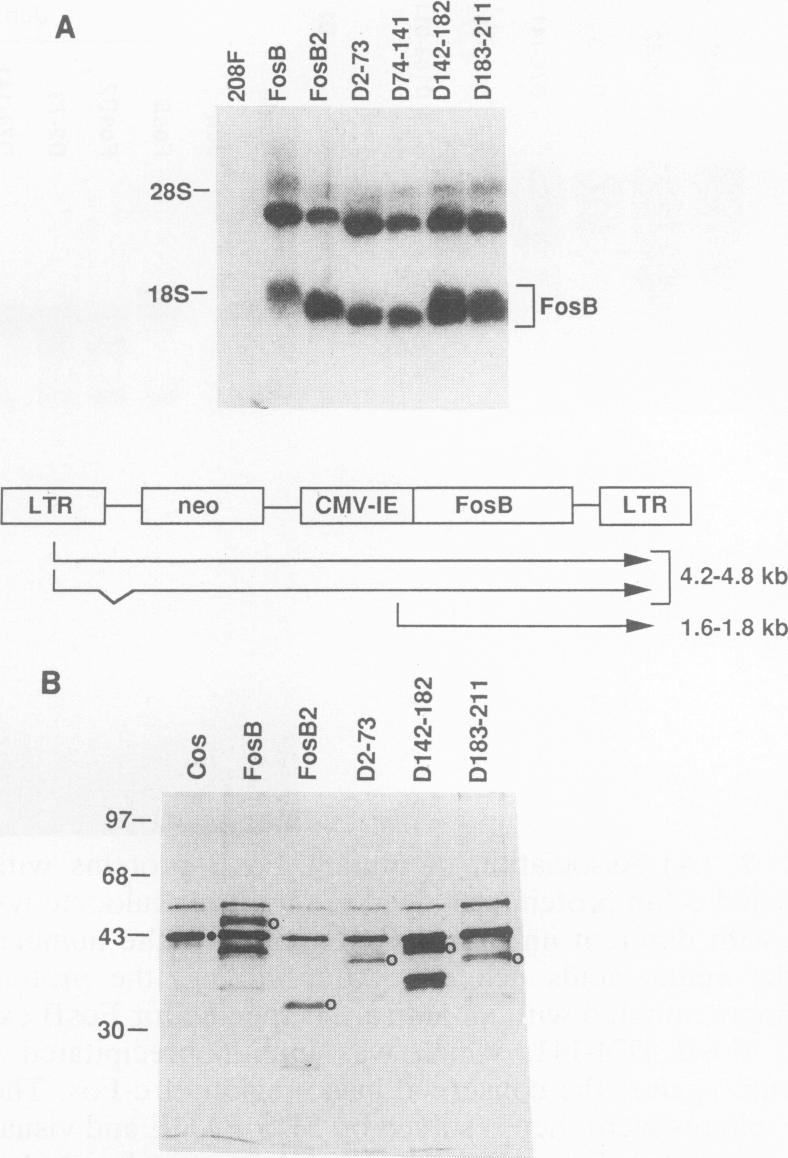
Overexpression of some members of the Fos gene family, including FosB, leads to transformation of established rodent fibroblasts. We have previously shown that transformation by FosB requires the presence of a C-terminal transcriptional activation domain. We now report that transformation by FosB also requires an intact DNA-binding domain composed of the functionally bipartite basic region and leucine zipper as well as sequences present in the N terminus that serve a regulatory function. Deletion of the N-terminal sequences results in proteins impaired in transcriptional activation and transformation. This region does not itself function as a transcriptional activation domain but instead regulates the transactivation functions present in the FosB-Jun complex. The requirement for this N-terminal region can be abolished by the presence of a strong constitutive activation domain. The primary sequence of the region that we have defined is highly conserved in the Fos family of proteins, suggesting functional conservation.