Cereghino J L, Marcusson E G, Emr S D
Division of Cellular and Molecular Medicine, Howard Hughes Medical Institute, University of California, School of Medicine, San Diego, La Jolla 92093-0668, USA.
Mol Biol Cell. 1995 Sep;6(9):1089-102. doi: 10.1091/mbc.6.9.1089.
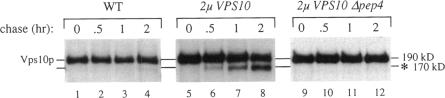
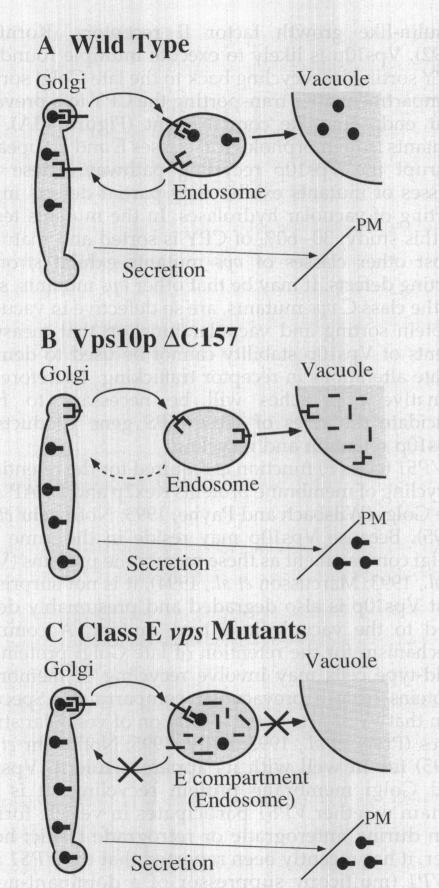
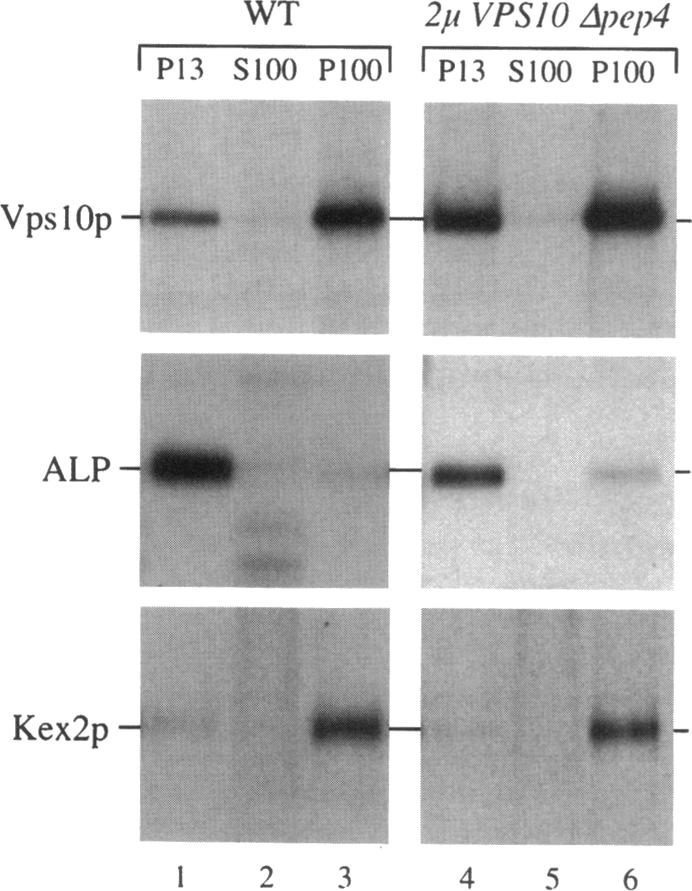
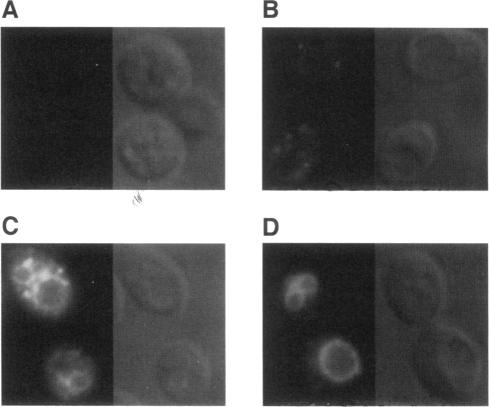
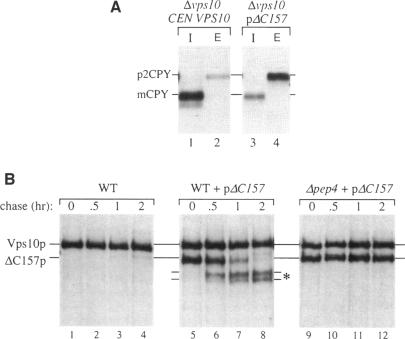
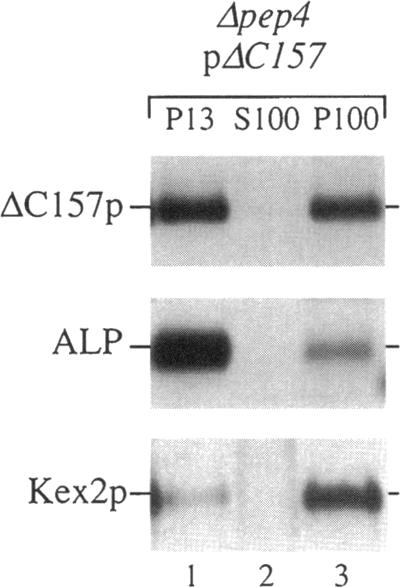
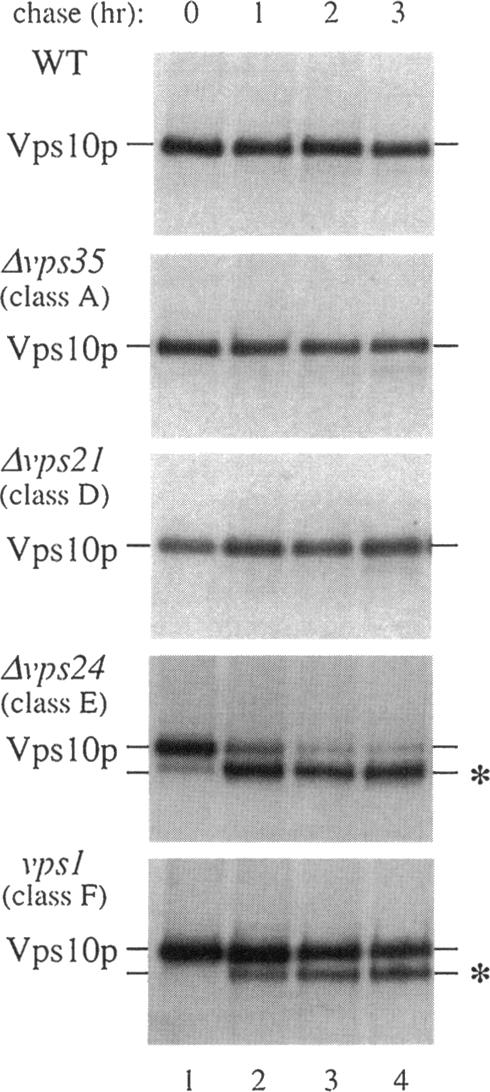
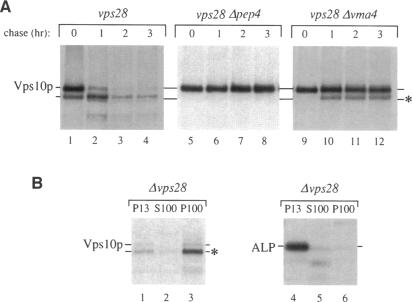
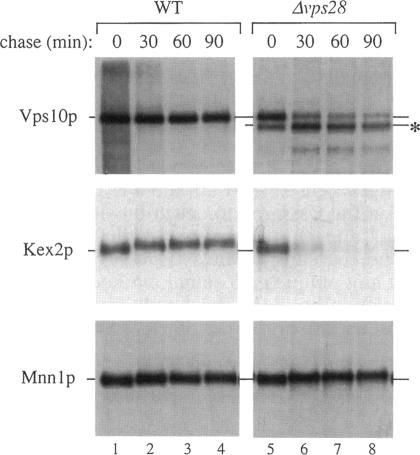
VPS10 of Saccharomyces cerevisiae encodes a type I transmembrane receptor protein required for the sorting of the soluble vacuolar hydrolase carboxypeptidase Y (CPY). To characterize the essential structural features and intercompartmental transport itinerary of the CPY receptor, we have constructed mutant forms of Vps10p that alter the carboxyterminal cytoplasmic tail of the protein. In addition, we have analyzed the effect these mutations as well as mutations in several VPS genes have on the function, stability, and localization of Vps10p. Although wild-type Vps10p is very stable over a 3-h chase period, overproduction of Vps10p results in PEP4-dependent degradation of the receptor. Immunofluorescence studies indicate that overexpressed receptor is delivered to the vacuole. A mutant form of Vps10p, in which 157 residues of the 164-residue cytoplasmic tail domain have been deleted, missorts CPY and is degraded rapidly. Additional mutations in the carboxy-terminus of Vps10p, including a deletion of a putative retention/recycling signal (FYVF), also result in CPY missorting and PEP4-dependent receptor instability. Because the cytoplasmic tail domain may interact with other factors, possibly VPS gene products, Vps10p stability was examined in a number of vps mutants. As was observed with the late Golgi protein Kex2p, Vps10p is unstable in a vps1 mutant. However, instability of Vps10p is even more severe in the class E vps mutants. Double mutant analyses demonstrate that this rapid degradation is dependent upon vacuolar proteases and a functional vacuolar ATPase. Fractionation studies of Vps10p in class E vps mutant strains indicate that the turnover of Vps10p occurs in a compartment other than the vacuole. These data are consistent with a model in which the cytoplasmic tail of Vps10p directs cycling of the receptor between a late Golgi sorting compartment and a prevacuolar endosome-like compartment, an exaggerated form of which is present in the vps class E mutants.
酿酒酵母的VPS10编码一种I型跨膜受体蛋白,该蛋白是可溶性液泡水解酶羧肽酶Y(CPY)分选所必需的。为了表征CPY受体的基本结构特征和跨区室转运路径,我们构建了Vps10p的突变形式,这些突变改变了该蛋白的羧基末端细胞质尾巴。此外,我们分析了这些突变以及几个VPS基因中的突变对Vps10p的功能、稳定性和定位的影响。尽管野生型Vps10p在3小时的追踪期内非常稳定,但Vps10p的过量表达会导致受体依赖PEP4的降解。免疫荧光研究表明,过表达的受体被递送至液泡。一种Vps10p的突变形式,其164个残基的细胞质尾巴结构域中有157个残基被删除,导致CPY分选错误并迅速降解。Vps10p羧基末端的其他突变,包括一个假定的滞留/循环信号(FYVF)的缺失,也会导致CPY分选错误和依赖PEP4的受体不稳定性。由于细胞质尾巴结构域可能与其他因子相互作用,可能是VPS基因产物,因此在多个vps突变体中检测了Vps10p的稳定性。正如在晚期高尔基体蛋白Kex2p中观察到的那样,Vps10p在vps1突变体中不稳定。然而,Vps10p的不稳定性在E类vps突变体中更为严重。双突变分析表明,这种快速降解依赖于液泡蛋白酶和功能性液泡ATP酶。对E类vps突变体菌株中Vps10p的分级分离研究表明,Vps10p的周转发生在液泡以外的区室中。这些数据与一个模型一致,在该模型中,Vps10p的细胞质尾巴指导受体在晚期高尔基体分选区室和前液泡内体样区室之间循环,E类vps突变体中存在一种夸张的形式。