
腺苷诱导鸡胚交感神经元凋亡:腺苷的一种新生理作用。
Adenosine-induced apoptosis in chick embryonic sympathetic neurons: a new physiological role for adenosine.
作者信息
Wakade T D, Palmer K C, McCauley R, Przywara D A, Wakade A R
机构信息
Department of Pharmacology, School of Medicine, Wayne State University, Detroit, MI 48201, USA.
出版信息
J Physiol. 1995 Oct 1;488 ( Pt 1)(Pt 1):123-38. doi: 10.1113/jphysiol.1995.sp020951.
Abstract
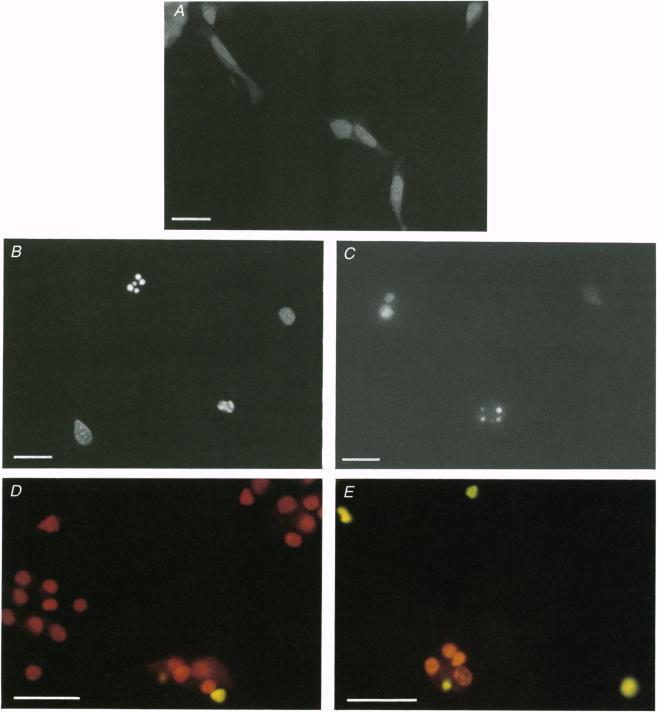
- A newly found action of adenosine in neurons, which may have an important physiological function in the growth and development of the sympathetic nervous system, is described. Adenosine (1-100 microM) inhibited neurite outgrowth within the first 24 h and killed about 80% of sympathetic neurons supported by nerve growth factor over the next 2 days in culture. Neurons supported by excess KCl, forskolin or phorbol 12,13-dibutyrate were equally susceptible to the toxic actions of adenosine. Inosine, guanosine or hypoxanthine (all 100-300 microM) were without effect on neuronal growth and survival. 2. Specific agonists of adenosine A1 and A2 receptors were not neurotoxic, and toxic effects of adenosine were not antagonized by aminophylline. These results rule out involvement of adenosine receptors and the adenylyl cyclase-cAMP signalling system in neurotoxic actions of adenosine. 3. Adenosine toxicity was prevented by inhibitors of the adenosine membrane transporter, suggesting an intracellular site of action of adenosine. 4. Inhibitors of adenosine deaminase dramatically facilitated the toxic action so that physiologically relevant concentrations of adenosine were neurotoxic. 5. Adenosine kinase activity of sympathetic neurons was dose-dependently inhibited by 5'-iodotubercidin (3-100 nM). 5'-Iodotubercidin (100 nM) completely protected neurons against toxicity of adenosine plus adenosine deaminase inhibitors. These results provide convincing evidence that phosphorylation of the nucleoside is an essential requirement for initiation of adenosine toxicity. 6. Sympathetic neurons were successfully rescued from the lethal effects of adenosine deaminase inhibitor plus adenosine by uridine or 2-deoxycytidine, but not by nicotinamide or 2-deoxyguanosine, suggesting that depletion of pyrimidine nucleotides by phosphorylated adenosine compounds and consequent inhibition of DNA synthesis produces neuronal death. 7. DNA fragmentation, assessed by the fluorescent dye bisbenzimide and by the TUNEL (terminal deoxynucleotidyl transferase-mediated nick end labelling) method, indicated that neuronal death induced by adenosine was apoptotic. 8. We conclude that adenosine deaminase and adenosine kinase play an important role in the metabolism of intracellular concentrations of adenosine and thereby regulate the growth and development of sympathetic neurons. Our study highlights, for the first time, the importance of adenosine as a mediator of programmed cell death of neurons supported by nerve growth factor.
摘要
- 本文描述了腺苷在神经元中的一种新发现的作用,这一作用可能在交感神经系统的生长和发育中具有重要的生理功能。在培养过程中,腺苷(1 - 100微摩尔)在前24小时内抑制神经突生长,并在接下来的2天内杀死约80%由神经生长因子支持的交感神经元。由过量氯化钾、福斯高林或佛波酯12,13 - 二丁酸支持的神经元对腺苷的毒性作用同样敏感。肌苷、鸟苷或次黄嘌呤(均为100 - 300微摩尔)对神经元的生长和存活没有影响。2. 腺苷A1和A2受体的特异性激动剂没有神经毒性,氨茶碱也不能拮抗腺苷的毒性作用。这些结果排除了腺苷受体和腺苷酸环化酶 - cAMP信号系统参与腺苷的神经毒性作用。3. 腺苷膜转运体抑制剂可预防腺苷毒性,提示腺苷的作用位点在细胞内。4. 腺苷脱氨酶抑制剂显著促进了毒性作用,使得生理相关浓度的腺苷具有神经毒性。5. 5'-碘结核菌素(3 - 100纳摩尔)剂量依赖性地抑制交感神经元的腺苷激酶活性。5'-碘结核菌素(100纳摩尔)完全保护神经元免受腺苷加腺苷脱氨酶抑制剂的毒性作用。这些结果提供了令人信服的证据,表明核苷的磷酸化是启动腺苷毒性的必要条件。6. 尿苷或2 - 脱氧胞苷可成功挽救交感神经元免受腺苷脱氨酶抑制剂加腺苷的致死作用,但烟酰胺或2 - 脱氧鸟苷则不能,这表明磷酸化的腺苷化合物导致嘧啶核苷酸耗竭并进而抑制DNA合成会导致神经元死亡。7. 通过荧光染料双苯甲酰胺和TUNEL(末端脱氧核苷酸转移酶介导的缺口末端标记)方法评估的DNA片段化表明,腺苷诱导的神经元死亡是凋亡性的。8. 我们得出结论,腺苷脱氨酶和腺苷激酶在细胞内腺苷浓度的代谢中起重要作用,从而调节交感神经元的生长和发育。我们的研究首次强调了腺苷作为神经生长因子支持的神经元程序性细胞死亡介质的重要性。


 Zotero 插件