Askanas V, McFerrin J, Baqué S, Alvarez R B, Sarkozi E, Engel W K
Department of Neurology, University of Southern California School of Medicine, Good Samaritan Hospital, Los Angeles 90017, USA.
Proc Natl Acad Sci U S A. 1996 Feb 6;93(3):1314-9. doi: 10.1073/pnas.93.3.1314.
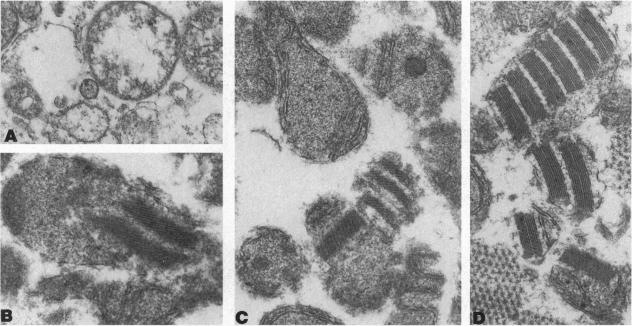
As in Alzheimer-disease (AD) brain, vacuolated muscle fibers of inclusion-body myositis (IBM) contain abnormally accumulated beta-amyloid precursor protein (beta APP), including its beta-amyloid protein epitope, and increased beta APP-751 mRNA. Other similarities between IBM muscle and AD brain phenotypes include paired helical filaments, hyperphosphorylated tau protein, apolipoprotein E, and mitochondrial abnormalities, including decreased cytochrome-c oxidase (COX) activity. The pathogenesis of these abnormalities in IBM muscle and AD brain is not known. We now report that direct transfer of the beta APP gene, using adenovirus vector, into cultured normal human muscle fibers causes structural abnormalities of mitochondria and decreased COX activity. In this adenovirus-mediated beta APP gene transfer, we demonstrated that beta APP overproduction can induce mitochondrial abnormalities. The data suggest that excessive beta APP may be responsible for mitochondrial and COX abnormalities in IBM muscle and perhaps AD brain.
与阿尔茨海默病(AD)脑一样,包涵体肌炎(IBM)的空泡化肌纤维含有异常蓄积的β-淀粉样前体蛋白(βAPP),包括其β-淀粉样蛋白表位,且βAPP-751 mRNA增加。IBM肌肉与AD脑表型之间的其他相似之处包括双螺旋丝、过度磷酸化的tau蛋白、载脂蛋白E以及线粒体异常,包括细胞色素c氧化酶(COX)活性降低。IBM肌肉和AD脑中这些异常的发病机制尚不清楚。我们现在报告,使用腺病毒载体将βAPP基因直接导入培养的正常人肌纤维会导致线粒体结构异常和COX活性降低。在这种腺病毒介导的βAPP基因转移中,我们证明βAPP过量产生可诱导线粒体异常。数据表明,过量的βAPP可能是IBM肌肉以及或许AD脑中线粒体和COX异常的原因。