Keen N J, Gait M J, Karn J
Medical Research Council Laboratory of Molecular Biology, Cambridge, United Kingdom.
Proc Natl Acad Sci U S A. 1996 Mar 19;93(6):2505-10. doi: 10.1073/pnas.93.6.2505.
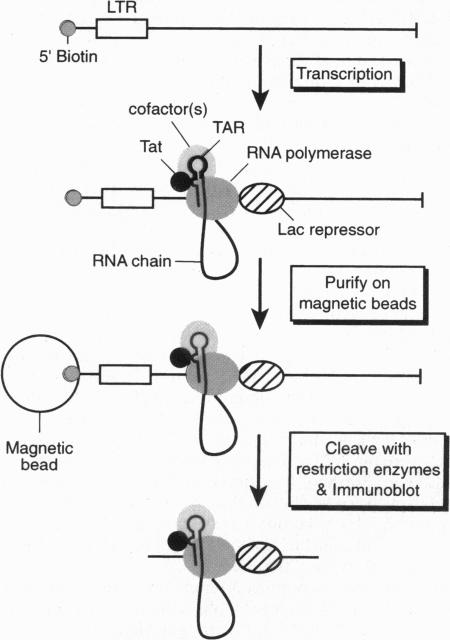
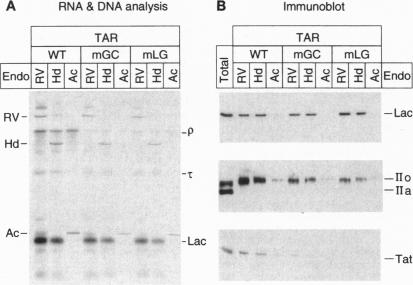
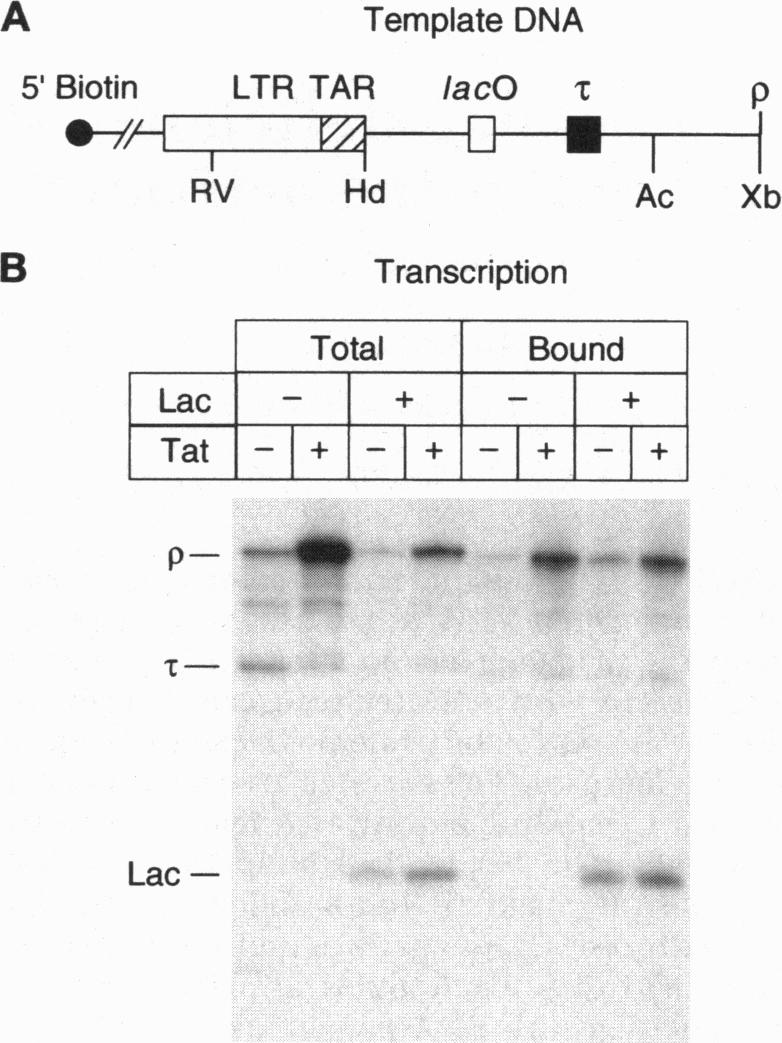
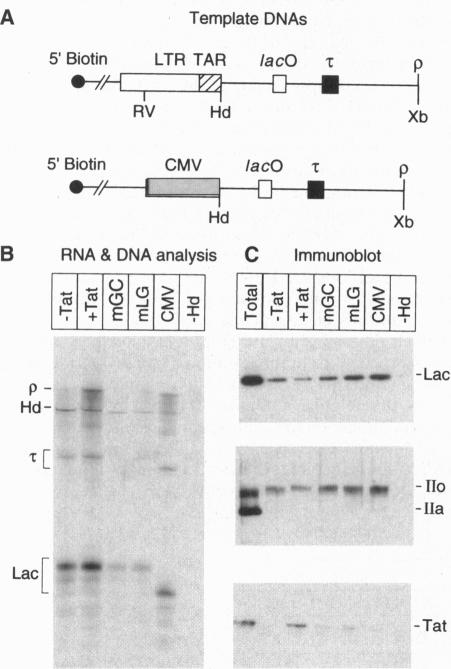
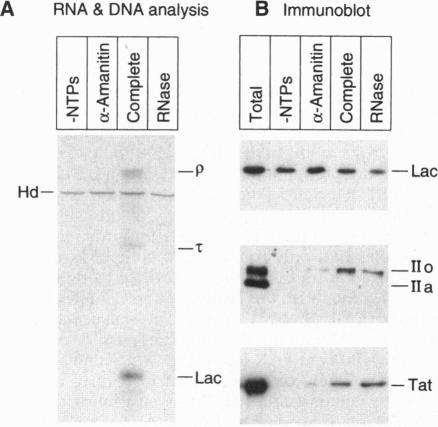
The human immunodeficiency virus type 1 transactivator protein, Tat, stimulates transcriptional elongation from the viral long terminal repeat. To test whether Tat associates directly with activated transcription complexes, we have used the lac repressor protein (LacR) to "trap" elongating RNA polymerases. The arrested transcription complexes were purified by binding biotinylated templates to streptaviridin-coated magnetic beads. Transcription complexes were released from the magnetic beads following cleavage of the templates with restriction enzymes and were immunoblotted with antibodies to Tat, LacR and RNA polymerase II. The Tat protein copurified with RNA polymerase bound to wild-type templates but did not copurify with transcription complexes prepared by using templates carrying mutations in the transactivation response element (TAR) RNA. We conclude that Tat and cellular cofactors become attached to the transcription complex during its transit through TAR.
1型人类免疫缺陷病毒反式激活蛋白Tat可刺激病毒长末端重复序列的转录延伸。为了检测Tat是否直接与激活的转录复合物相关联,我们使用了乳糖阻遏蛋白(LacR)来“捕获”延伸中的RNA聚合酶。通过将生物素化模板与链霉抗生物素蛋白包被的磁珠结合来纯化停滞的转录复合物。在用限制酶切割模板后,转录复合物从磁珠上释放出来,并用针对Tat、LacR和RNA聚合酶II的抗体进行免疫印迹分析。Tat蛋白与结合在野生型模板上的RNA聚合酶共纯化,但不与使用在反式激活应答元件(TAR)RNA中携带突变的模板制备的转录复合物共纯化。我们得出结论,Tat和细胞辅助因子在转录复合物通过TAR的过程中附着于其上。