Chang W P, Clevenger C V
Department of Pathology and Laboratory Medicine, University of Pennsylvania Medical Center, Philadelphia, 19104, USA.
Proc Natl Acad Sci U S A. 1996 Jun 11;93(12):5947-52. doi: 10.1073/pnas.93.12.5947.
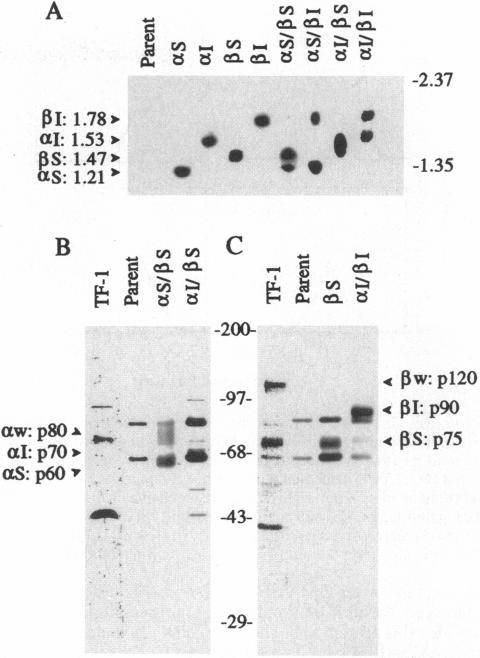
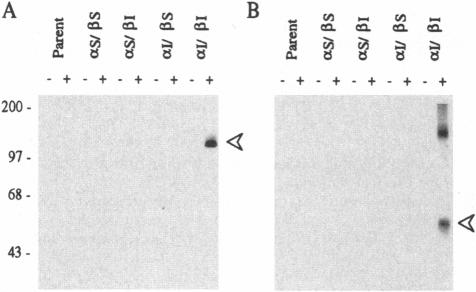
Activation of prolactin (PRL)-dependent signaling occurs as the result of ligand-induced dimerization of receptor (PRLr). Although three PRLr isoforms (short, intermediate, and long) have been characterized and are variably coexpressed in PRL-responsive tissues, the functional effects of ligand-induced PRLr isoform heterodimerization have not been examined. To determine whether heterodimeric PRLr complexes were capable of ligand-induced signaling and cellular proliferation, chimeras consisting of the extracellular domain of either the alpha or beta subunit of human granulocyte-macrophage colony-stimulating factor receptor (GM-CSFr) and the intracellular domain of the rat intermediate or short PRLr isoforms (PRLr-I or PRLr-S) were synthesized. Because high affinity binding of GM-CSF is mediated by the extracellular domain of one alpha and beta GM-CSFr pair, use of GM-CSFr/PRLr chimera specifically directed the dimerization of the PRLr intracellular domains within ligand-receptor complexes. Stable transfection of these constructs into the Ba/F3 line was demonstrated by Northern blot and immunoprecipitation analyses. Flow cytometry revealed specific binding of a phycoerythrin-conjugated human GM-CSF to the transfectants, confirming cell surface expression of the chimeric receptors. When tested for their ability to proliferate in response to GM-CSF, only chimeric transfectants expressing GM-CSFr/PRLr-I homodimers demonstrated significant [3H]thymidine incorporation. GM-CSF stimulation of transfectants expressing either GM-CSFr/PRLr-S homodimers or GM-CSFr/PRLr-S+1 heterodimers failed to induce proliferation. Consistent with these data, the GM-CSF-induced activation of two phosphotyrosine kinases, Jak2 and Fyn, was observed only in homodimeric GM-CSFr/PRLr-I transfectants. These results show that the PRLr-S functions as a dominant negative isoform, down-regulating both signaling and proliferation mediated by the receptor complex. Thus, structural motifs necessary for Jak2 and Fyn activation within the carboxy terminus of the PRLr-I, absent in the PRLr-S, are required in each member of the dimeric PRLr complex.
催乳素(PRL)依赖性信号的激活是配体诱导受体(PRLr)二聚化的结果。虽然已鉴定出三种PRLr异构体(短、中、长),且它们在PRL反应性组织中可变地共表达,但配体诱导的PRLr异构体异源二聚化的功能效应尚未得到研究。为了确定异源二聚体PRLr复合物是否能够进行配体诱导的信号传导和细胞增殖,合成了由人粒细胞-巨噬细胞集落刺激因子受体(GM-CSFr)的α或β亚基的细胞外结构域与大鼠中间或短PRLr异构体(PRLr-I或PRLr-S)的细胞内结构域组成的嵌合体。由于GM-CSF的高亲和力结合是由一对α和β GM-CSFr的细胞外结构域介导的,因此使用GM-CSFr/PRLr嵌合体可特异性地引导配体-受体复合物中PRLr细胞内结构域的二聚化。通过Northern印迹和免疫沉淀分析证实了这些构建体在Ba/F3细胞系中的稳定转染。流式细胞术显示藻红蛋白偶联的人GM-CSF与转染子特异性结合,证实了嵌合受体在细胞表面的表达。当测试它们对GM-CSF的增殖反应能力时,只有表达GM-CSFr/PRLr-I同二聚体的嵌合转染子表现出显著的[3H]胸苷掺入。GM-CSF刺激表达GM-CSFr/PRLr-S同二聚体或GM-CSFr/PRLr-S+1异二聚体的转染子未能诱导增殖。与这些数据一致,仅在同二聚体GM-CSFr/PRLr-I转染子中观察到GM-CSF诱导的两种磷酸酪氨酸激酶Jak2和Fyn的激活。这些结果表明,PRLr-S作为一种显性负性异构体,下调受体复合物介导的信号传导和增殖。因此,PRLr-I羧基末端存在的、PRLr-S中不存在的Jak2和Fyn激活所需的结构基序,是二聚体PRLr复合物的每个成员所必需的。