Persidsky Y, Limoges J, McComb R, Bock P, Baldwin T, Tyor W, Patil A, Nottet H S, Epstein L, Gelbard H, Flanagan E, Reinhard J, Pirruccello S J, Gendelman H E
Department of Pathology and Microbiology, University of Nebraska Medical Center, Omaha 68198-5215, USA.
Am J Pathol. 1996 Sep;149(3):1027-53.
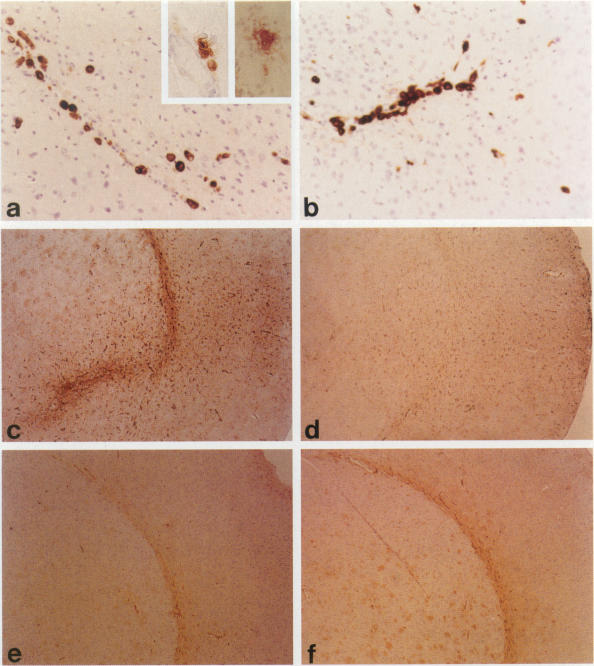
The human immunodeficiency virus (HIV) is neuroinvasive and commonly causes cognitive and motor deficits during the later stages of viral infection. (referred to as HIV dementia). The mechanism(s) for disease revolves around secretory products produced from immune-activated brain macrophages/microglia. Recently, we developed an animal model system for HIV dementia that contains xenografts of HIV-1-infected cells inoculated into brains of mice with severe combined immunodeficiency (SCID). This animal system was used to quantitatively evaluate HIV-induced neuropathology. Xenografts of HIV-1-infected human monocytes (placed into the putamen and cortex of SCID mice) remained viable for 5 weeks. HIV-1 p24 antigen expression in mouse brain was persistent. Progressive inflammatory responses (including astrogliosis and cytokine production), which began at 3 days, peaked at day 12. The range of astrocyte proliferative reactions exceeded the inoculation site by > 1000 microns. Brains with virus-infected monocytes showed a > or = 1.6-fold increase in glial fibrillary acidic protein (staining distribution and intensity) as compared with similarly inoculated brains with uninfected control monocytes. These findings paralleled the accumulation and activation of murine microglia (increased branching of cell processes, formation of microglial nodules, interleukin (IL)-1 beta and IL-6 expression). An inflammatory reaction of human monocytes (as defined by HLA-DR, IL-1 beta, IL-6, and tumor necrosis factor-alpha expression) and neuronal injury (apoptosis) also developed after virus-infected monocyte xenograft placement into mouse brain tissue. These data, taken together, demonstrate that this SCID mouse model of HIV-1 neuropathogenesis can reproduce key aspects of disease (virus-infected macrophages, astrocytosis, microglial activation, and neuronal damage). This model may serve as an important means for therapeutic development directed toward improving mental function in HIV-infected subjects with cognitive and motor dysfunction.
人类免疫缺陷病毒(HIV)具有神经侵袭性,在病毒感染后期通常会导致认知和运动功能障碍(称为HIV痴呆)。疾病的发病机制围绕免疫激活的脑巨噬细胞/小胶质细胞产生的分泌产物。最近,我们开发了一种用于HIV痴呆的动物模型系统,该系统包含接种到严重联合免疫缺陷(SCID)小鼠脑内的HIV-1感染细胞的异种移植物。这个动物系统用于定量评估HIV诱导的神经病理学。HIV-1感染的人类单核细胞的异种移植物(置于SCID小鼠的壳核和皮质中)存活了5周。小鼠脑中HIV-1 p24抗原表达持续存在。始于第3天的进行性炎症反应(包括星形胶质细胞增生和细胞因子产生)在第12天达到峰值。星形胶质细胞增殖反应的范围超过接种部位> 1000微米。与接种未感染对照单核细胞的类似脑相比,感染病毒单核细胞的脑胶质纤维酸性蛋白(染色分布和强度)增加了≥1.6倍。这些发现与小鼠小胶质细胞的积累和激活(细胞突起分支增加、小胶质结节形成、白细胞介素(IL)-1β和IL-6表达)平行。将病毒感染的单核细胞异种移植物植入小鼠脑组织后,也出现了人类单核细胞的炎症反应(由HLA-DR、IL-1β、IL-6和肿瘤坏死因子-α表达定义)和神经元损伤(凋亡)。综合这些数据表明,这个HIV-1神经发病机制的SCID小鼠模型可以重现疾病的关键方面(病毒感染的巨噬细胞、星形细胞增多、小胶质细胞激活和神经元损伤)。这个模型可能成为针对改善有认知和运动功能障碍的HIV感染受试者心理功能的治疗开发的重要手段。