Syroid D E, Maycox P R, Burrola P G, Liu N, Wen D, Lee K F, Lemke G, Kilpatrick T J
Molecular Neurobiology Laboratory, Salk Institute for Biological Studies, La Jolla, CA 92037, USA.
Proc Natl Acad Sci U S A. 1996 Aug 20;93(17):9229-34. doi: 10.1073/pnas.93.17.9229.
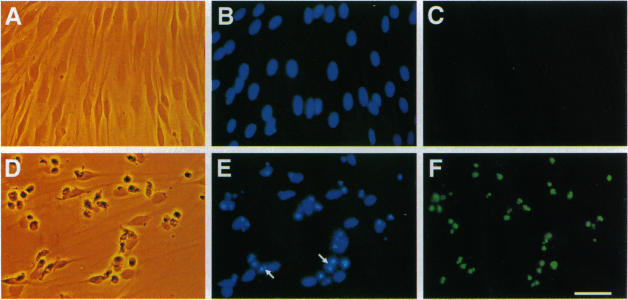
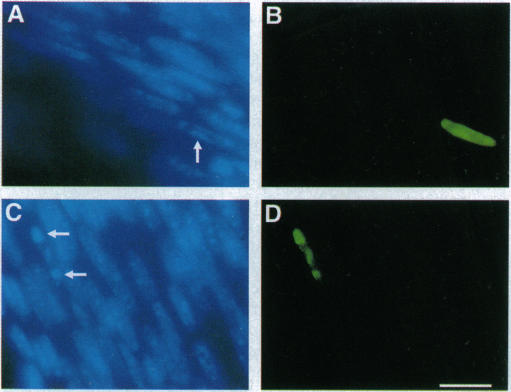
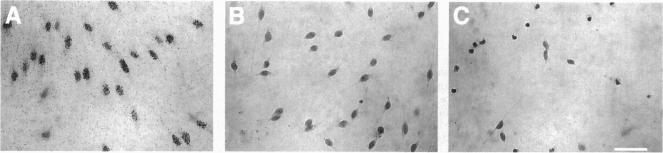
The development of Schwann cells, the myelin-forming glial cells of the vertebrate peripheral nervous system, involves a neonatal phase of proliferation in which cells migrate along and segregate newly formed axons. Withdrawal from the cell cycle, around postnatal days 2-4 in rodents, initiates terminal differentiation to the myelinating state. During this time, Schwann cell number is subject to stringent regulation such that within the first postnatal week, axons and myelinating Schwann cells attain the one-to-one relationship characteristic of the mature nerve. The mechanisms that underly this developmental control remain largely undefined. In this report, we examine the role of apoptosis in the determination of postnatal Schwann cell number. We find that Schwann cells isolated from postnatal day 3 rat sciatic nerve undergo apoptosis in vitro upon serum withdrawal and that Schwann cell death can be prevented by beta forms of neuregulin (NRG-beta) but not by fibroblast growth factor 2 or platelet-derived growth factors AA and BB. This NRG-beta-mediated Schwann cell survival is apparently transduced through an ErbB2/ErbB3 receptor heterodimer. We also provide evidence that postnatal Schwann cells undergo developmentally regulated apoptosis in vivo. Together with other recent findings, these results suggest that Schwann cell apoptosis may play an important role in peripheral nerve development and that Schwann cell survival may be regulated by access to axonally derived NRG.
施万细胞是脊椎动物外周神经系统中形成髓鞘的神经胶质细胞,其发育包括一个新生期的增殖阶段,在此阶段细胞沿着新形成的轴突迁移并分离。在啮齿动物出生后第2 - 4天左右退出细胞周期,启动向髓鞘形成状态的终末分化。在此期间,施万细胞数量受到严格调控,使得在出生后的第一周内,轴突和形成髓鞘的施万细胞达到成熟神经特有的一对一关系。这种发育控制的潜在机制在很大程度上仍不明确。在本报告中,我们研究了细胞凋亡在确定出生后施万细胞数量中的作用。我们发现,从出生后第3天大鼠坐骨神经分离的施万细胞在体外血清撤去后会发生凋亡,并且施万细胞死亡可被神经调节蛋白β(NRG-β)的β形式阻止,但不能被成纤维细胞生长因子2或血小板衍生生长因子AA和BB阻止。这种NRG-β介导的施万细胞存活显然是通过ErbB2/ErbB3受体异二聚体转导的。我们还提供证据表明出生后施万细胞在体内经历发育调控的凋亡。与其他近期发现一起,这些结果表明施万细胞凋亡可能在外周神经发育中起重要作用,并且施万细胞的存活可能受轴突衍生的NRG的可及性调节。