Shelby R D, Vafa O, Sullivan K F
Department of Cell Biology, The Scripps Research Institute, La Jolla, California 92037, USA.
J Cell Biol. 1997 Feb 10;136(3):501-13. doi: 10.1083/jcb.136.3.501.
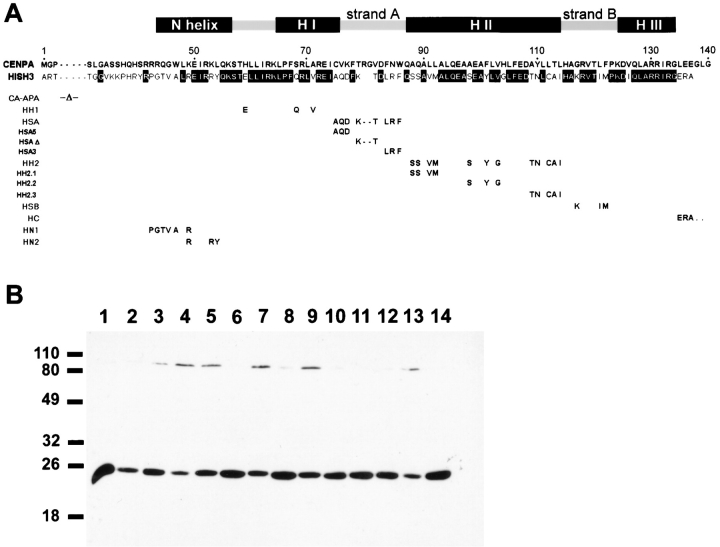
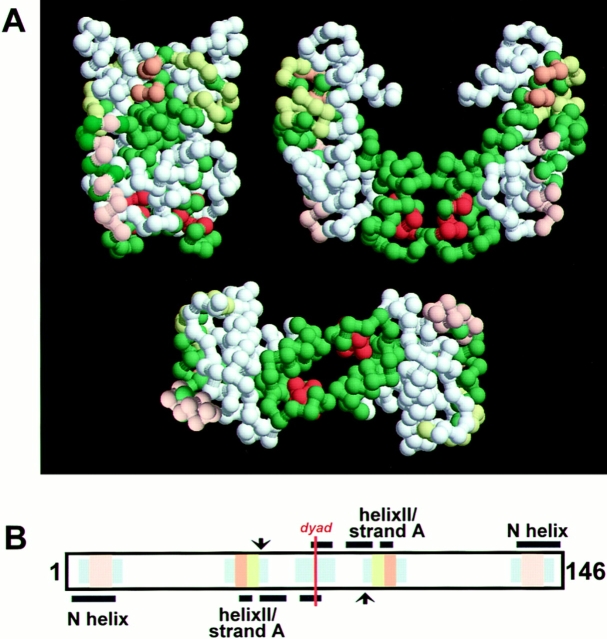
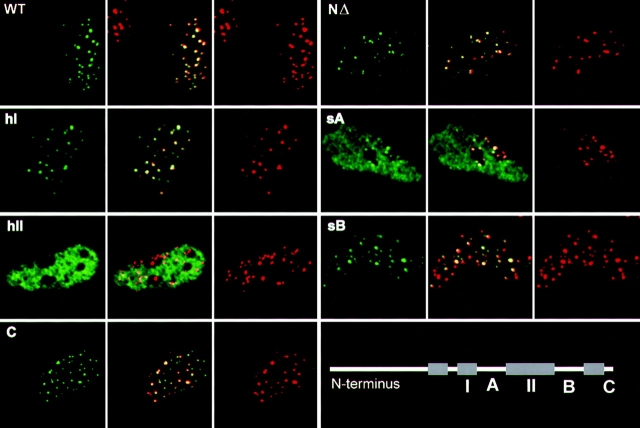
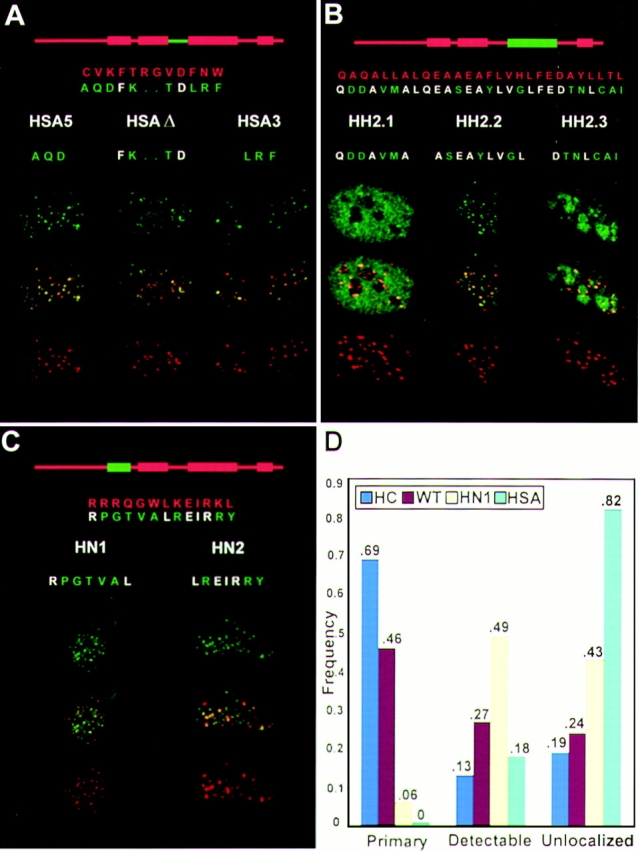
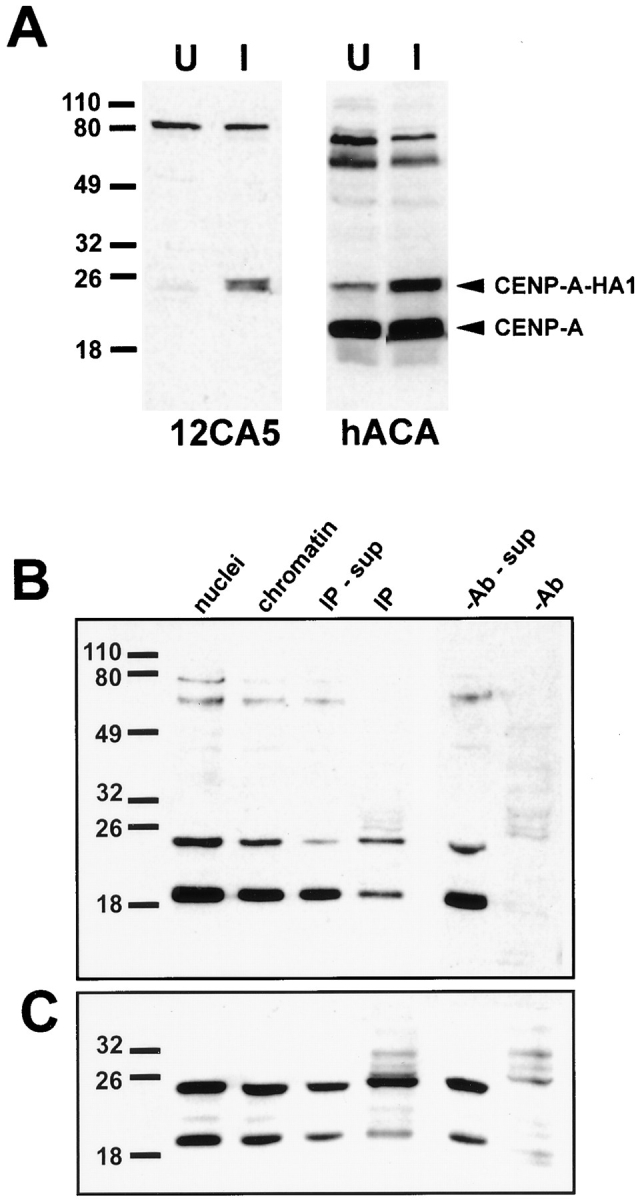
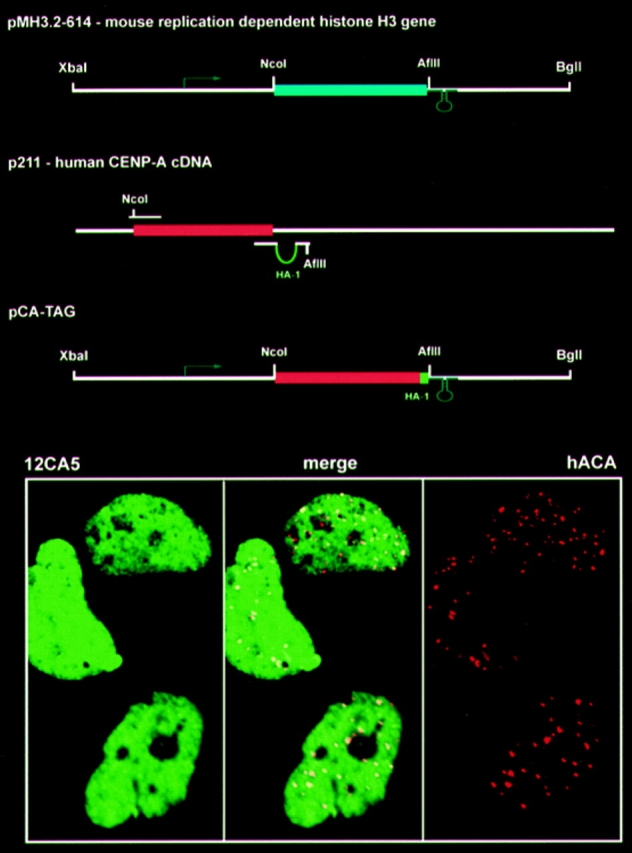
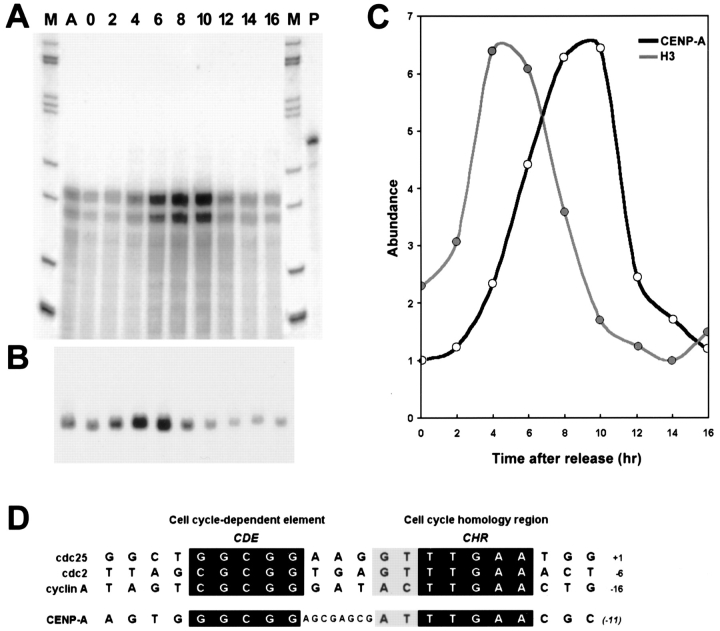
We investigated the requirements for targeting the centromeric histone H3 homologue CENP-A for assembly at centromeres in human cells by transfection of epitope-tagged CENP-A derivatives into HeLa cells. Centromeric targeting is driven solely by the conserved histone fold domain of CENP-A. Using the crystal structure of histone H3 as a guide, a series of CENP-A/histone H3 chimeras was constructed to test the role of discrete structural elements of the histone fold domain. Three elements were identified that are necessary for efficient targeting to centromeres. Two correspond to contact sites between histone H3 and nucleosomal DNA. The third maps to a homotypic H3-H3 interaction site important for assembly of the (H3/H4)2 heterotetramer. Immunoprecipitation confirms that CENP-A self-associates in vivo. In addition, targeting requires that CENP-A expression is uncoupled from histone H3 synthesis during S phase. CENP-A mRNA accumulates later in the cell cycle than histone H3, peaking in G2. Isolation of the gene for human CENP-A revealed a regulatory motif in the promoter region that directs the late S/G2 expression of other cell cycle-dependent transcripts such as cdc2, cdc25C, and cyclin A. Our data suggest a mechanism for molecular recognition of centromeric DNA at the nucleosomal level mediated by a cooperative series of differentiated CENP-A-DNA contact sites arrayed across the surface of a CENP-A nucleosome and a distinctive assembly pathway occurring late in the cell cycle.
我们通过将表位标记的CENP-A衍生物转染到HeLa细胞中,研究了在人类细胞中着丝粒靶向组装着丝粒组蛋白H3同源物CENP-A的要求。着丝粒靶向仅由CENP-A保守的组蛋白折叠结构域驱动。以组蛋白H3的晶体结构为指导,构建了一系列CENP-A/组蛋白H3嵌合体,以测试组蛋白折叠结构域离散结构元件的作用。确定了三个对有效靶向着丝粒必不可少的元件。其中两个对应于组蛋白H3与核小体DNA之间的接触位点。第三个定位到一个对(H3/H4)2异源四聚体组装很重要的同型H3-H3相互作用位点。免疫沉淀证实CENP-A在体内自我缔合。此外,靶向要求在S期CENP-A的表达与组蛋白H3的合成解偶联。CENP-A mRNA在细胞周期中比组蛋白H3积累得晚,在G2期达到峰值。人类CENP-A基因的分离揭示了启动子区域中的一个调控基序,该基序指导其他细胞周期依赖性转录本如cdc2、cdc25C和细胞周期蛋白A的晚期S/G2表达。我们的数据表明,在核小体水平上,由排列在CENP-A核小体表面的一系列分化的CENP-A-DNA接触位点协同介导的着丝粒DNA分子识别机制,以及在细胞周期后期发生的独特组装途径。