
人类皮肤黑色素瘤和神经胶质瘤共有的肿瘤相关抗原的分子检测
Molecular detection of tumor-associated antigens shared by human cutaneous melanomas and gliomas.
作者信息
Chi D D, Merchant R E, Rand R, Conrad A J, Garrison D, Turner R, Morton D L, Hoon D S
机构信息
National Genetics Institute, Los Angeles, California, USA.
出版信息
Am J Pathol. 1997 Jun;150(6):2143-52.
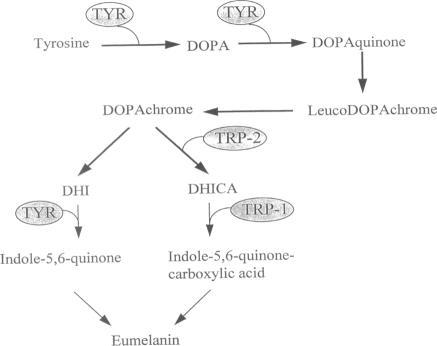
Both melanocytes and glial cells are derived embryologically from the neural ectoderm. Their malignant transformed counterparts, melanoma and glioma cells, respectively, may share common antigens. Numerous tumor-associated antigens have been identified in melanomas but only a few a gliomas. Using an established reverse transcriptase polymerase chain reaction plus Southern blot assay, we compared the mRNA expression of melanoma-associated antigens (MAAs) of melanomas to brain tumors primarily derived from glial cells. The MAAs studied included tyrosinase (Tyr), tyrosinase-related protein-1 and -2 (TRP-1 and TRP-2), gp100, human melanoma antigen-encoding genes 1 and 3 (MAGE-1 and MAGE-3), and melanotransferrin (p97). Glioblastoma multiforme (n = 21), anaplastic astrocytoma (n = 3), ependymoma (n = 2), meningioma (n = 3), oligodendroglioma (n = 1), and melanoma (n = 12) tumor specimens were assayed for MAA mRNA expression. Glioblastoma multiforme, astrocytoma, and melanoma cell lines were also assayed. We observed that individual MAA mRNAs were expressed in these brain tumors and cell lines at varying frequencies. The melanogenesis-pathway-related MAAs Tyr, TRP-1, TRP-2, and gp100 mRNAs were also expressed at different levels in normal brain tissues but at a much lower frequency than in glioblastoma multiforme and melanoma. MAGE-1 and MAGE-3 mRNA were expressed in different types of tumor specimens and cell lines but never in normal brain tissue. Tumor antigen p97 was expressed in all types of tumors and also in normal brain tissues. These studies demonstrate that melanomas and primary brain tumors express common MAAs and could be exploited in patients with malignant glioma by active specific immunotherapy against these common MAAs.
黑色素细胞和神经胶质细胞在胚胎学上均起源于神经外胚层。它们各自恶性转化后的对应物,即黑色素瘤细胞和胶质瘤细胞,可能具有共同抗原。在黑色素瘤中已鉴定出许多肿瘤相关抗原,但在胶质瘤中仅发现了少数几种。我们使用已建立的逆转录酶聚合酶链反应加Southern印迹分析法,比较了黑色素瘤相关抗原(MAA)在黑色素瘤与主要源自神经胶质细胞的脑肿瘤中的mRNA表达。所研究的MAA包括酪氨酸酶(Tyr)、酪氨酸酶相关蛋白-1和-2(TRP-1和TRP-2)、gp100、人类黑色素瘤抗原编码基因1和3(MAGE-1和MAGE-3)以及黑色素转铁蛋白(p97)。对多形性胶质母细胞瘤(n = 21)、间变性星形细胞瘤(n = 3)、室管膜瘤(n = 2)、脑膜瘤(n = 3)、少突胶质细胞瘤(n = 1)和黑色素瘤(n = 12)的肿瘤标本进行了MAA mRNA表达检测。还检测了多形性胶质母细胞瘤、星形细胞瘤和黑色素瘤细胞系。我们观察到,这些脑肿瘤和细胞系中单个MAA mRNA的表达频率各不相同。与黑色素生成途径相关的MAA,即Tyr、TRP-1、TRP-2和gp100 mRNA在正常脑组织中也有不同水平的表达,但频率远低于多形性胶质母细胞瘤和黑色素瘤。MAGE-1和MAGE-3 mRNA在不同类型的肿瘤标本和细胞系中表达,但在正常脑组织中从未表达。肿瘤抗原p97在所有类型的肿瘤中均有表达,在正常脑组织中也有表达。这些研究表明,黑色素瘤和原发性脑肿瘤表达共同的MAA,针对这些共同的MAA进行主动特异性免疫治疗,可能对恶性胶质瘤患者有效。


 Zotero 插件