
酿酒酵母中两种SH3结构域蛋白、一种腺苷酸环化酶相关蛋白与肌动蛋白细胞骨架之间物理和功能相互作用的证据。
Evidence for physical and functional interactions among two Saccharomyces cerevisiae SH3 domain proteins, an adenylyl cyclase-associated protein and the actin cytoskeleton.
作者信息
Lila T, Drubin D G
机构信息
Department of Molecular and Cell Biology, University of California, Berkeley 94720, USA.
出版信息
Mol Biol Cell. 1997 Feb;8(2):367-85. doi: 10.1091/mbc.8.2.367.
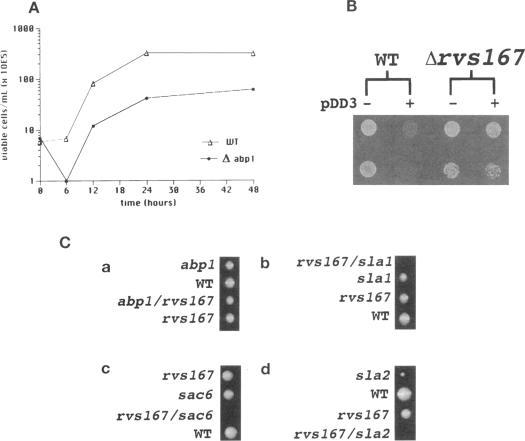
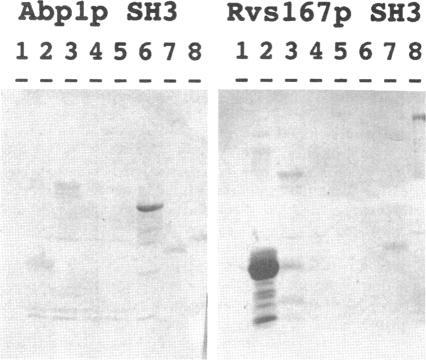
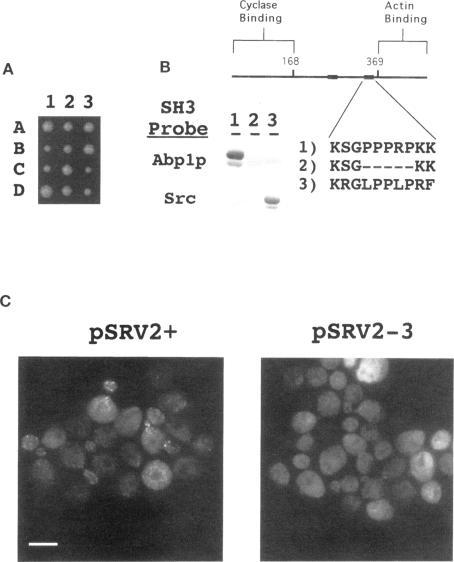
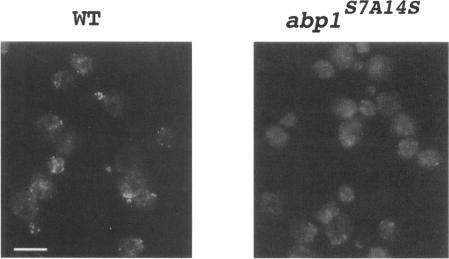
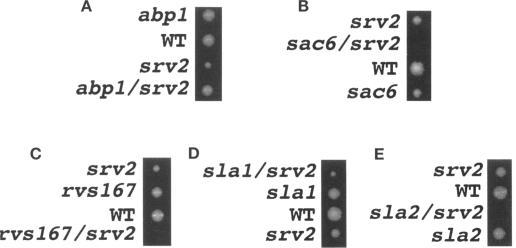
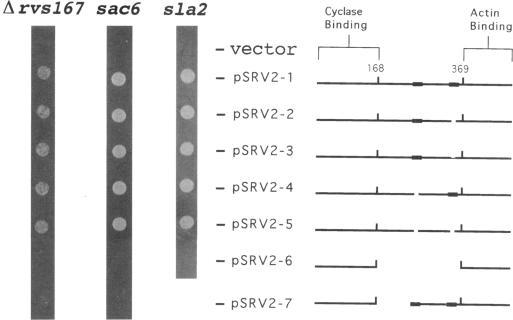
In a variety of organisms, a number of proteins associated with the cortical actin cytoskeleton contain SH3 domains, suggesting that these domains may provide the physical basis for functional interactions among structural and regulatory proteins in the actin cytoskeleton. We present evidence that SH3 domains mediate at least two independent functions of the Saccharomyces cerevisiae actin-binding protein Abp1p in vivo. Abp1p contains a single SH3 domain that has recently been shown to bind in vitro to the adenylyl cyclase-associated protein Srv2p. Immunofluorescence analysis of Srv2p subcellular localization in strains carrying mutations in either ABP1 or SRV2 reveals that the Abp1p SH3 domain mediates the normal association of Srv2p with the cortical actin cytoskeleton. We also show that a site in Abp1p itself is specifically bound by the SH3 domain of the actin-associated protein Rvs167p. Genetic analysis provides evidence that Abp1p and Rvs167p have functions that are closely interrelated. Abp1 null mutations, like rvs167 mutations, result in defects in sporulation and reduced viability under certain suboptimal growth conditions. In addition, mutations in ABP1 and RVS167 yield similar profiles of genetic "synthetic lethal" interactions when combined with mutations in genes encoding other cytoskeletal components. Mutations which specifically disrupt the SH3 domain-mediated interaction between Abp1p and Srv2p, however, show none of the shared phenotypes of abp1 and rvs167 mutations. We conclude that the Abp1p SH3 domain mediates the association of Srv2p with the cortical actin cytoskeleton, and that Abp1p performs a distinct function that is likely to involve binding by the Rvs167p SH3 domain. Overall, work presented here illustrates how SH3 domains can integrate the activities of multiple actin cytoskeleton proteins in response to varying environmental conditions.
在多种生物体中,许多与皮质肌动蛋白细胞骨架相关的蛋白质都含有SH3结构域,这表明这些结构域可能为肌动蛋白细胞骨架中结构蛋白和调节蛋白之间的功能相互作用提供物理基础。我们提供的证据表明,SH3结构域在体内介导酿酒酵母肌动蛋白结合蛋白Abp1p的至少两种独立功能。Abp1p含有一个单一的SH3结构域,最近已证明该结构域在体外可与腺苷酸环化酶相关蛋白Srv2p结合。对携带ABP1或SRV2突变的菌株中Srv2p亚细胞定位的免疫荧光分析表明,Abp1p的SH3结构域介导Srv2p与皮质肌动蛋白细胞骨架的正常结合。我们还表明,Abp1p自身的一个位点被肌动蛋白相关蛋白Rvs167p的SH3结构域特异性结合。遗传分析提供了证据,表明Abp1p和Rvs167p具有密切相关的功能。Abp1基因敲除突变,与rvs167突变一样,在某些次优生长条件下会导致孢子形成缺陷和活力降低。此外,当与编码其他细胞骨架成分的基因突变结合时,ABP1和RVS167中的突变产生相似的遗传“合成致死”相互作用谱。然而,特异性破坏Abp1p和Srv2p之间SH3结构域介导的相互作用的突变,没有表现出abp1和rvs167突变的共同表型。我们得出结论,Abp1p的SH3结构域介导Srv2p与皮质肌动蛋白细胞骨架的结合,并且Abp1p执行一种独特的功能,该功能可能涉及被Rvs167p的SH3结构域结合。总体而言,此处展示的工作说明了SH3结构域如何响应不同的环境条件整合多种肌动蛋白细胞骨架蛋白的活性。


 Zotero 插件