Longo V D, Ellerby L M, Bredesen D E, Valentine J S, Gralla E B
Department of Chemistry and Biochemistry, University of California at Los Angeles, Los Angeles, California 90095-1569, USA.
J Cell Biol. 1997 Jun 30;137(7):1581-8. doi: 10.1083/jcb.137.7.1581.
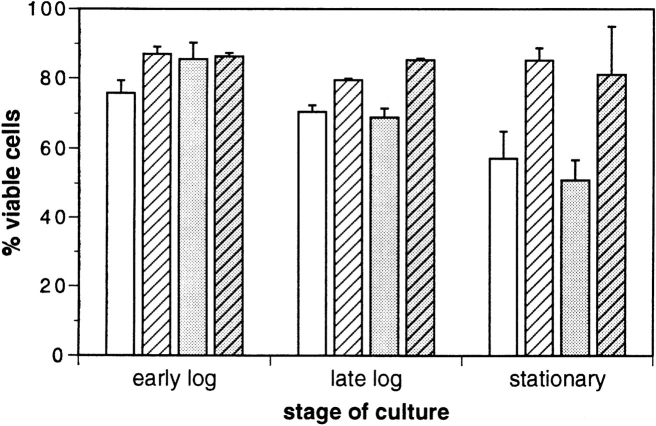
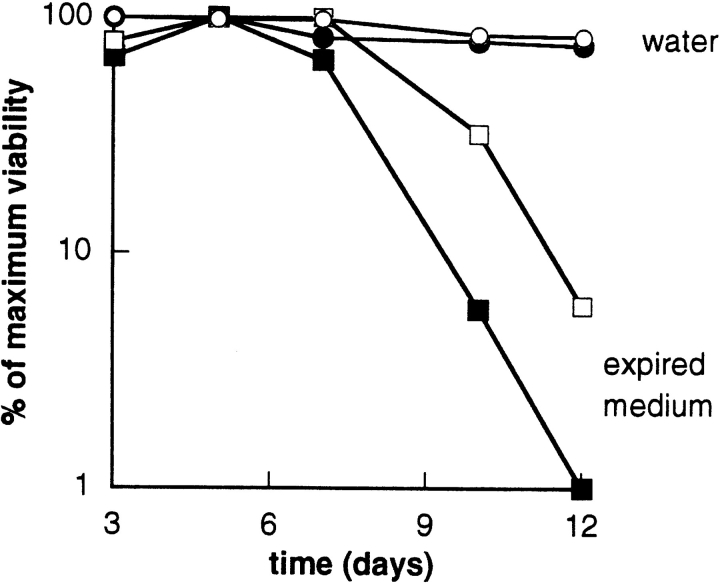
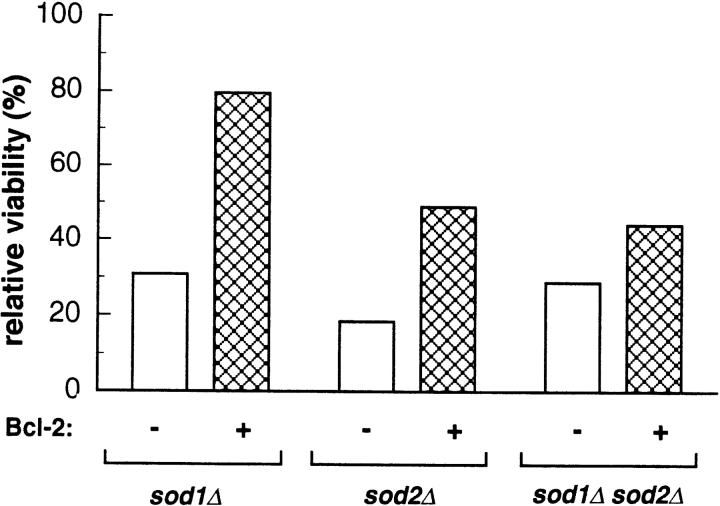
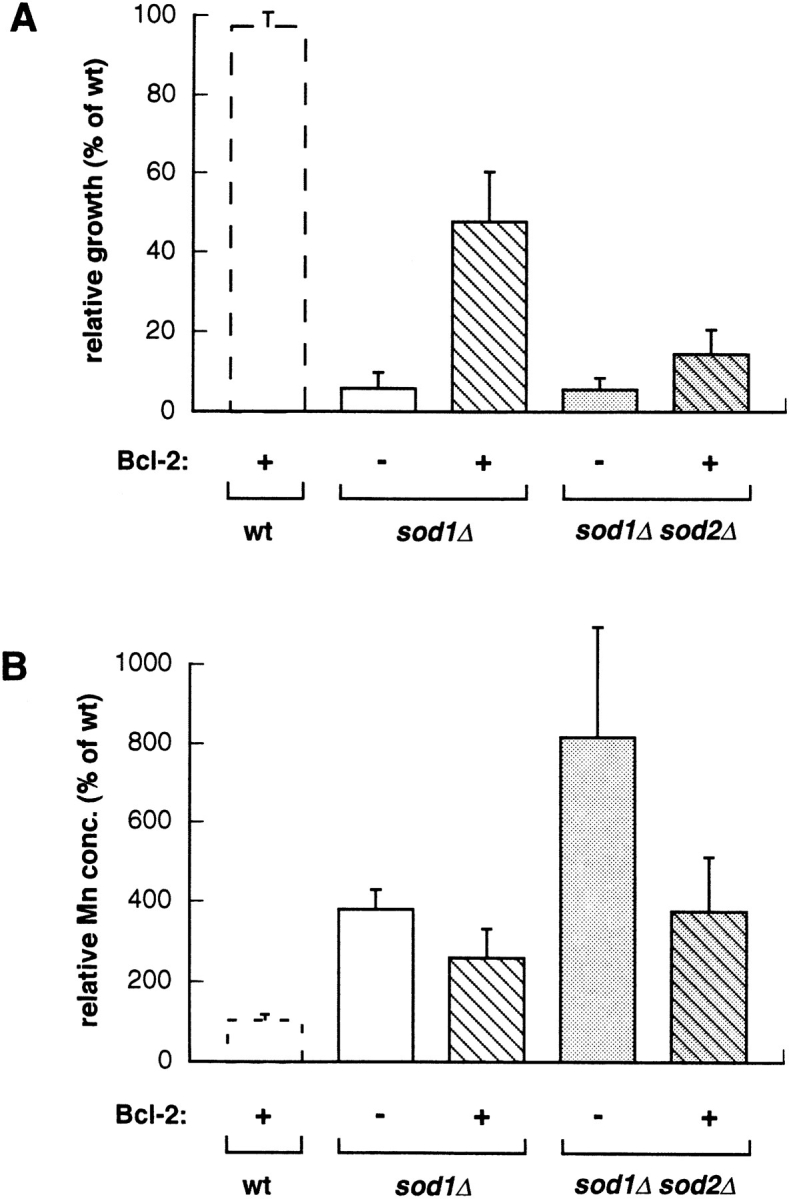
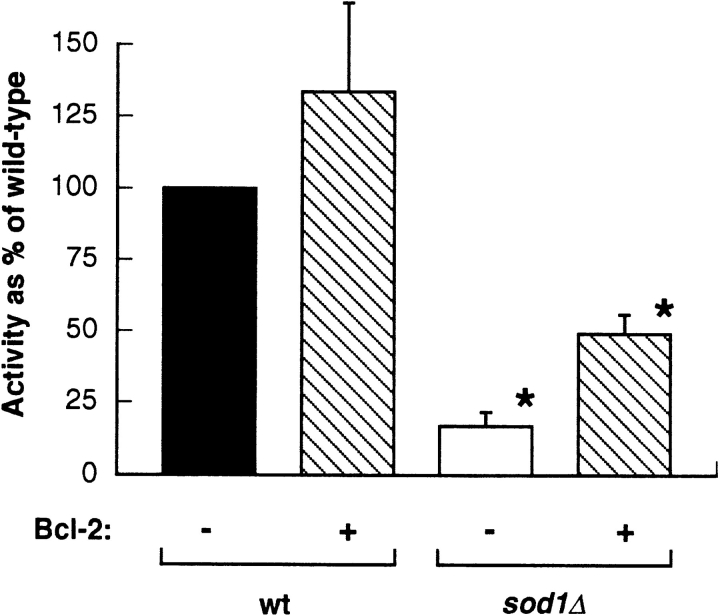
We expressed the human anti-apoptotic protein, Bcl-2, in Saccharomyces cerevisiae to investigate its effects on antioxidant protection and stationary phase survival. Yeast lacking copper-zinc superoxide dismutase (sod1Delta) show a profound defect in entry into and survival during stationary phase even under conditions optimal for survival of wild-type strains (incubation in water after stationary phase is reached). Expression of Bcl-2 in the sod1Delta strain caused a large improvement in viability at entry into stationary phase, as well as increased resistance to 100% oxygen and increased catalase activity. In addition, Bcl-2 expression reduced mutation frequency in both wild-type and sod1Delta strains. In another set of experiments, wild-type yeast incubated in expired minimal medium instead of water lost viability quickly; expression of Bcl-2 significantly delayed this stationary phase death. Our results demonstrate that Bcl-2 has activities in yeast that are similar to activities it is known to possess in mammalian cells: (a) stimulation of antioxidant protection and (b) delay of processes leading to cell death.
我们在酿酒酵母中表达了人类抗凋亡蛋白Bcl-2,以研究其对抗氧化保护和稳定期存活的影响。缺乏铜锌超氧化物歧化酶(sod1Δ)的酵母在进入稳定期及稳定期存活过程中表现出严重缺陷,即使在野生型菌株存活的最佳条件下(达到稳定期后在水中培养)也是如此。在sod1Δ菌株中表达Bcl-2导致进入稳定期时的活力大幅提高,对100%氧气的抗性增强,过氧化氢酶活性增加。此外,Bcl-2的表达降低了野生型和sod1Δ菌株中的突变频率。在另一组实验中,在过期的基本培养基而非水中培养的野生型酵母很快失去活力;Bcl-2的表达显著延迟了这种稳定期死亡。我们的结果表明,Bcl-2在酵母中的活性与其在哺乳动物细胞中已知的活性相似:(a)刺激抗氧化保护;(b)延迟导致细胞死亡的过程。