Humbles A A, Conroy D M, Marleau S, Rankin S M, Palframan R T, Proudfoot A E, Wells T N, Li D, Jeffery P K, Griffiths-Johnson D A, Williams T J, Jose P J
Department of Applied Pharmacology, Imperial College School of Medicine at the National Heart and Lung Institute, London SW3 6LY, United Kingdom.
J Exp Med. 1997 Aug 18;186(4):601-12. doi: 10.1084/jem.186.4.601.
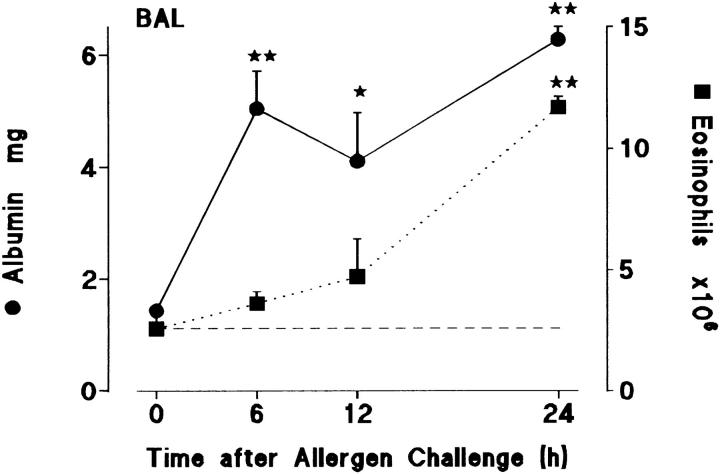
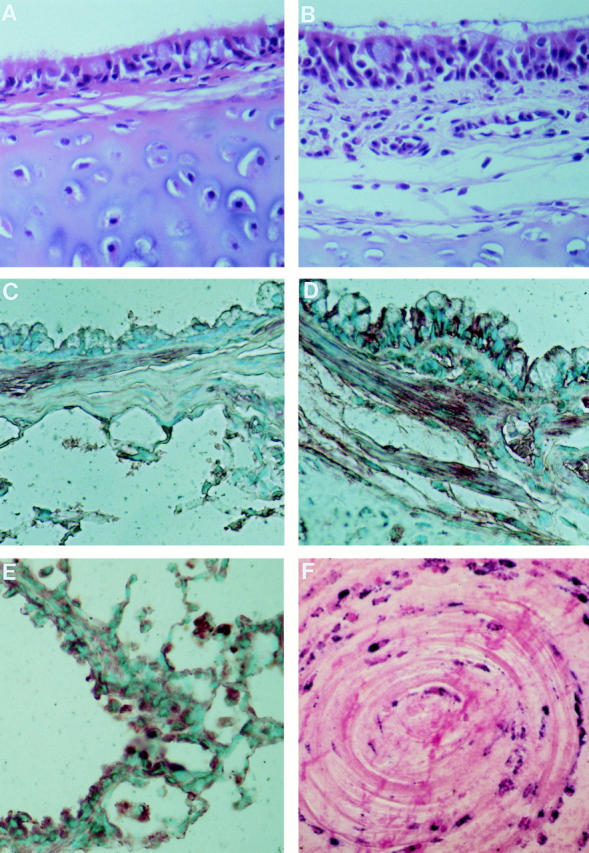
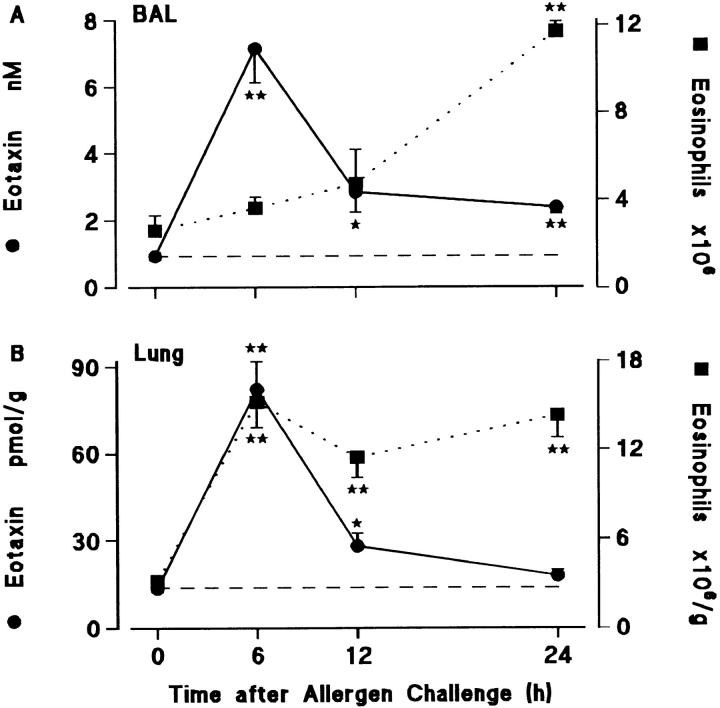
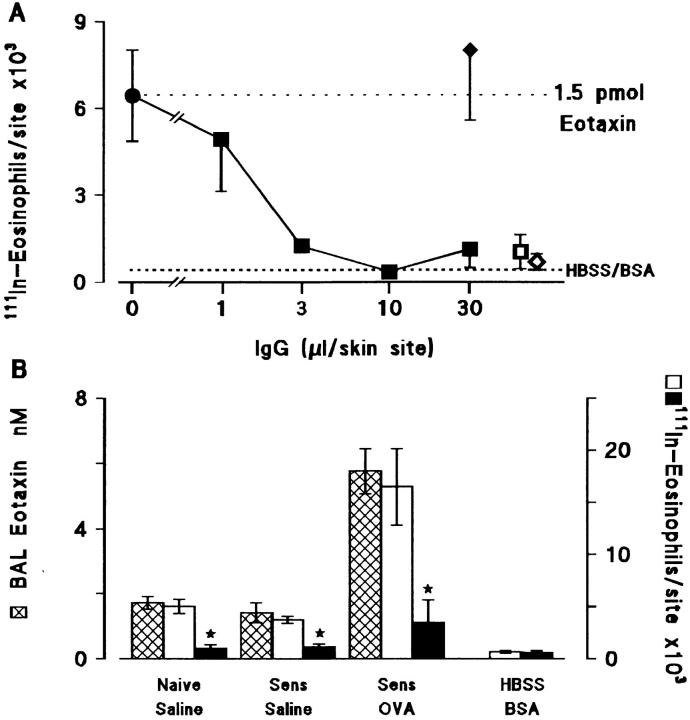
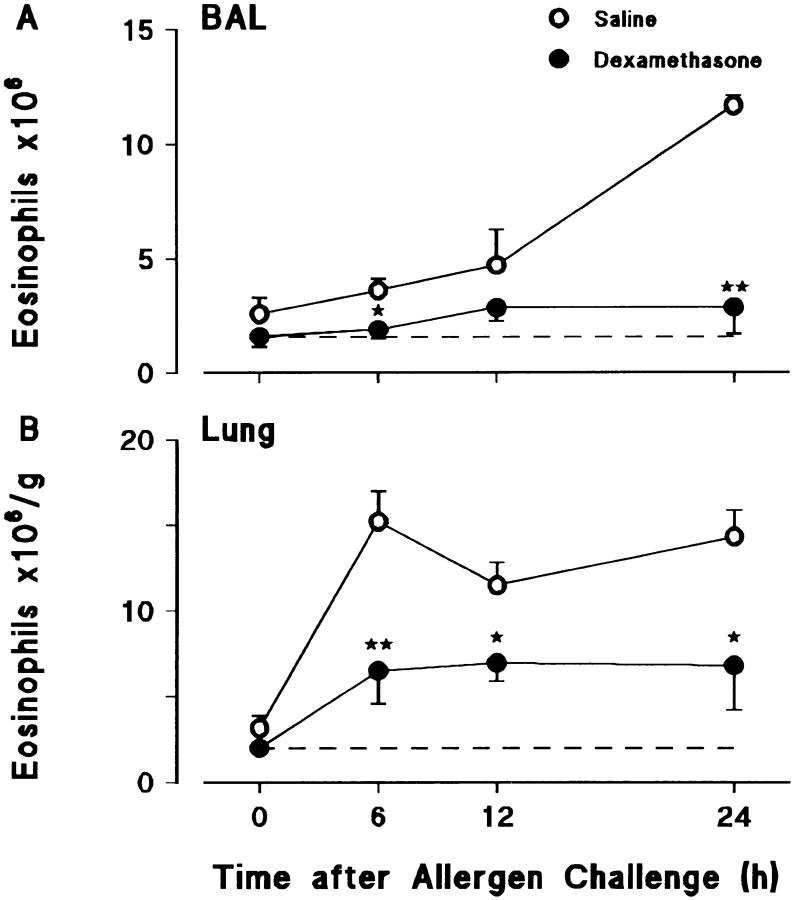
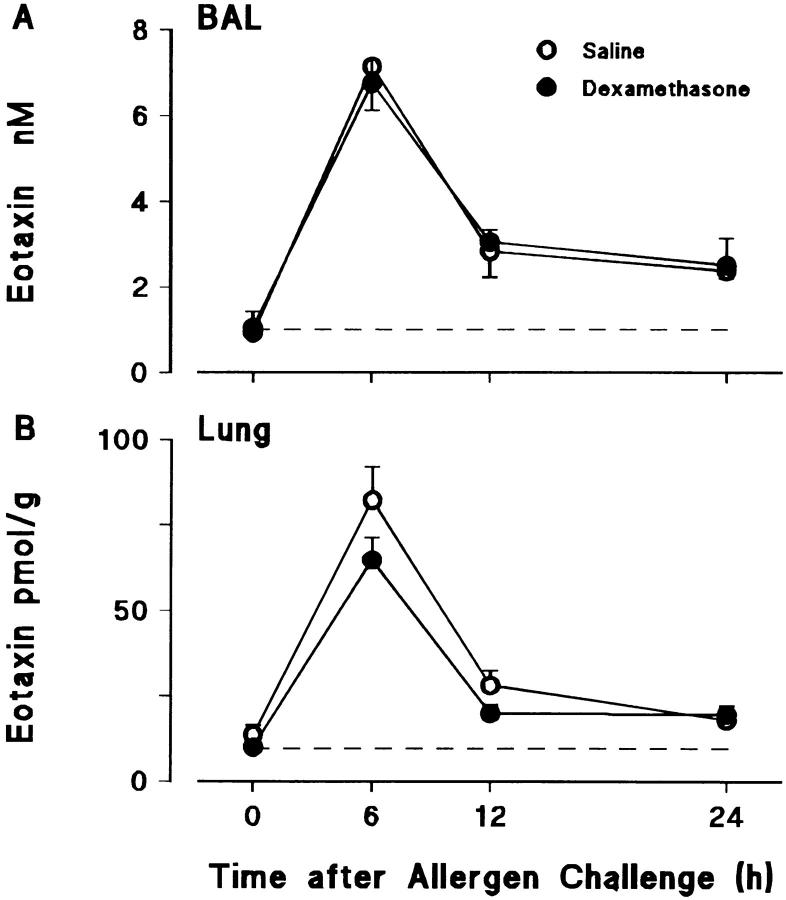
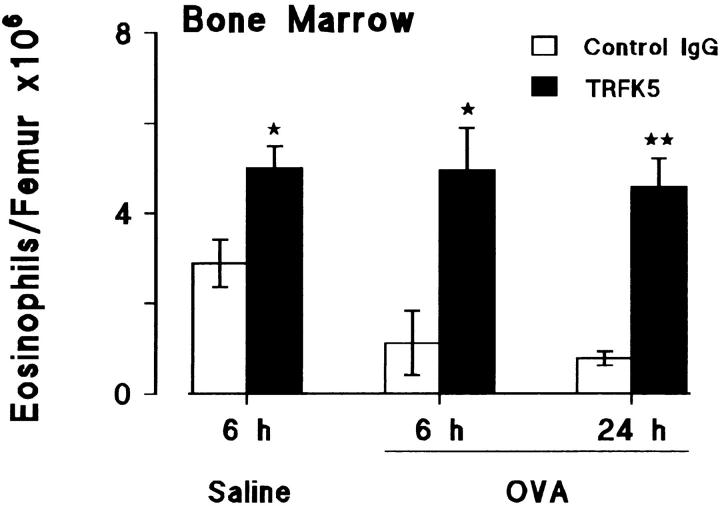
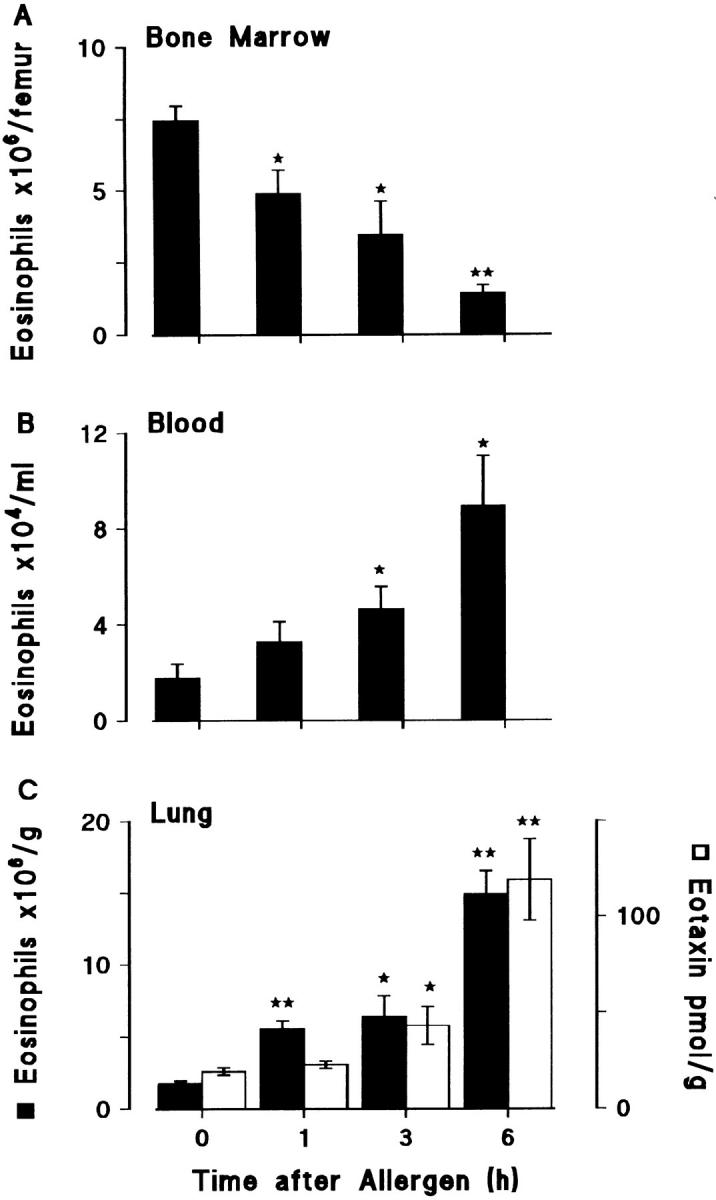
Challenge of the airways of sensitized guinea pigs with aerosolized ovalbumin resulted in an early phase of microvascular protein leakage and a delayed phase of eosinophil accumulation in the airway lumen, as measured using bronchoalveolar lavage (BAL). Immunoreactive eotaxin levels rose in airway tissue and BAL fluid to a peak at 6 h falling to low levels by 12 h. Eosinophil numbers in the tissue correlated with eotaxin levels until 6 h but eosinophils persisted until the last measurement time point at 24 h. In contrast, few eosinophils appeared in BAL over the first 12 h, major trafficking through the airway epithelium occurring at 12-24 h when eotaxin levels were low. Constitutive eotaxin was present in BAL fluid. Both constitutive and allergen-induced eosinophil chemoattractant activity in BAL fluid was neutralized by an antibody to eotaxin. Allergen-induced eotaxin appeared to be mainly in airway epithelium and macrophages, as detected by immunostaining. Allergen challenge of the lung resulted in a rapid release of bone marrow eosinophils into the blood. An antibody to IL-5 suppressed bone marrow eosinophil release and lung eosinophilia, without affecting lung eotaxin levels. Thus, IL-5 and eotaxin appear to cooperate in mediating a rapid transfer of eosinophils from the bone marrow to the lung in response to allergen challenge.
用雾化卵清蛋白攻击致敏豚鼠的气道,导致微血管蛋白渗漏的早期阶段和气道腔内嗜酸性粒细胞积聚的延迟阶段,这是通过支气管肺泡灌洗(BAL)测量的。免疫反应性嗜酸性粒细胞趋化因子水平在气道组织和BAL液中升高,在6小时达到峰值,到12小时降至低水平。组织中的嗜酸性粒细胞数量与嗜酸性粒细胞趋化因子水平在6小时前相关,但嗜酸性粒细胞一直持续到最后测量时间点24小时。相比之下,在最初12小时内BAL中几乎没有嗜酸性粒细胞出现,当嗜酸性粒细胞趋化因子水平较低时,主要在12 - 24小时通过气道上皮发生转运。组成型嗜酸性粒细胞趋化因子存在于BAL液中。BAL液中组成型和变应原诱导的嗜酸性粒细胞趋化活性均被抗嗜酸性粒细胞趋化因子抗体中和。通过免疫染色检测,变应原诱导的嗜酸性粒细胞趋化因子似乎主要存在于气道上皮和巨噬细胞中。对肺部进行变应原攻击导致骨髓嗜酸性粒细胞迅速释放到血液中。抗白细胞介素 - 5抗体抑制骨髓嗜酸性粒细胞释放和肺部嗜酸性粒细胞增多,而不影响肺部嗜酸性粒细胞趋化因子水平。因此,白细胞介素 - 5和嗜酸性粒细胞趋化因子似乎协同作用,介导嗜酸性粒细胞在变应原攻击后从骨髓快速转移到肺部。