Bhatia M, Bonnet D, Kapp U, Wang J C, Murdoch B, Dick J E
Department of Genetics, Research Institute, Hospital for Sick Children, Toronto, Ontario, Canada M5G 1X8.
J Exp Med. 1997 Aug 18;186(4):619-24. doi: 10.1084/jem.186.4.619.
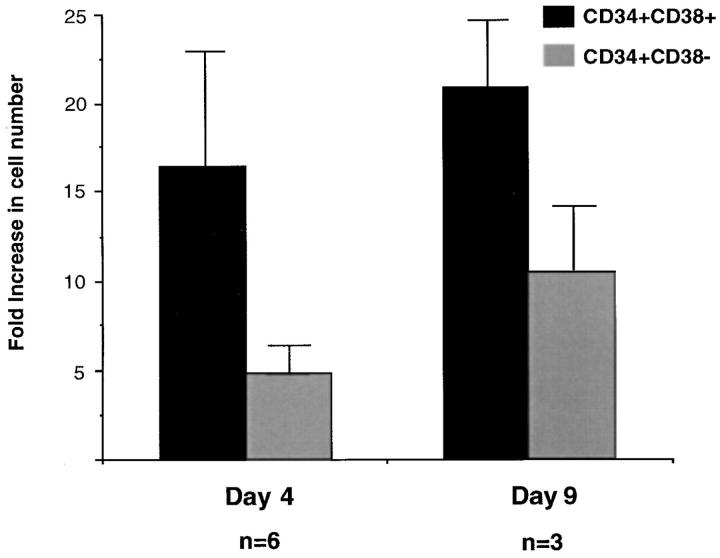
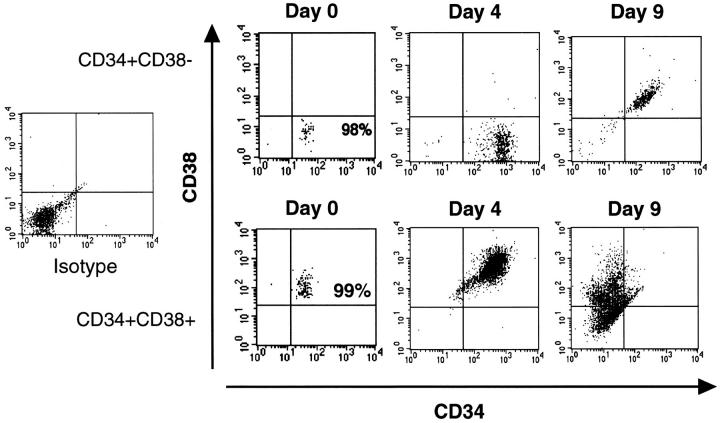
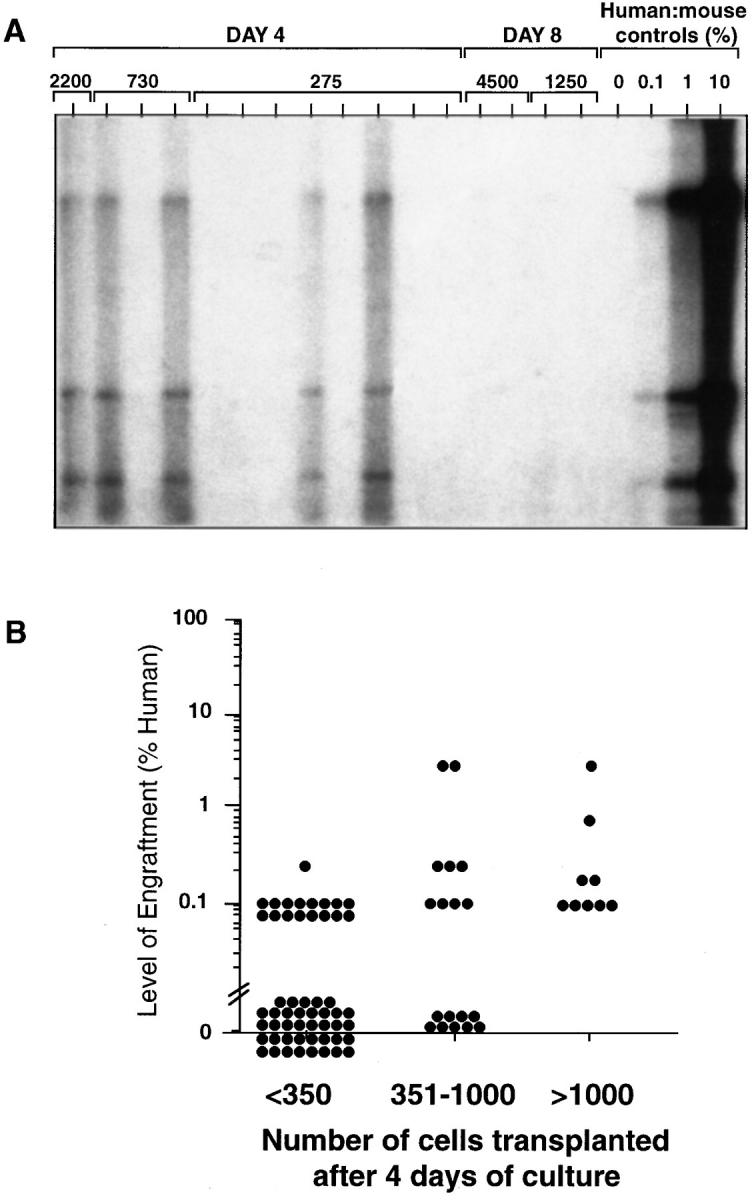
Ex vivo culture of human hematopoietic cells is a crucial component of many therapeutic applications. Although current culture conditions have been optimized using quantitative in vitro progenitor assays, knowledge of the conditions that permit maintenance of primitive human repopulating cells is lacking. We report that primitive human cells capable of repopulating nonobese diabetic (NOD)/severe combined immunodeficiency (SCID) mice (SCID-repopulating cells; SRC) can be maintained and/or modestly increased after culture of CD34+CD38- cord blood cells in serum-free conditions. Quantitative analysis demonstrated a 4- and 10-fold increase in the number of CD34+CD38- cells and colony-forming cells, respectively, as well as a 2- to 4-fold increase in SRC after 4 d of culture. However, after 9 d of culture, all SRC were lost, despite further increases in total cells, CFC content, and CD34+ cells. These studies indicate that caution must be exercised in extending the duration of ex vivo cultures used for transplantation, and demonstrate the importance of the SRC assay in the development of culture conditions that support primitive cells.
人造血细胞的体外培养是许多治疗应用的关键组成部分。尽管目前的培养条件已通过定量体外祖细胞测定法进行了优化,但仍缺乏关于允许维持原始人类再增殖细胞的条件的知识。我们报告称,在无血清条件下培养CD34+CD38-脐带血细胞后,能够重建非肥胖糖尿病(NOD)/重症联合免疫缺陷(SCID)小鼠的原始人类细胞(SCID再增殖细胞;SRC)可以得到维持和/或适度增加。定量分析表明,培养4天后,CD34+CD38-细胞数量增加了4倍,集落形成细胞数量增加了10倍,SRC数量增加了2至4倍。然而,培养9天后,尽管总细胞数、CFC含量和CD34+细胞数进一步增加,但所有SRC均消失。这些研究表明,在延长用于移植的体外培养时间时必须谨慎,并证明了SRC测定在支持原始细胞的培养条件开发中的重要性。