Wilsch-Bräuninger M, Schwarz H, Nüsslein-Volhard C
Max-Planck-Institut für Entwicklungsbiologie, D-72076 Tübingen, Germany.
J Cell Biol. 1997 Nov 3;139(3):817-29. doi: 10.1083/jcb.139.3.817.
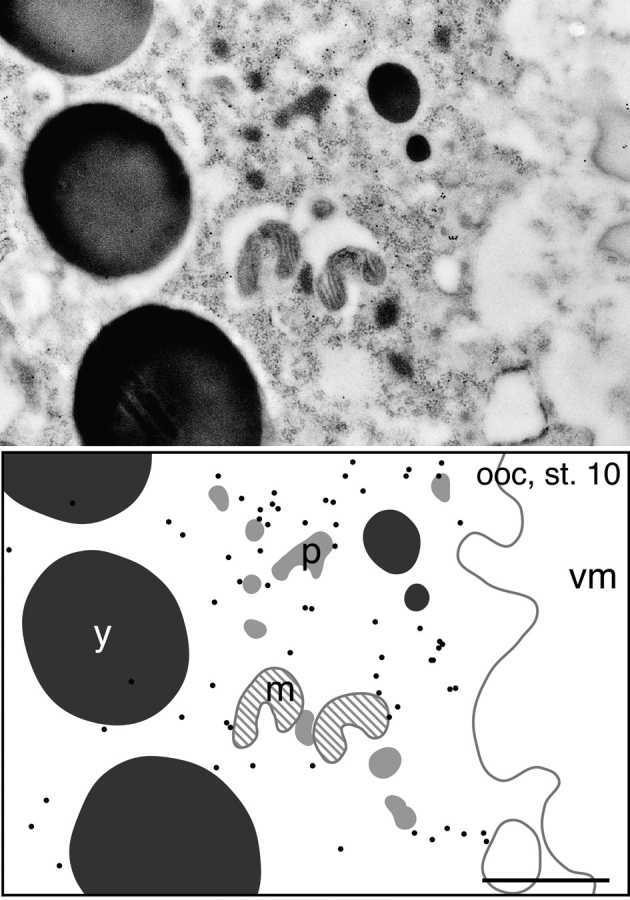
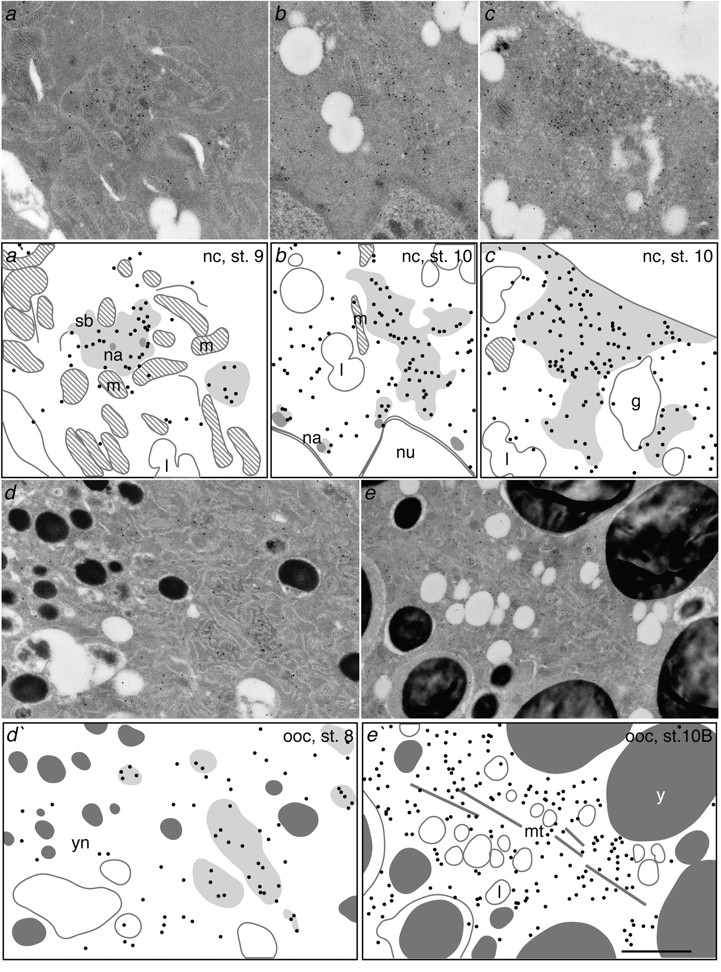
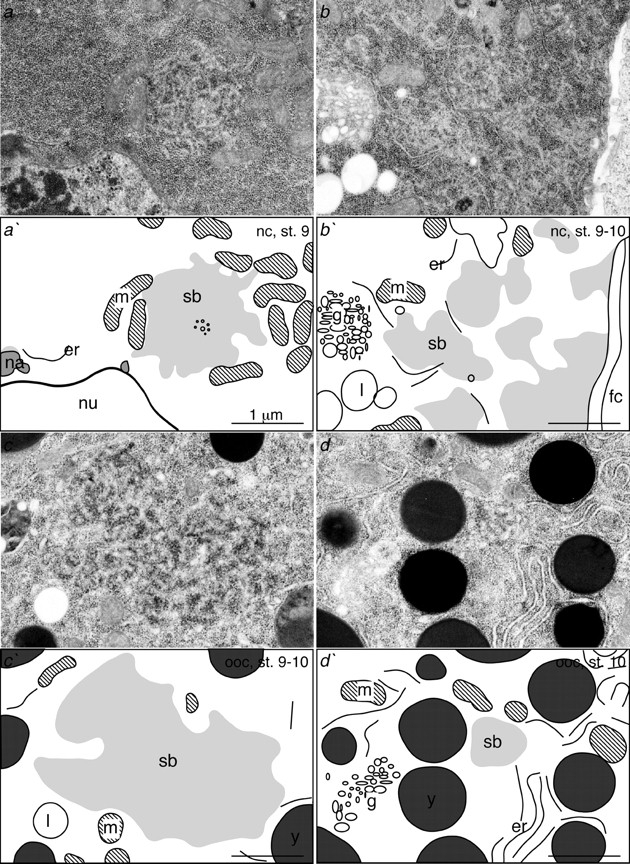
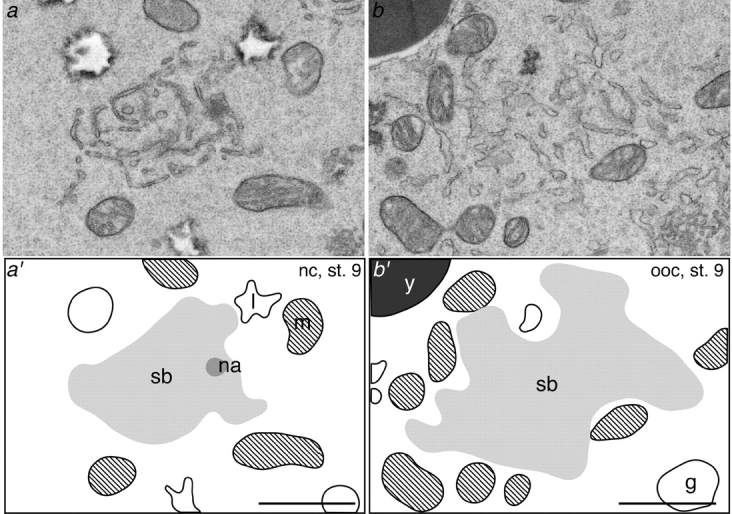
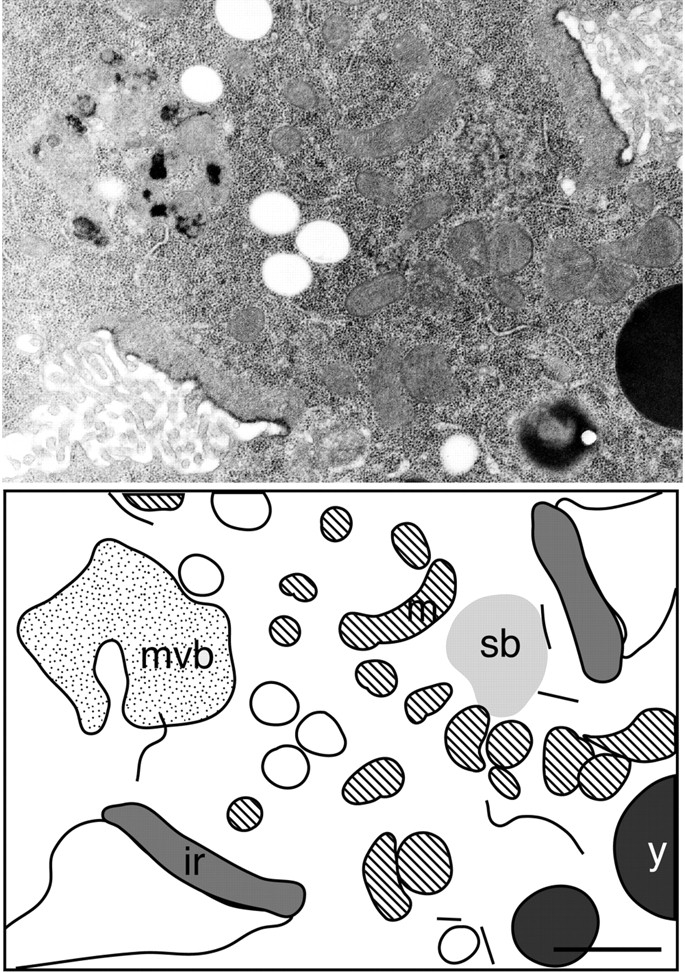
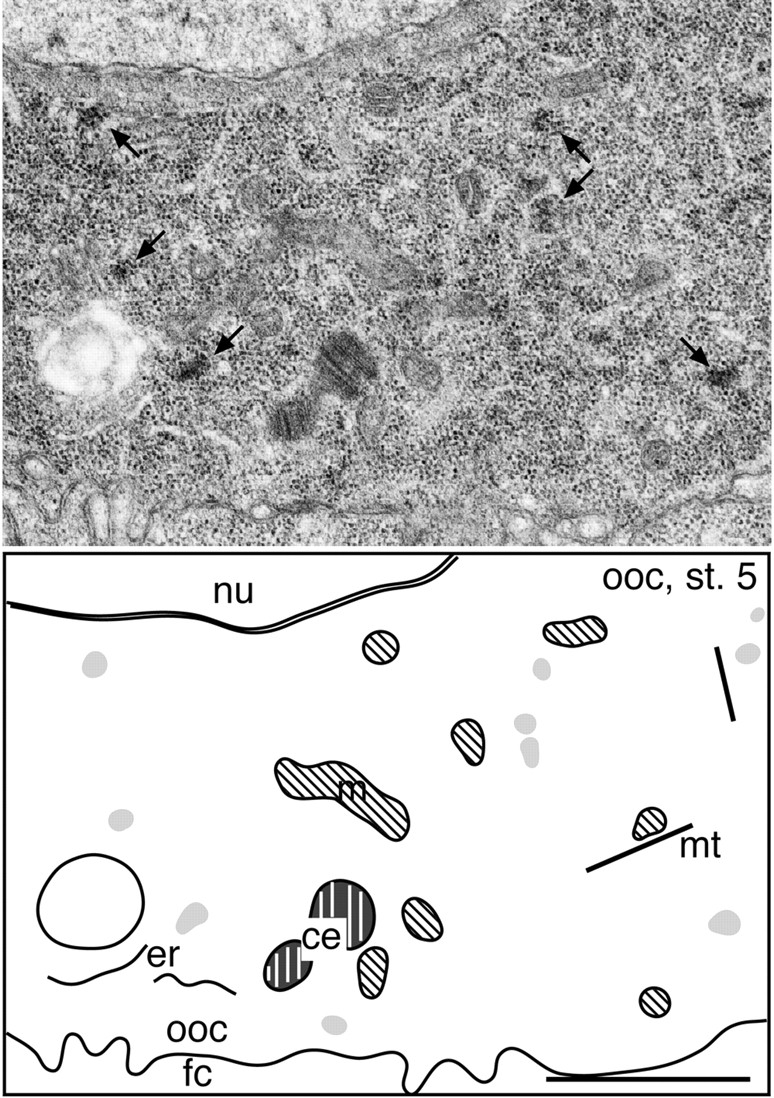
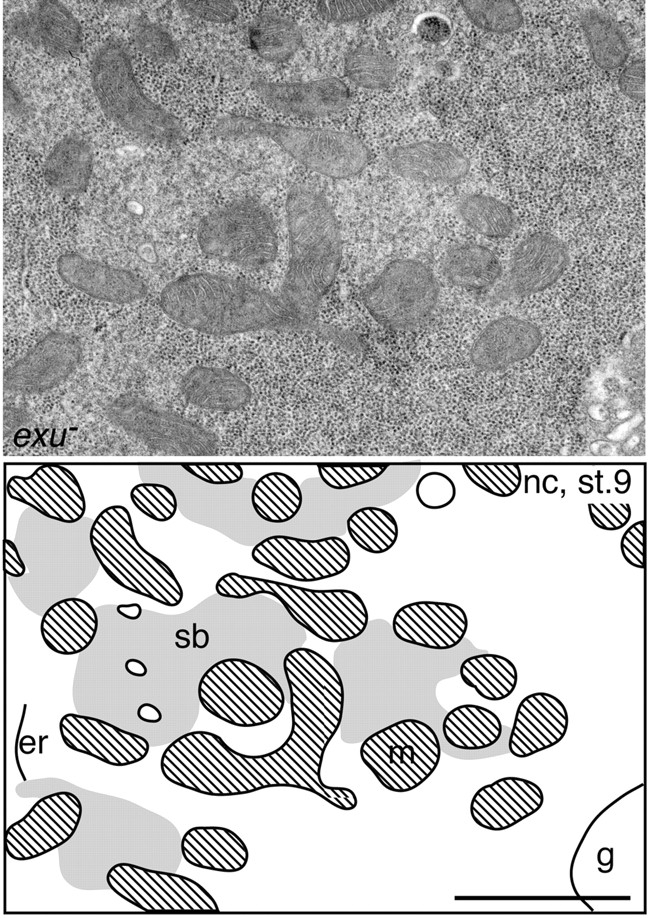
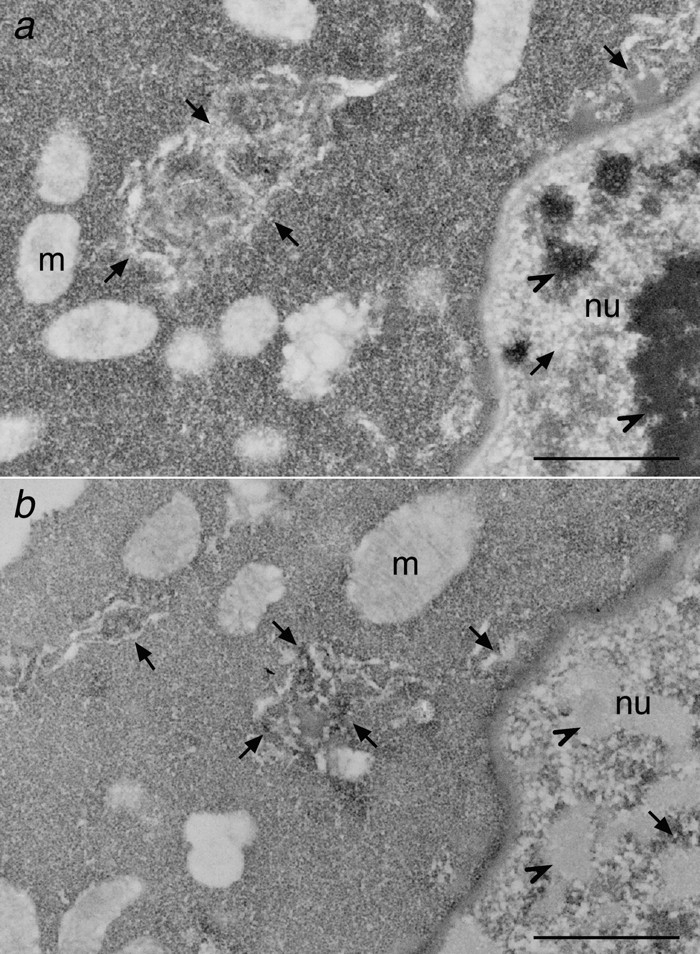
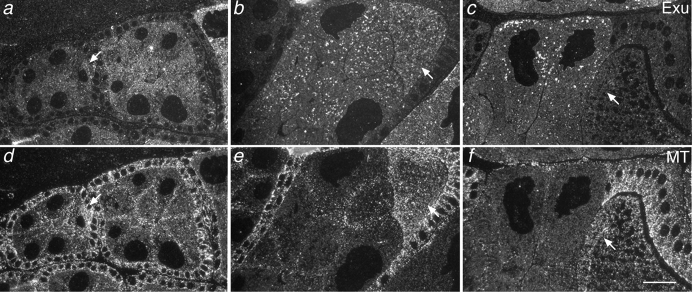
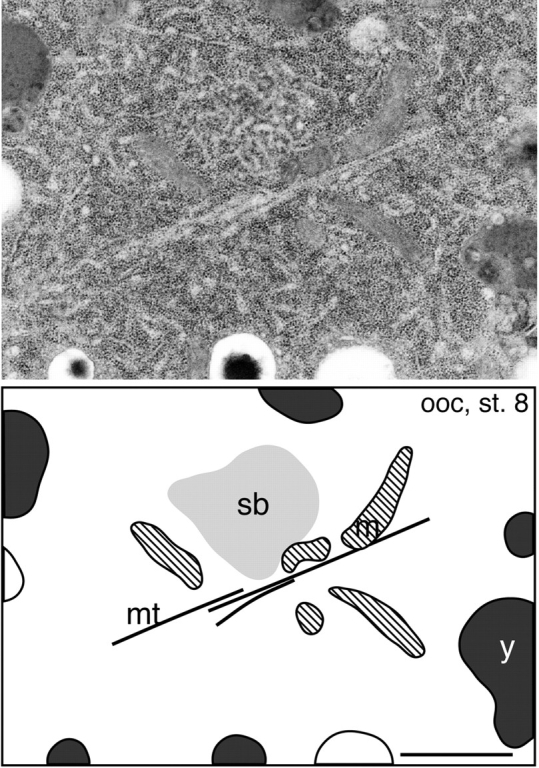
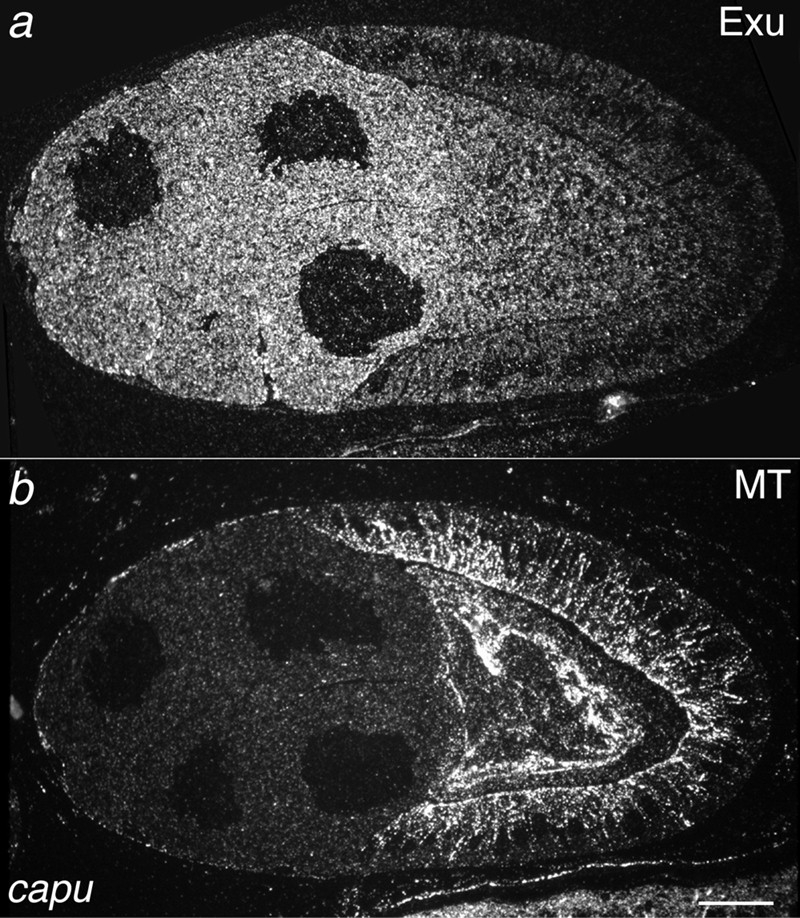
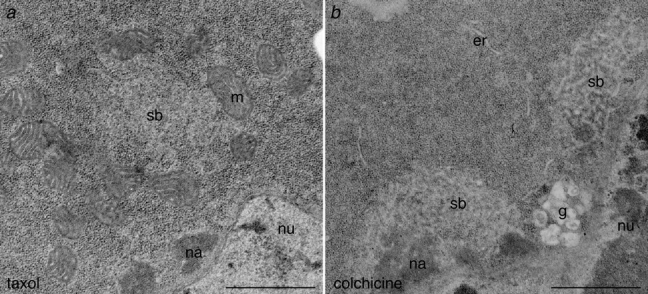
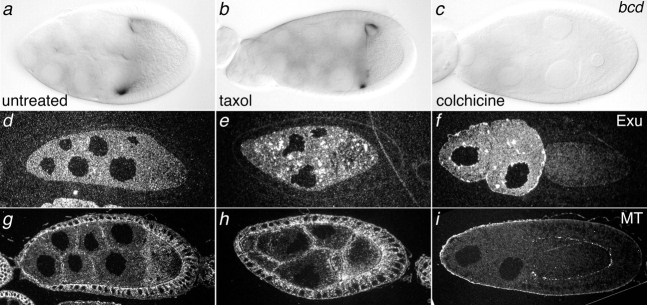
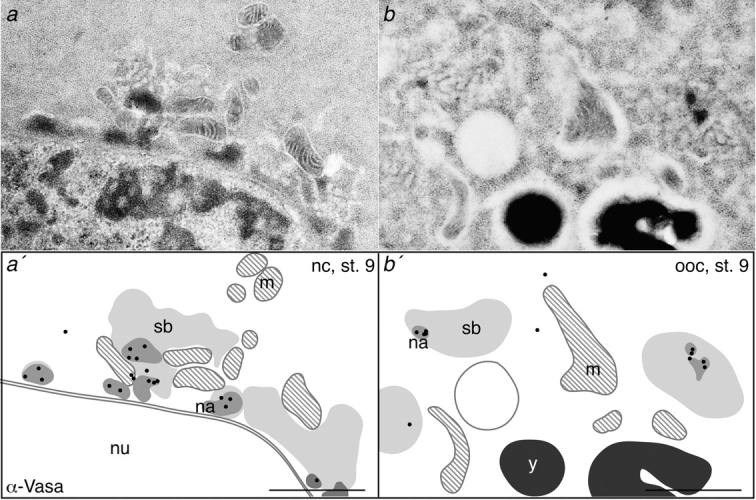
Localization of maternally provided RNAs during oogenesis is required for formation of the antero-posterior axis of the Drosophila embryo. Here we describe a subcellular structure in nurse cells and oocytes which may function as an intracellular compartment for assembly and transport of maternal products involved in RNA localization. This structure, which we have termed "sponge body," consists of ER-like cisternae, embedded in an amorphous electron-dense mass. It lacks a surrounding membrane and is frequently associated with mitochondria. The sponge bodies are not identical to the Golgi complexes. We suggest that the sponge bodies are homologous to the mitochondrial cloud in Xenopus oocytes, a granulo-fibrillar structure that contains RNAs involved in patterning of the embryo. Exuperantia protein, the earliest factor known to be required for the localization of bicoid mRNA to the anterior pole of the Drosophila oocyte, is highly enriched in the sponge bodies but not an essential structural component of these. RNA staining indicates that sponge bodies contain RNA. However, neither the intensity of this staining nor the accumulation of Exuperantia in the sponge bodies is dependent on the amount of bicoid mRNA present in the ovaries. Sponge bodies surround nuage, a possible polar granule precursor. Microtubules and microfilaments are not present in sponge bodies, although transport of the sponge bodies through the cells is implied by their presence in cytoplasmic bridges. We propose that the sponge bodies are structures that, by assembly and transport of included molecules or associated structures, are involved in localization of mRNAs in Drosophila oocytes.
卵子发生过程中母源提供的RNA的定位对于果蝇胚胎前后轴的形成是必需的。在此,我们描述了一种在滋养细胞和卵母细胞中的亚细胞结构,它可能作为一个细胞内区室,用于组装和运输参与RNA定位的母源产物。这种结构,我们称之为“海绵体”,由类似内质网的池组成,嵌入无定形的电子致密物质中。它没有周围的膜,并且经常与线粒体相关联。海绵体与高尔基体并不相同。我们认为海绵体与非洲爪蟾卵母细胞中的线粒体云同源,线粒体云是一种颗粒纤维状结构,含有参与胚胎模式形成的RNA。Exuperantia蛋白是已知最早将bicoid mRNA定位到果蝇卵母细胞前极所必需的因子,它在海绵体中高度富集,但不是这些结构的必需组成部分。RNA染色表明海绵体含有RNA。然而,这种染色的强度以及Exuperantia在海绵体中的积累都不依赖于卵巢中bicoid mRNA的含量。海绵体围绕着云状小体,云状小体可能是极性颗粒的前体。海绵体中不存在微管和微丝,尽管它们在细胞质桥中的存在暗示了海绵体在细胞间的运输。我们提出海绵体是这样一种结构,通过组装和运输所含分子或相关结构,参与果蝇卵母细胞中mRNA的定位。