Gronert K, Gewirtz A, Madara J L, Serhan C N
Center for Experimental Therapeutics and Reperfusion Injury, Department of Anesthesia, Brigham and Women's Hospital and Harvard Medical School, Boston, Massachusetts 02115, USA.
J Exp Med. 1998 Apr 20;187(8):1285-94. doi: 10.1084/jem.187.8.1285.
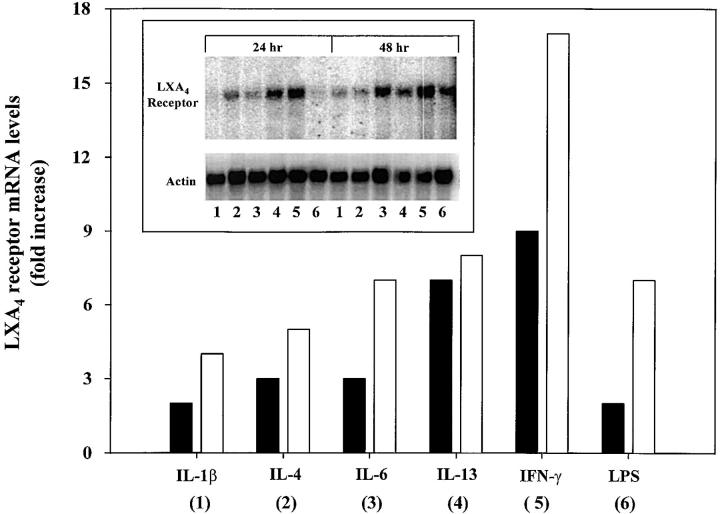
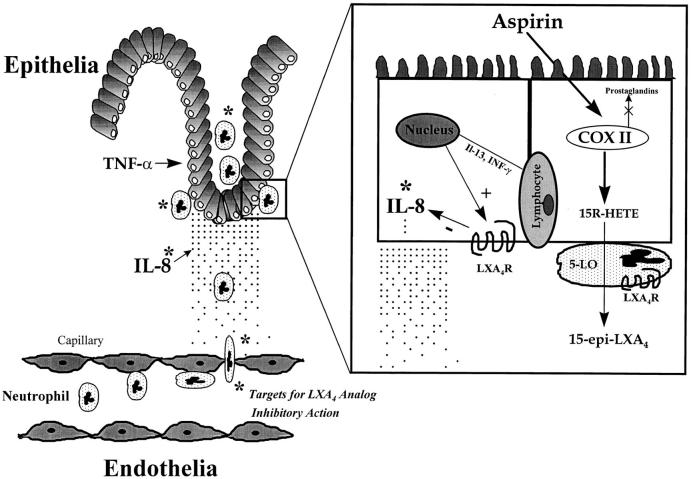
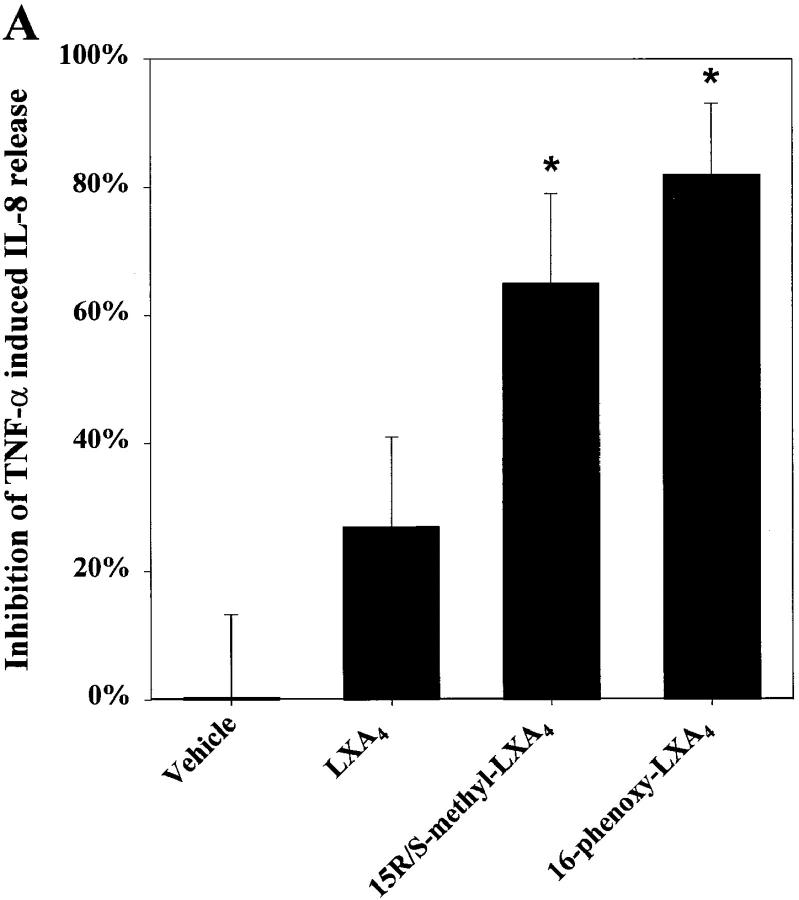
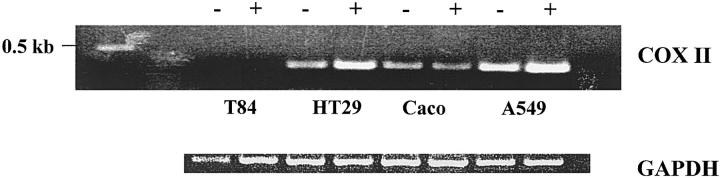
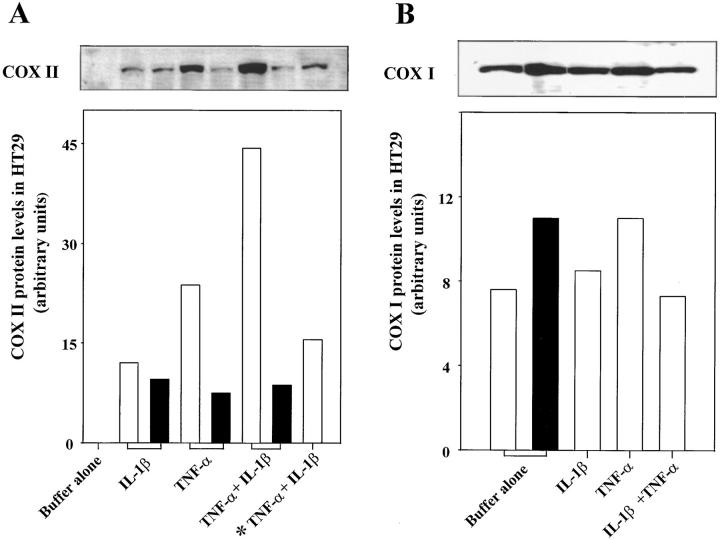
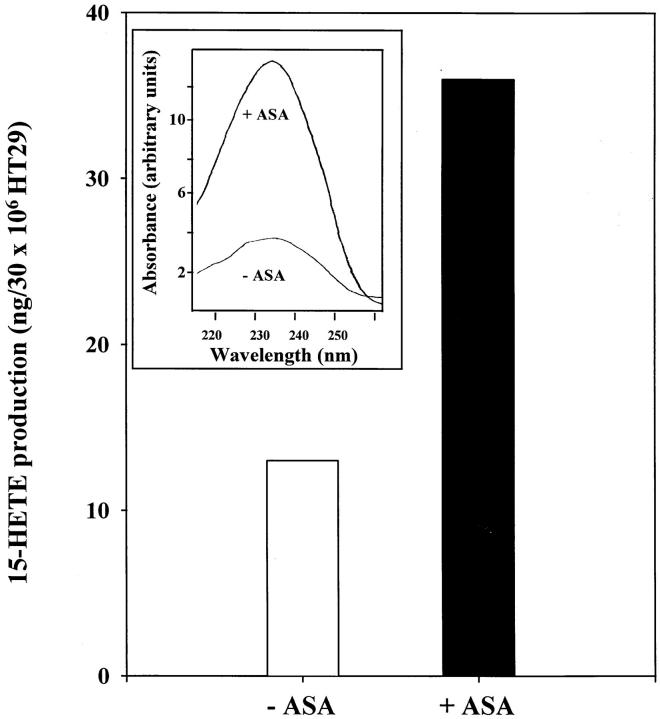
Epithelial cells of the alimentary tract play a central role in mucosal immunophysiology. Pathogens and/or agonists that interact with mucosal surfaces often elicit epithelial responses that upregulate inflammation. Therefore, it was of interest to explore potential epithelial targeted antiinflammatory signals. Here we identified and sequenced a human enterocyte lipoxin (LX) A4 [5(S), 6(R),15(S)-trihydroxy-7,9,13-trans-11-cis eicosatetraenoic acid] receptor, and demonstrate that transcription of this receptor was controlled by cytokines, of which lymphocyte-derived interleukin (IL)-13 and interferon gamma were the most potent. When lipoxins and LXA4 stable analogs were evaluated for enterocyte functional as well as immune responses, lipoxins sharply inhibited TNF-alpha-induced IL-8 release but did not alter either barrier function or agonist-stimulated chloride secretion. 15R/S-methyl-LXA4 and 16-phenoxy-LXA4 each attenuated (IC50 approximately 10 nM) IL-8 release. Cyclooxygenase (COX) II is emerging as an important component in wound healing and proliferation in intestinal epithelia and when acetylated by acetylsalicylic acid (aspirin) initiates the biosynthesis of a LXA4 receptor ligand. We therefore determined whether colonic cell lines (HT-29 Cl.19A, Caco-2, or T84) express the COX II isozyme. Results for RT-PCR and Western blot analysis showed that COX I as well as an IL-1beta- and TNF-alpha-inducible COX II are expressed in HT-29 Cl.19A. In addition, aspirin-treated enterocytes generated 15R-HETE, a precursor of 15-epi-LXA4 biosynthesis, whose potent bioactions were mimicked by the stable analog 15R/S-methyl-LXA4. Taken together, these results identify an endogenous pathway for downregulating mucosal inflammatory events and suggest a potential therapeutic benefit for LXA4 stable analogs.
消化道上皮细胞在黏膜免疫生理学中发挥着核心作用。与黏膜表面相互作用的病原体和/或激动剂通常会引发上皮反应,从而上调炎症反应。因此,探索潜在的上皮靶向抗炎信号具有重要意义。在此,我们鉴定并测序了一种人肠细胞脂氧素(LX)A4 [5(S), 6(R),15(S)-三羟基-7,9,13-反式-11-顺式二十碳四烯酸] 受体,并证明该受体的转录受细胞因子控制,其中淋巴细胞衍生的白细胞介素(IL)-13和干扰素γ最为有效。当评估脂氧素和LXA4稳定类似物对肠细胞功能以及免疫反应的影响时,脂氧素能显著抑制肿瘤坏死因子-α(TNF-α)诱导的IL-8释放,但不改变屏障功能或激动剂刺激的氯离子分泌。15R/S-甲基-LXA4和16-苯氧基-LXA4均可减弱(IC50约为10 nM)IL-8释放。环氧合酶(COX)II正逐渐成为肠道上皮伤口愈合和增殖的重要组成部分,当被乙酰水杨酸(阿司匹林)乙酰化时,会启动LXA4受体配体的生物合成。因此,我们确定结肠细胞系(HT-29 Cl.19A、Caco-2或T84)是否表达COX II同工酶。逆转录聚合酶链反应(RT-PCR)和蛋白质免疫印迹分析结果显示,HT-29 Cl.19A中表达COX I以及IL-1β和TNF-α诱导型COX II。此外,经阿司匹林处理的肠细胞可生成15R-羟基二十碳四烯酸(15R-HETE),它是15-表-LXA4生物合成的前体,其强大的生物活性可被稳定类似物15R/S-甲基-LXA4模拟。综上所述,这些结果确定了一种下调黏膜炎症事件的内源性途径,并提示LXA4稳定类似物具有潜在的治疗益处。