Smith E A, Fuchs E
Howard Hughes Medical Institute, The University of Chicago, Chicago, Illinois 60637, USA.
J Cell Biol. 1998 Jun 1;141(5):1229-41. doi: 10.1083/jcb.141.5.1229.
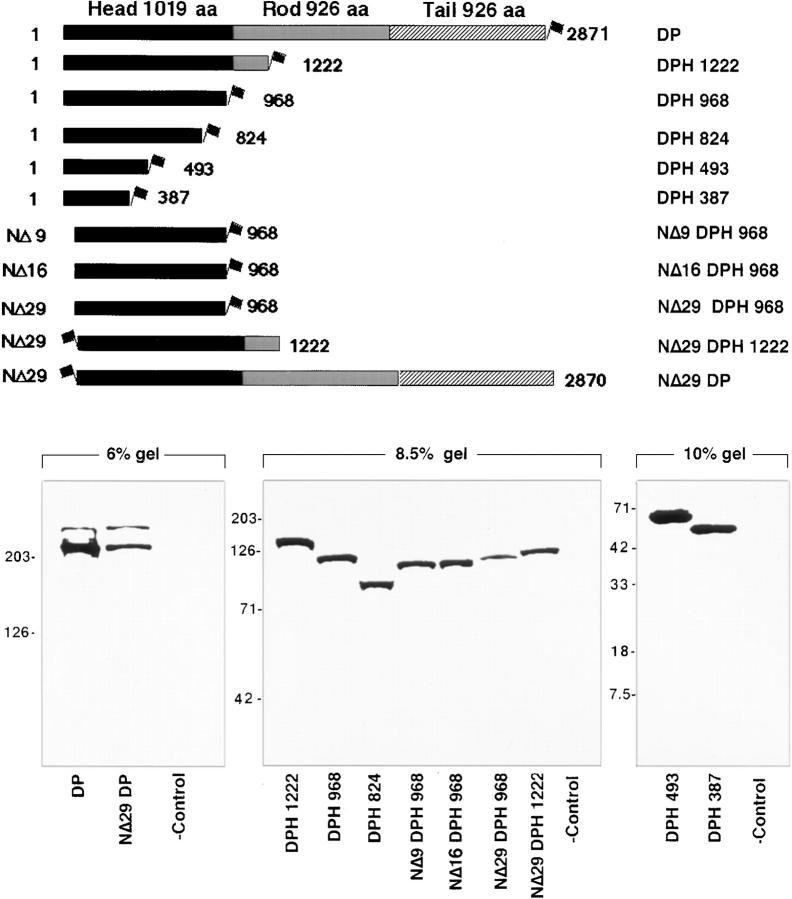
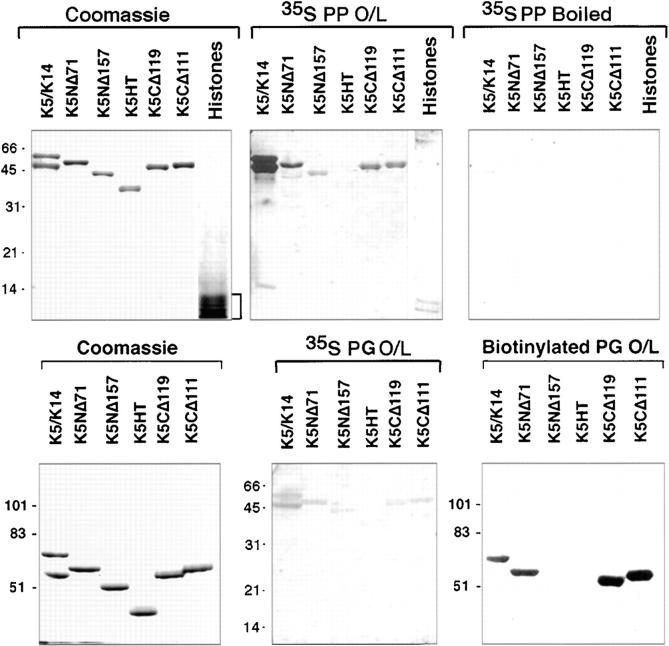
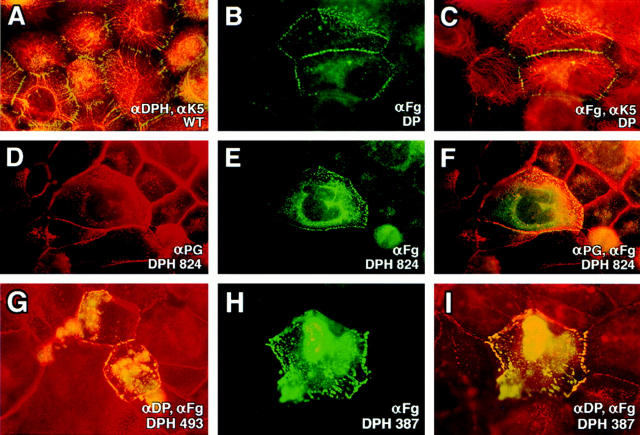
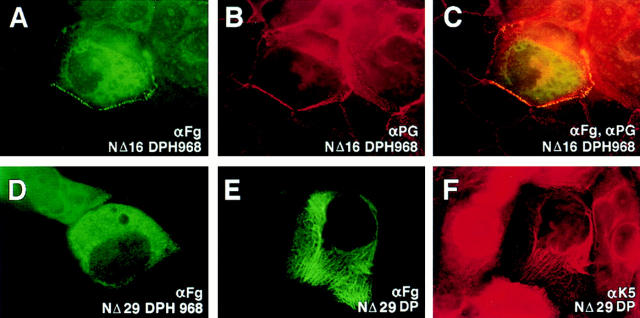
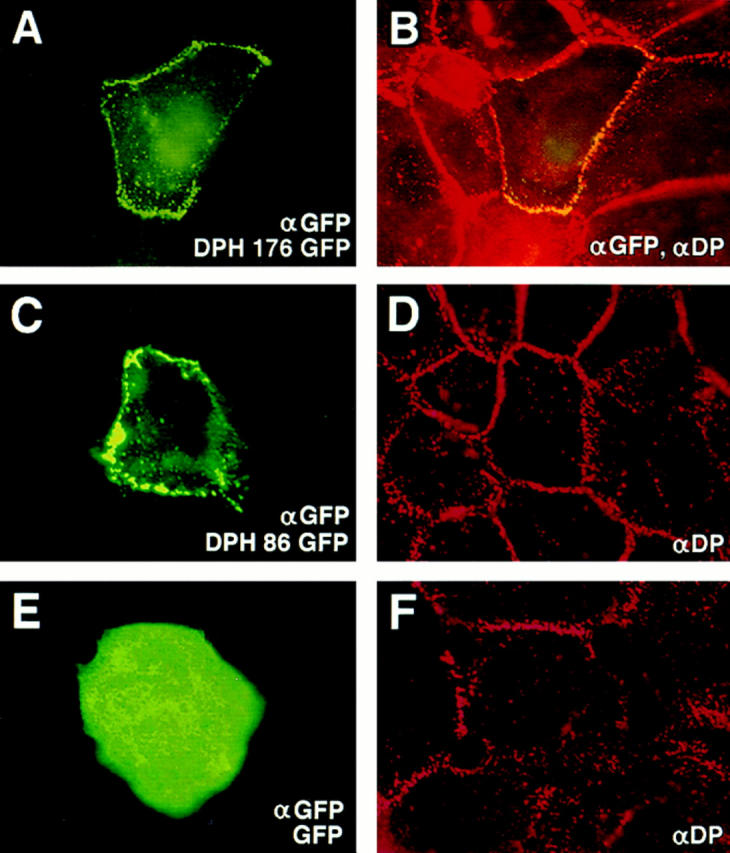
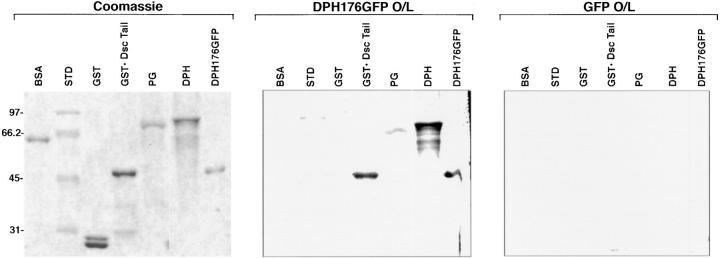
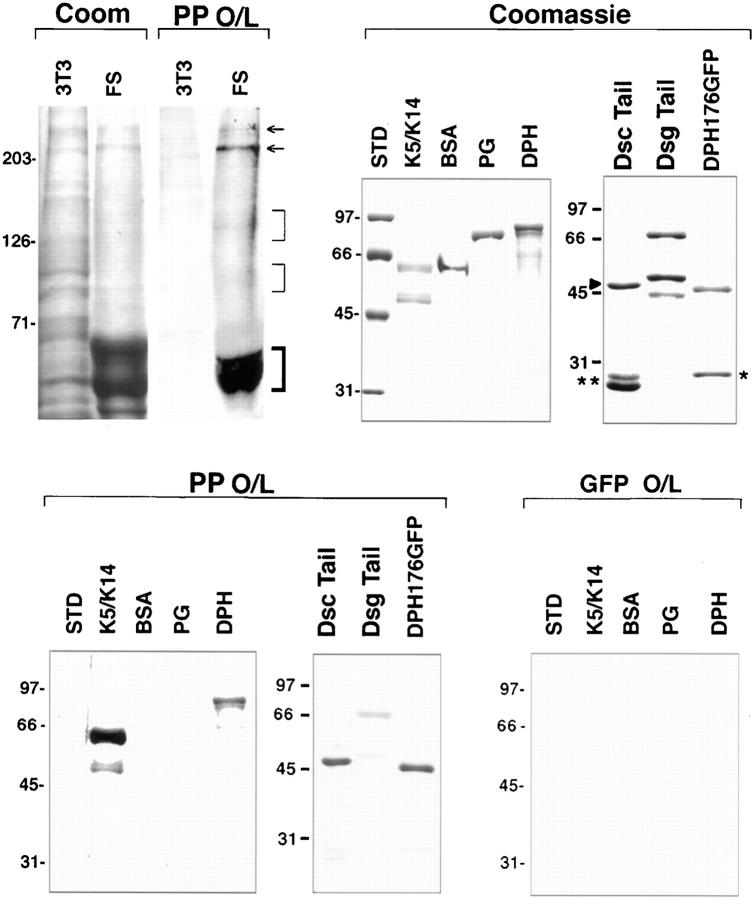
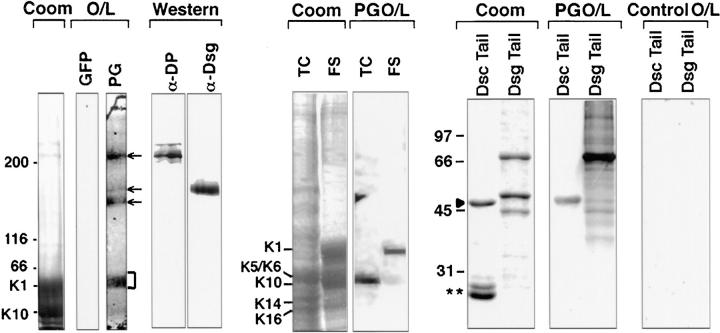
Desmoplakin (DP), plakoglobin (PG), and plakophilin 1 (PP1) are desmosomal components lacking a transmembrane domain, thus making them candidate linker proteins for connecting intermediate filaments and desmosomes. Using deletion and site-directed mutagenesis, we show that remarkably, removal of approximately 1% of DP's sequence obliterates its ability to associate with desmosomes. Conversely, when linked to a foreign protein, as few as 86 NH2-terminal DP residues are sufficient to target to desmosomes efficiently. In in vitro overlay assays, the DP head specifically associates with itself and with desmocollin 1a (Dsc1a). In similar overlay assays, PP1 binds to DP and Dsc1a, and to a lesser extent, desmoglein 1 (Dsg1), while PG binds to Dsg1 and more weakly to Dsc1a and DP. Interestingly, like DP, PG and PP1 associate with epidermal keratins, although PG is considerably weaker in its ability to do so. As judged by overlay assays, the amino terminal head domain of type II keratins appears to have a special importance in establishing these connections. Taken together, our findings provide new insights into the complexities of the links between desmosomes and intermediate filaments (IFs). Our results suggest a model whereby at desmosome sites within dividing epidermal cells, DP and PG anchor to desmosomal cadherins and to each other, forming an ordered array of nontransmembrane proteins that then bind to keratin IFs. As epidermal cells differentiate, PP1 is added as a molecular reinforcement to the plaque, enhancing anchorage to IFs and accounting at least partially for the increase in numbers and stability of desmosomes in suprabasal cells.
桥粒斑蛋白(DP)、桥粒芯蛋白(PG)和桥粒斑菲素蛋白1(PP1)是缺乏跨膜结构域的桥粒成分,因此它们是连接中间丝和桥粒的候选连接蛋白。通过缺失和定点诱变,我们发现,显著的是,去除DP约1%的序列就会消除其与桥粒结合的能力。相反,当与一种外源蛋白相连时,仅86个NH2端的DP残基就足以有效地靶向桥粒。在体外覆盖分析中,DP头部特异性地与自身以及桥粒芯胶蛋白1a(Dsc1a)结合。在类似的覆盖分析中,PP1与DP和Dsc1a结合,与桥粒芯糖蛋白1(Dsg1)的结合程度较低,而PG与Dsg1结合,与Dsc1a和DP的结合较弱。有趣的是,与DP一样,PG和PP1也与表皮角蛋白结合,尽管PG在这方面的能力相当弱。通过覆盖分析判断,II型角蛋白的氨基末端头部结构域在建立这些连接中似乎具有特殊重要性。综上所述,我们的研究结果为桥粒与中间丝(IFs)之间连接的复杂性提供了新的见解。我们的结果提出了一个模型,即在分裂的表皮细胞内的桥粒部位,DP和PG锚定在桥粒钙黏蛋白上并相互锚定,形成一个有序的非跨膜蛋白阵列,然后与角蛋白IFs结合。随着表皮细胞分化,PP1作为一种分子增强物被添加到斑块中,增强了对IFs的锚定,并至少部分解释了基底上层细胞中桥粒数量的增加和稳定性。