Sparer T E, Matthews S, Hussell T, Rae A J, Garcia-Barreno B, Melero J A, Openshaw P J
Imperial College School of Medicine, National Heart and Lung Institute at St. Mary's, London, W2 1PG United Kingdom.
J Exp Med. 1998 Jun 1;187(11):1921-6. doi: 10.1084/jem.187.11.1921.
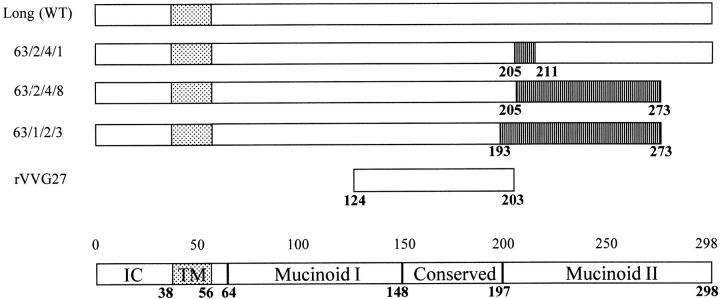
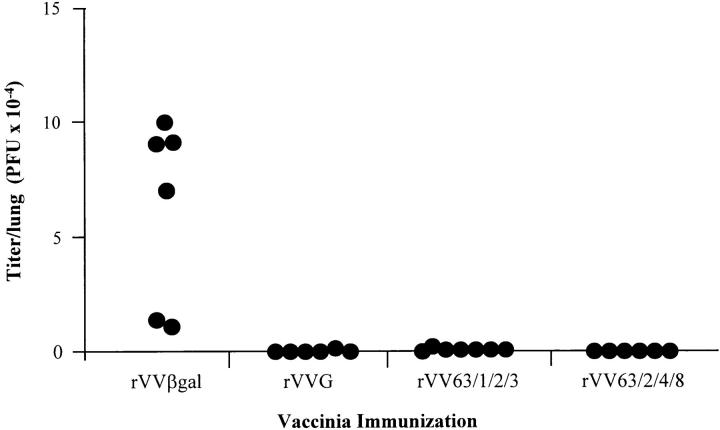
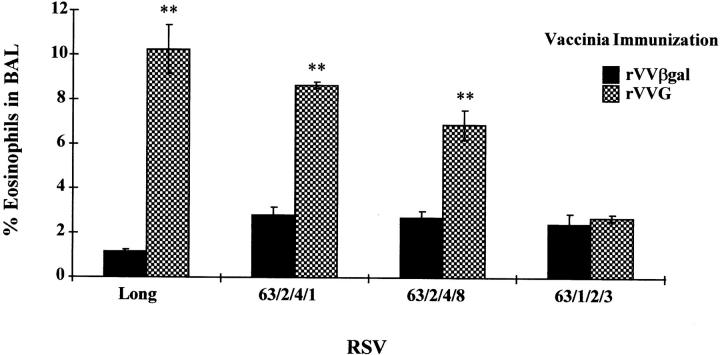
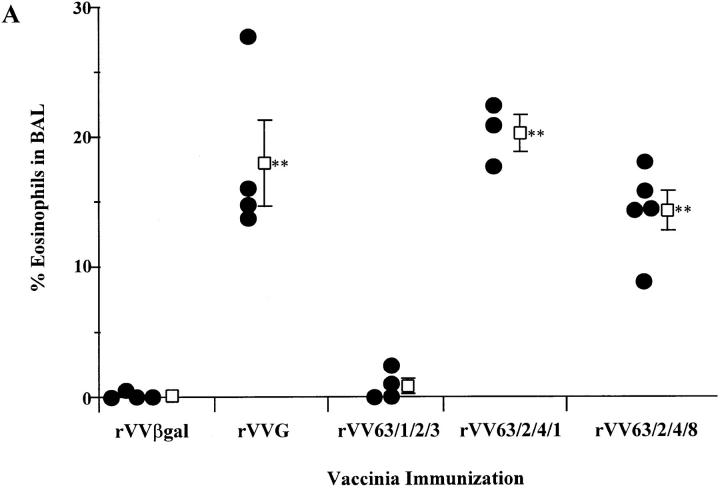
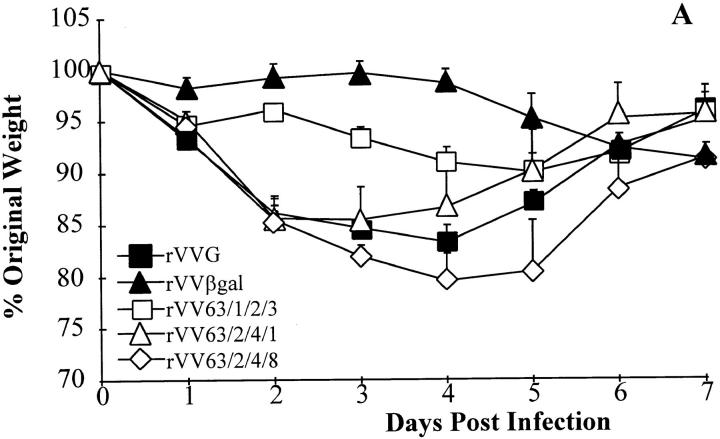
In a murine model of respiratory syncytial virus disease, prior sensitization to the attachment glycoprotein (G) leads to pulmonary eosinophilia and enhanced illness. Three different approaches were taken to dissect the region of G responsible for enhanced disease and protection against challenge. First, mutant viruses, containing frameshifts that altered the COOH terminus of the G protein, were used to challenge mice sensitized by scarification with recombinant vaccinia virus (rVV) expressing wild-type G. Second, cDNA expressing these mutated G proteins were expressed by rVV and used to vaccinate mice before challenge with wild-type respiratory syncytial virus (RSV). These studies identified residues 193-205 to be responsible for G-induced weight loss and lung eosinophilia and showed that this region was not was not necessary for induction of protective immunity. Third, mice were sensitized using an rVV that expressed only amino acids 124-203 of the G protein. Upon RSV challenge, mice sensitized with this rVV developed enhanced weight loss and eosinophilia. This is the first time that a region within RSV (amino acids 193-203) has been shown to be responsible for induction of lung eosinophilia and disease enhancement. Moreover, we now show that it is possible to induce protective immunity with an altered G protein without inducing a pathological response.
在呼吸道合胞病毒疾病的小鼠模型中,预先对附着糖蛋白(G)致敏会导致肺部嗜酸性粒细胞增多和病情加重。采用了三种不同方法来剖析G蛋白中与病情加重及抵御攻击相关的区域。首先,利用含有移码突变从而改变G蛋白COOH末端的突变病毒,对通过划痕接种表达野生型G的重组痘苗病毒(rVV)而致敏的小鼠进行攻击。其次,由rVV表达这些突变G蛋白的cDNA,并在野生型呼吸道合胞病毒(RSV)攻击前用于给小鼠接种疫苗。这些研究确定第193 - 205位氨基酸残基是导致G诱导体重减轻和肺部嗜酸性粒细胞增多的原因,并且表明该区域对于诱导保护性免疫并非必需。第三,使用仅表达G蛋白第124 - 203位氨基酸的rVV使小鼠致敏。经RSV攻击后,用这种rVV致敏的小鼠体重减轻加剧且嗜酸性粒细胞增多。这是首次表明呼吸道合胞病毒内的一个区域(第193 - 203位氨基酸)与肺部嗜酸性粒细胞增多及病情加重有关。此外,我们现在表明,用改变后的G蛋白诱导保护性免疫而不引发病理反应是可能的。