Tan S, Sagara Y, Liu Y, Maher P, Schubert D
Cellular Neurobiology Laboratory, The Salk Institute for Biological Studies, La Jolla, California 92037, USA.
J Cell Biol. 1998 Jun 15;141(6):1423-32. doi: 10.1083/jcb.141.6.1423.
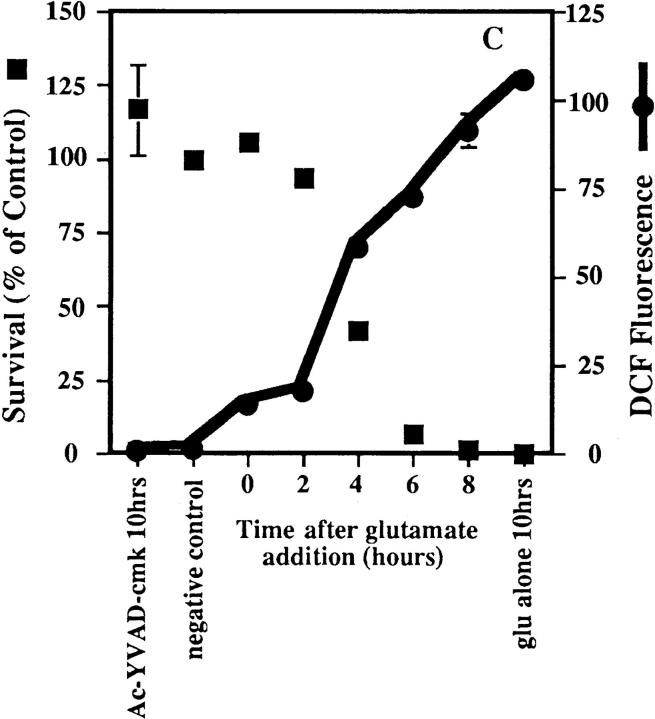
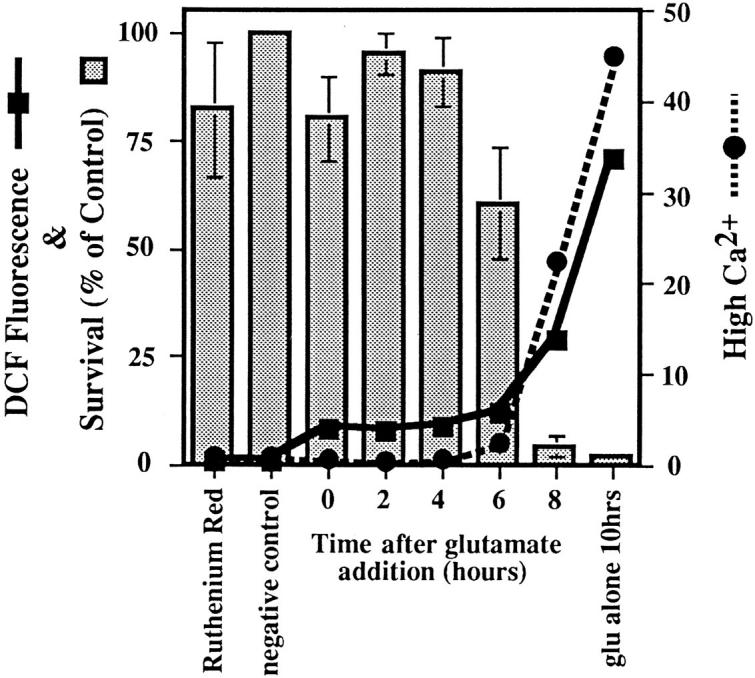
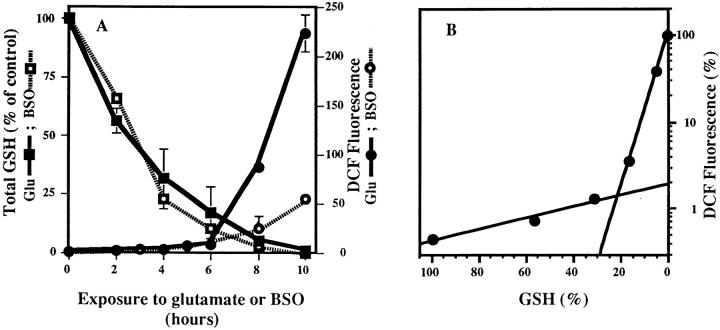
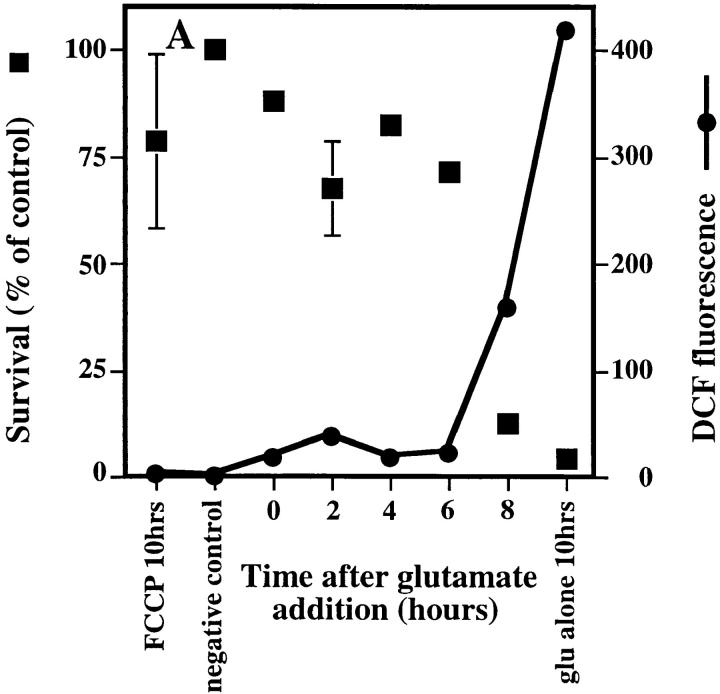
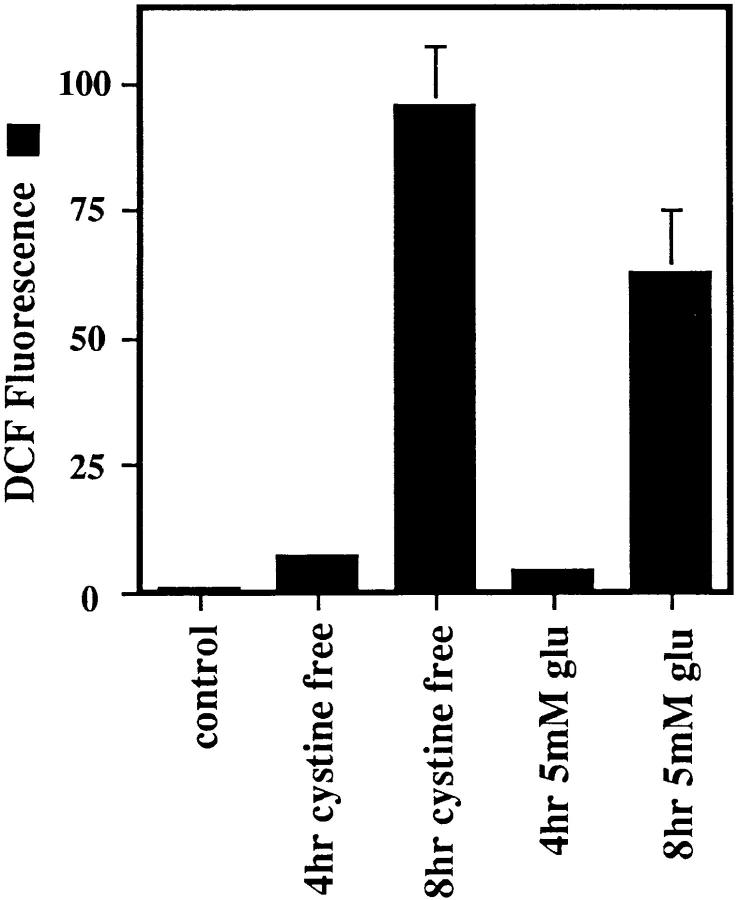
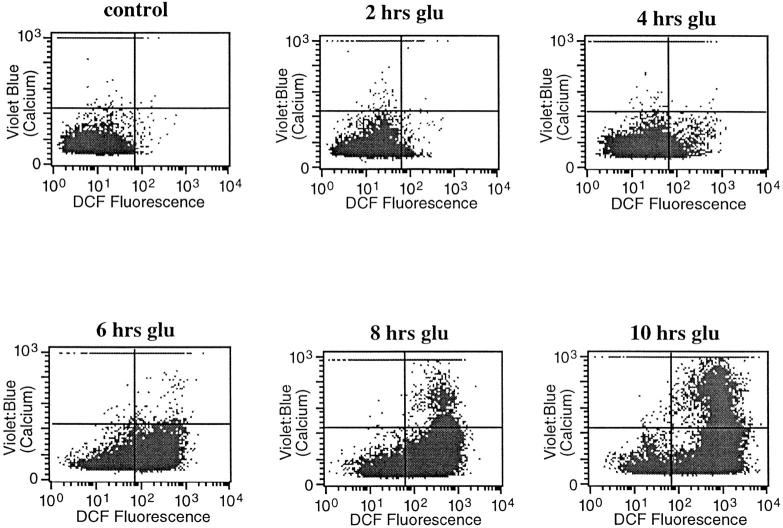
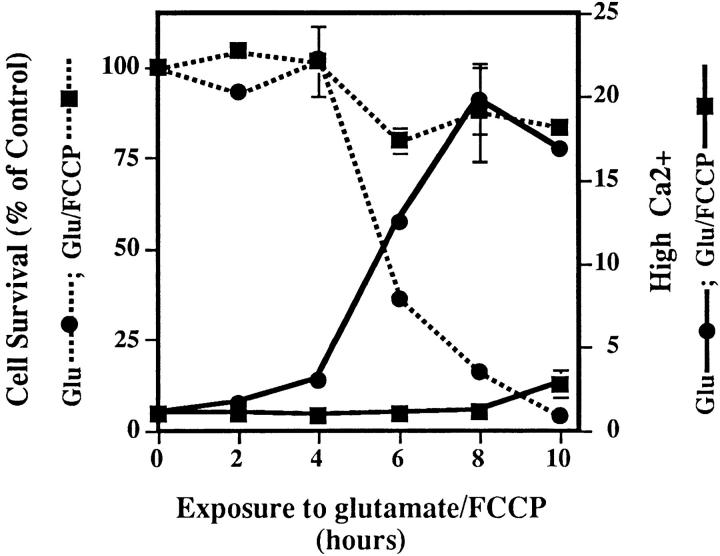
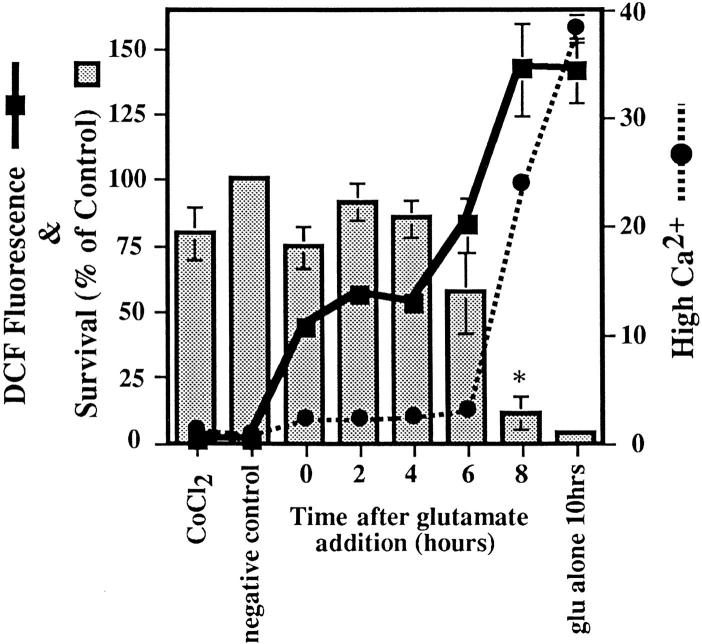
Reactive oxygen species (ROS) are thought to be involved in many forms of programmed cell death. The role of ROS in cell death caused by oxidative glutamate toxicity was studied in an immortalized mouse hippocampal cell line (HT22). The causal relationship between ROS production and glutathione (GSH) levels, gene expression, caspase activity, and cytosolic Ca2+ concentration was examined. An initial 5-10-fold increase in ROS after glutamate addition is temporally correlated with GSH depletion. This early increase is followed by an explosive burst of ROS production to 200-400-fold above control values. The source of this burst is the mitochondrial electron transport chain, while only 5-10% of the maximum ROS production is caused by GSH depletion. Macromolecular synthesis inhibitors as well as Ac-YVAD-cmk, an interleukin 1beta-converting enzyme protease inhibitor, block the late burst of ROS production and protect HT22 cells from glutamate toxicity when added early in the death program. Inhibition of intracellular Ca2+ cycling and the influx of extracellular Ca2+ also blocks maximum ROS production and protects the cells. The conclusion is that GSH depletion is not sufficient to cause the maximal mitochondrial ROS production, and that there is an early requirement for protease activation, changes in gene expression, and a late requirement for Ca2+ mobilization.
活性氧(ROS)被认为与多种形式的程序性细胞死亡有关。在永生化小鼠海马细胞系(HT22)中研究了ROS在氧化型谷氨酸毒性导致的细胞死亡中的作用。检测了ROS产生与谷胱甘肽(GSH)水平、基因表达、半胱天冬酶活性及胞质Ca2+浓度之间的因果关系。添加谷氨酸后ROS最初增加5 - 10倍,这在时间上与GSH消耗相关。这种早期增加之后是ROS产生的爆发式增长,达到对照值的200 - 400倍。这种爆发的来源是线粒体电子传递链,而最大ROS产生量中只有5 - 10%是由GSH消耗引起的。大分子合成抑制剂以及白细胞介素1β转换酶蛋白酶抑制剂Ac - YVAD - cmk,在死亡程序早期添加时,可阻断ROS产生的晚期爆发,并保护HT22细胞免受谷氨酸毒性影响。抑制细胞内Ca2+循环和细胞外Ca2+内流也可阻断最大ROS产生并保护细胞。结论是,GSH消耗不足以导致最大程度的线粒体ROS产生,并且在早期需要蛋白酶激活、基因表达改变,在晚期需要Ca2+动员。