Lennon P F, Taylor C T, Stahl G L, Colgan S P
Center for Experimental Therapeutics and Reperfusion Injury, Department of Anesthesia, Brigham and Women's Hospital, Harvard Medical School, Boston, Massachusetts 02115, USA.
J Exp Med. 1998 Oct 19;188(8):1433-43. doi: 10.1084/jem.188.8.1433.
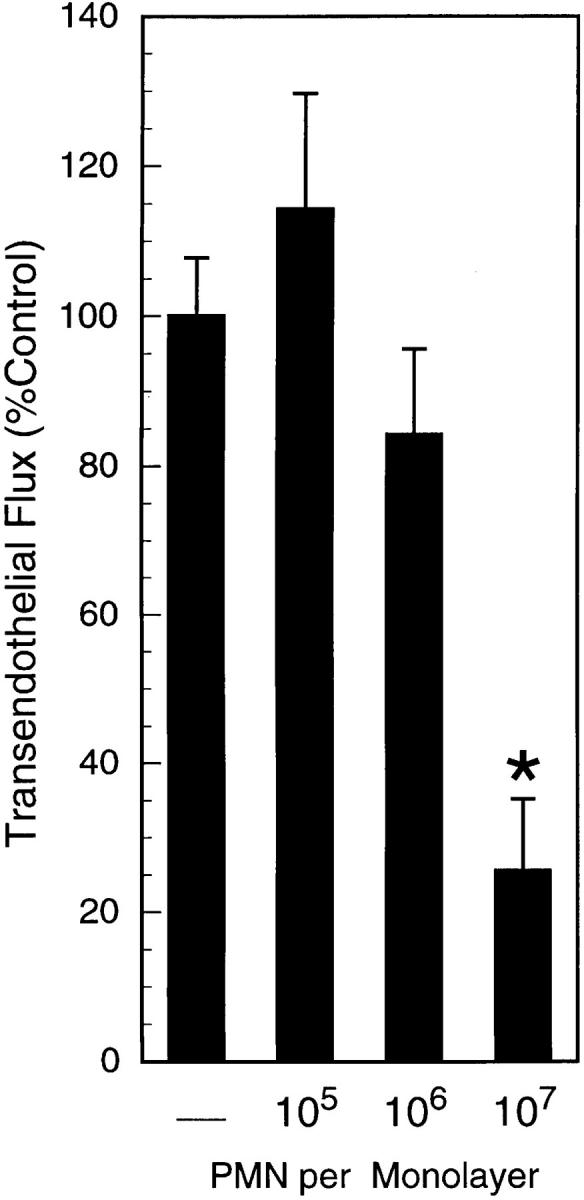
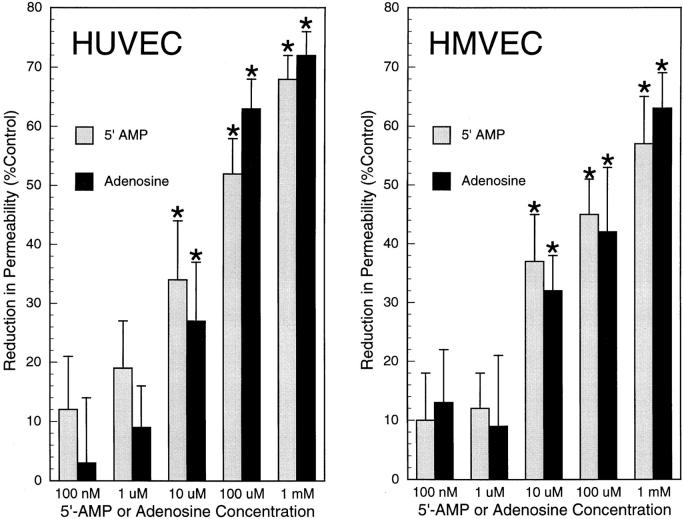
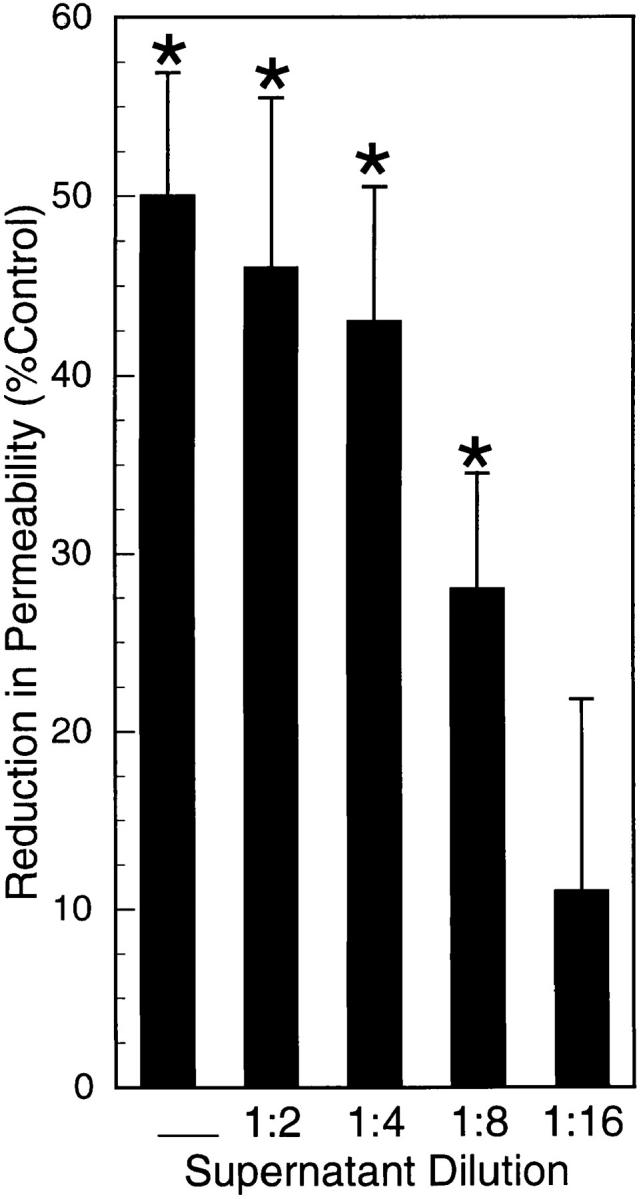
During episodes of inflammation, polymorphonuclear leukocyte (PMN) transendothelial migration has the potential to disturb vascular barrier function and give rise to intravascular fluid extravasation and edema. However, little is known regarding innate mechanisms that dampen fluid loss during PMN-endothelial interactions. Using an in vitro endothelial paracellular permeability model, we observed a PMN-mediated decrease in endothelial paracellular permeability. A similar decrease was elicited by cell-free supernatants from activated PMN (FMLP 10(-6) M), suggesting the presence of a PMN-derived soluble mediator(s). Biophysical and biochemical analysis of PMN supernatants revealed a role for PMN-derived 5'-adenosine monophosphate (AMP) and its metabolite, adenosine, in modulation of endothelial paracellular permeability. Supernatants from activated PMN contained micromolar concentrations of bioactive 5'-AMP and adenosine. Furthermore, exposure of endothelial monolayers to authentic 5'-AMP and adenosine increased endothelial barrier function more than twofold in both human umbilical vein endothelial cells and human microvascular endothelial cells. 5'-AMP bioactivity required endothelial CD73-mediated conversion of 5'-AMP to adenosine via its 5'-ectonucleotidase activity. Decreased endothelial paracellular permeability occurred through adenosine A2B receptor activation and was accompanied by a parallel increase in intracellular cAMP. We conclude that activated PMN release soluble mediators, such as 5'-AMP and adenosine, that promote endothelial barrier function. During inflammation, this pathway may limit potentially deleterious increases in endothelial paracellular permeability and could serve as a basic mechanism of endothelial resealing during PMN transendothelial migration.
在炎症发作期间,多形核白细胞(PMN)的跨内皮迁移有可能破坏血管屏障功能,并导致血管内液体外渗和水肿。然而,关于在PMN与内皮细胞相互作用过程中抑制液体流失的固有机制,我们知之甚少。利用体外内皮细胞旁细胞通透性模型,我们观察到PMN介导的内皮细胞旁细胞通透性降低。来自活化PMN(FMLP 10⁻⁶ M)的无细胞上清液也引发了类似的降低,这表明存在一种PMN衍生的可溶性介质。对PMN上清液的生物物理和生化分析揭示了PMN衍生的5'-单磷酸腺苷(AMP)及其代谢产物腺苷在调节内皮细胞旁细胞通透性中的作用。活化PMN的上清液含有微摩尔浓度的生物活性5'-AMP和腺苷。此外,将内皮细胞单层暴露于纯5'-AMP和腺苷中,在人脐静脉内皮细胞和人微血管内皮细胞中均使内皮屏障功能提高了两倍多。5'-AMP的生物活性需要内皮细胞CD73通过其5'-外核苷酸酶活性将5'-AMP转化为腺苷。内皮细胞旁细胞通透性的降低是通过腺苷A2B受体激活发生的,并伴随着细胞内cAMP的平行增加。我们得出结论,活化的PMN释放可溶性介质,如5'-AMP和腺苷,从而促进内皮屏障功能。在炎症期间,该途径可能限制内皮细胞旁细胞通透性潜在的有害增加,并可作为PMN跨内皮迁移过程中内皮细胞重新封闭的基本机制。