Zhao J H, Reiske H, Guan J L
Cancer Biology Laboratories, Department of Molecular Medicine, College of Veterinary Medicine, Cornell University, Ithaca, New York 14853, USA.
J Cell Biol. 1998 Dec 28;143(7):1997-2008. doi: 10.1083/jcb.143.7.1997.
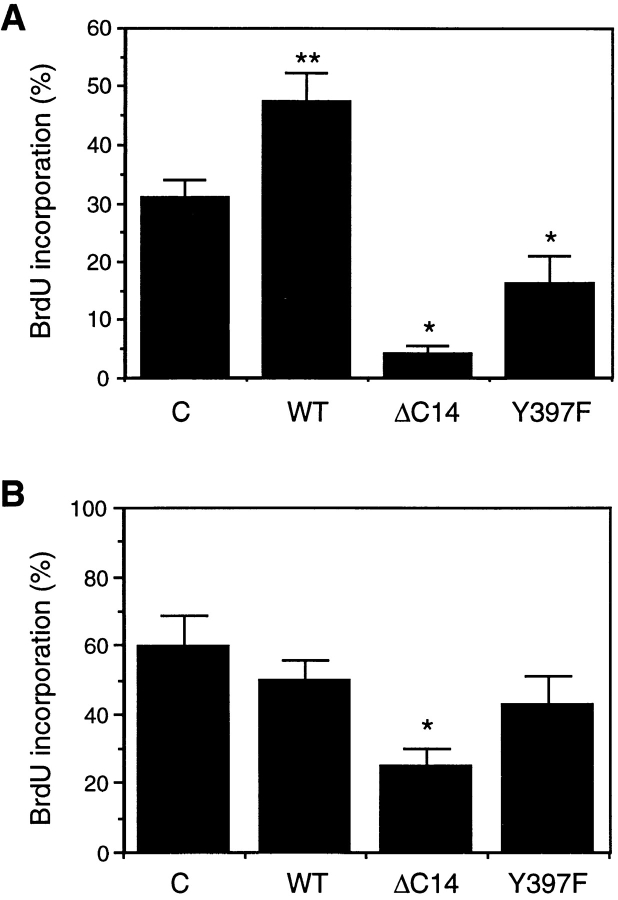
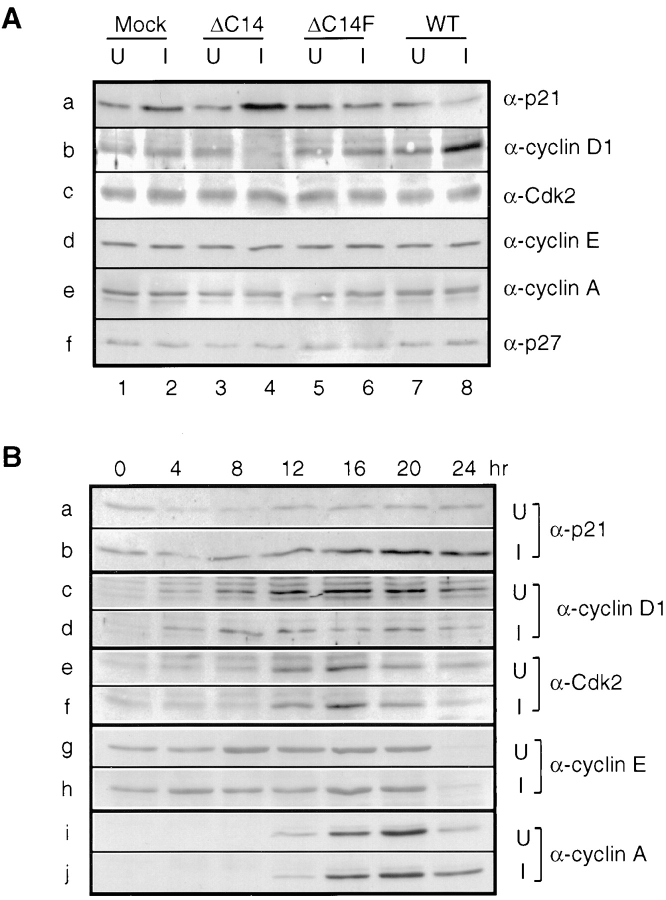
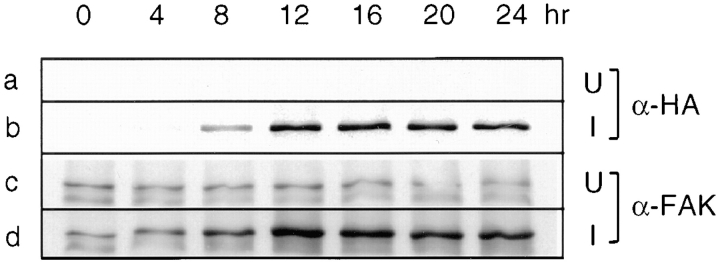
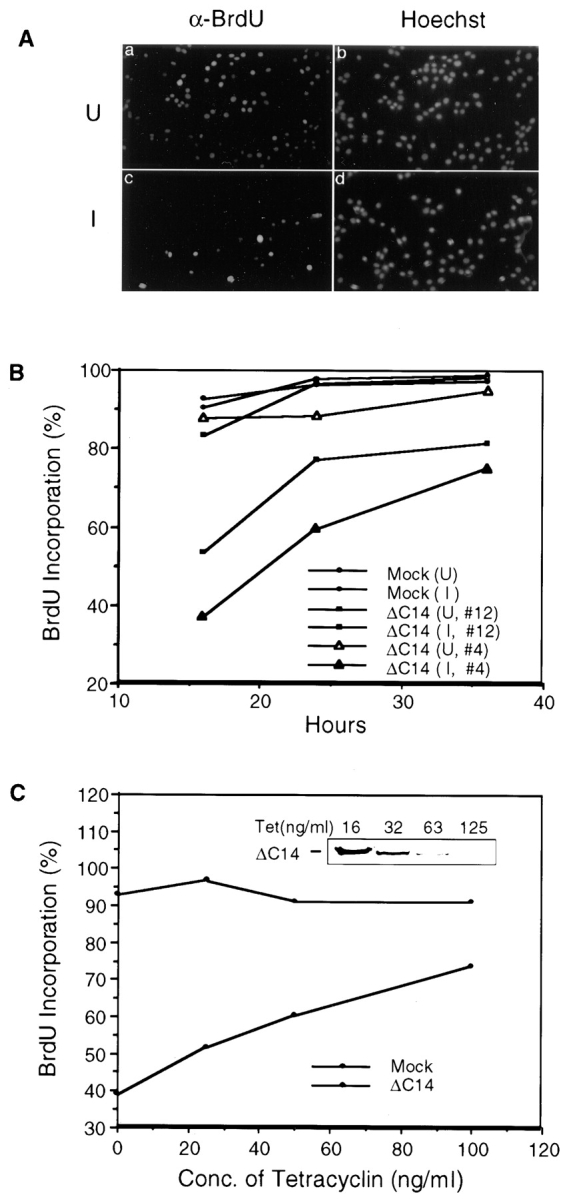
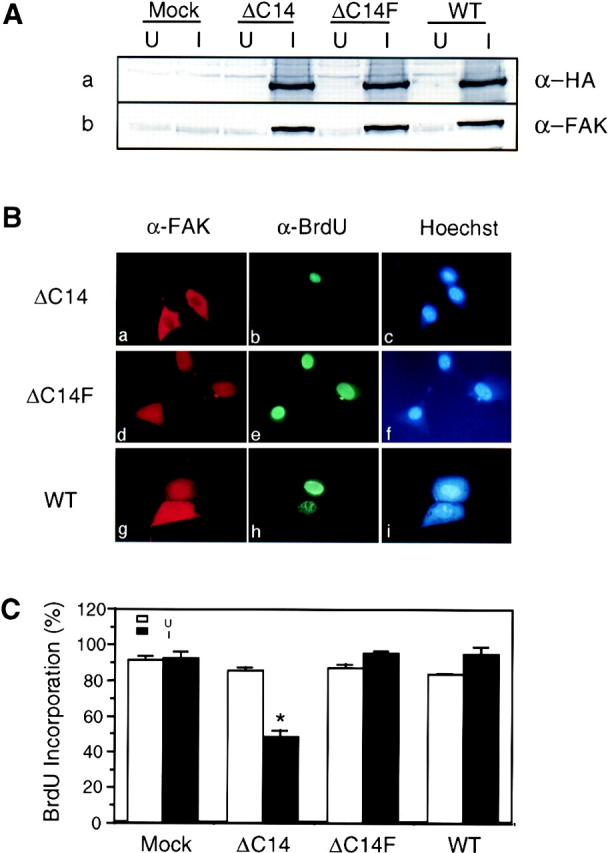
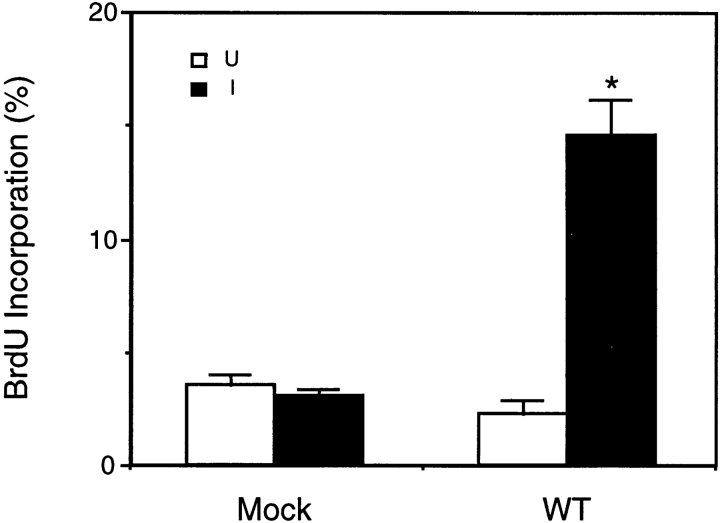
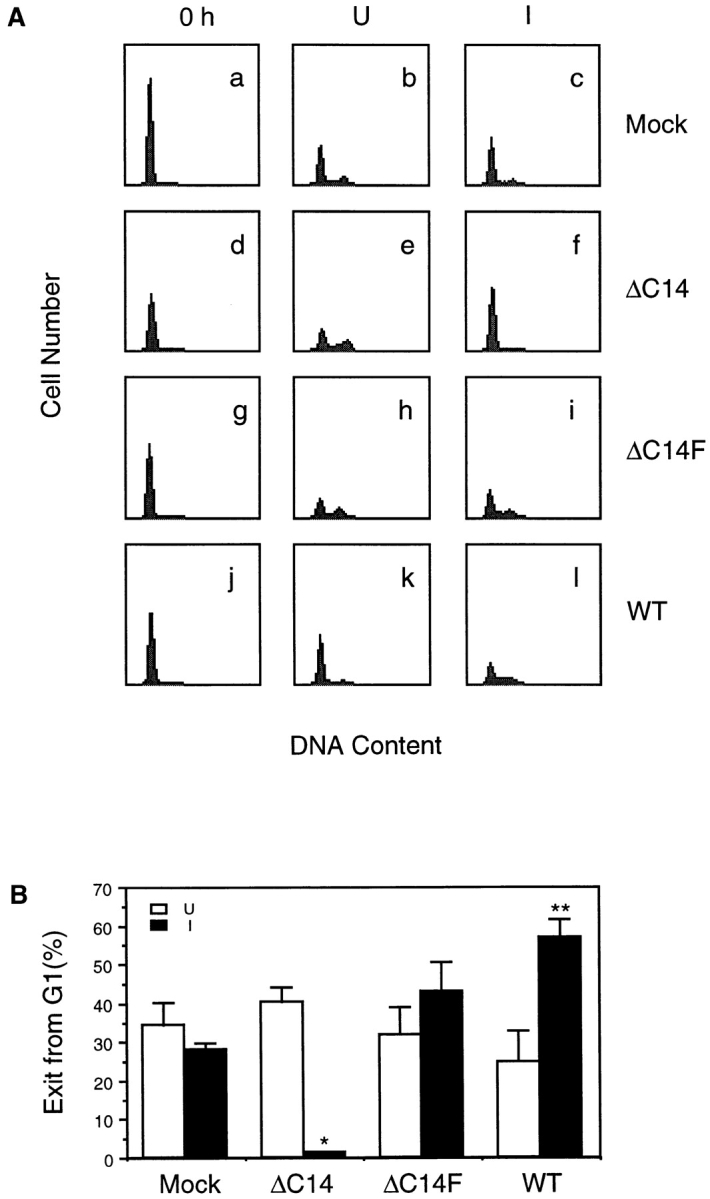
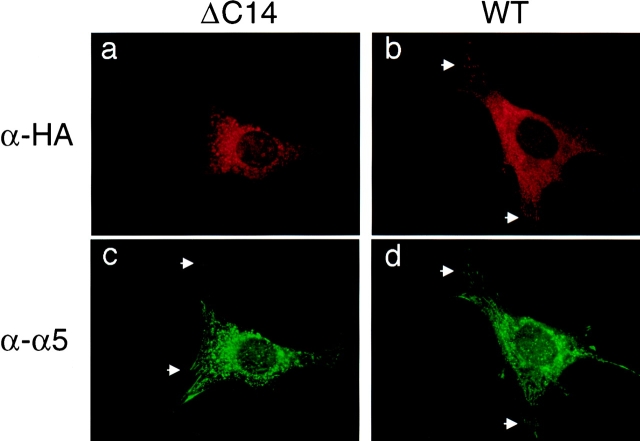
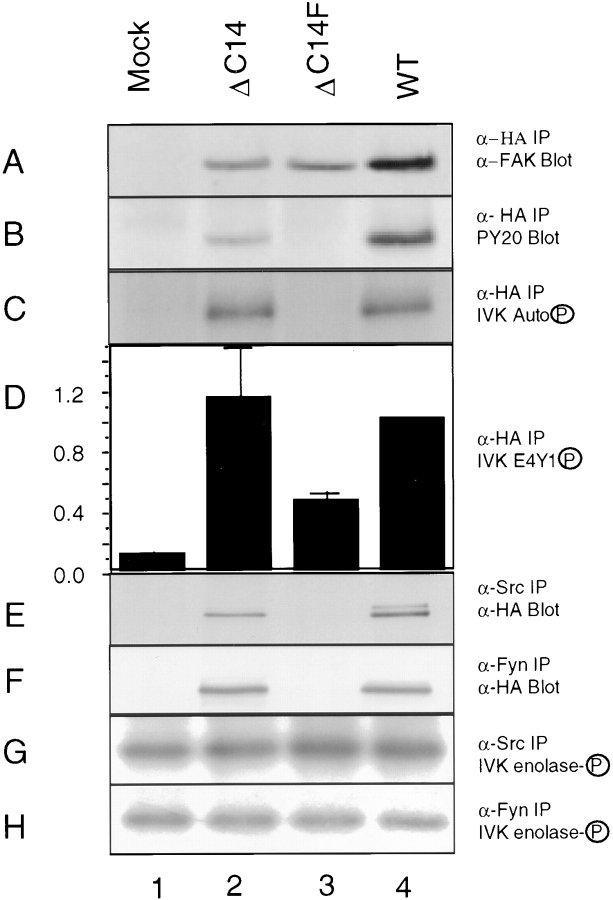
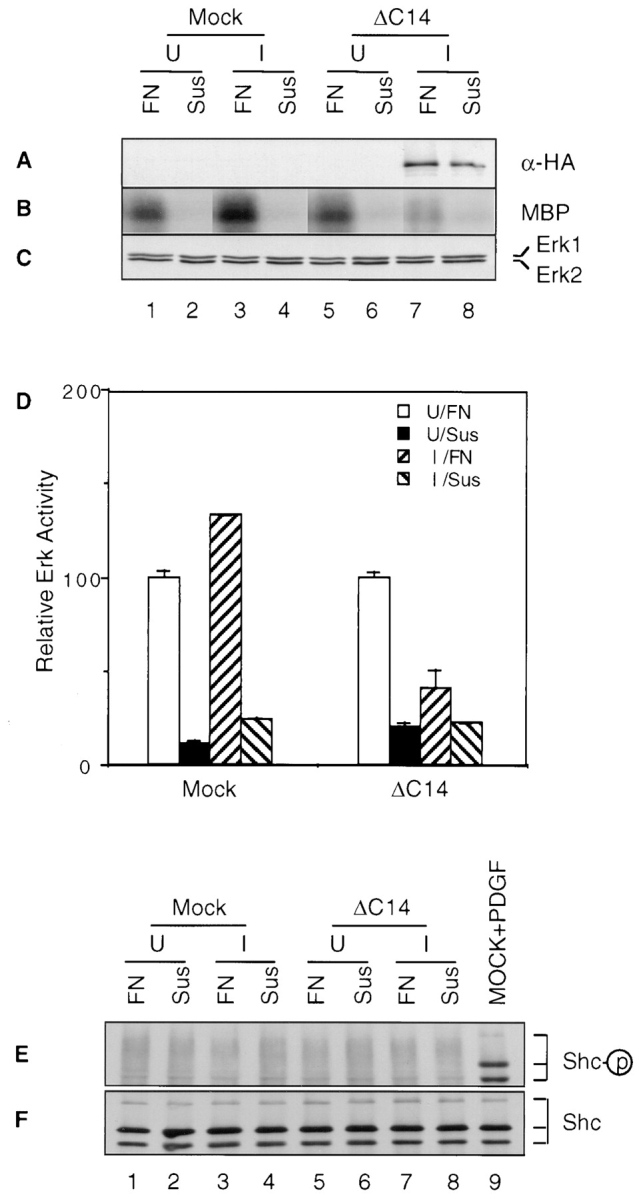
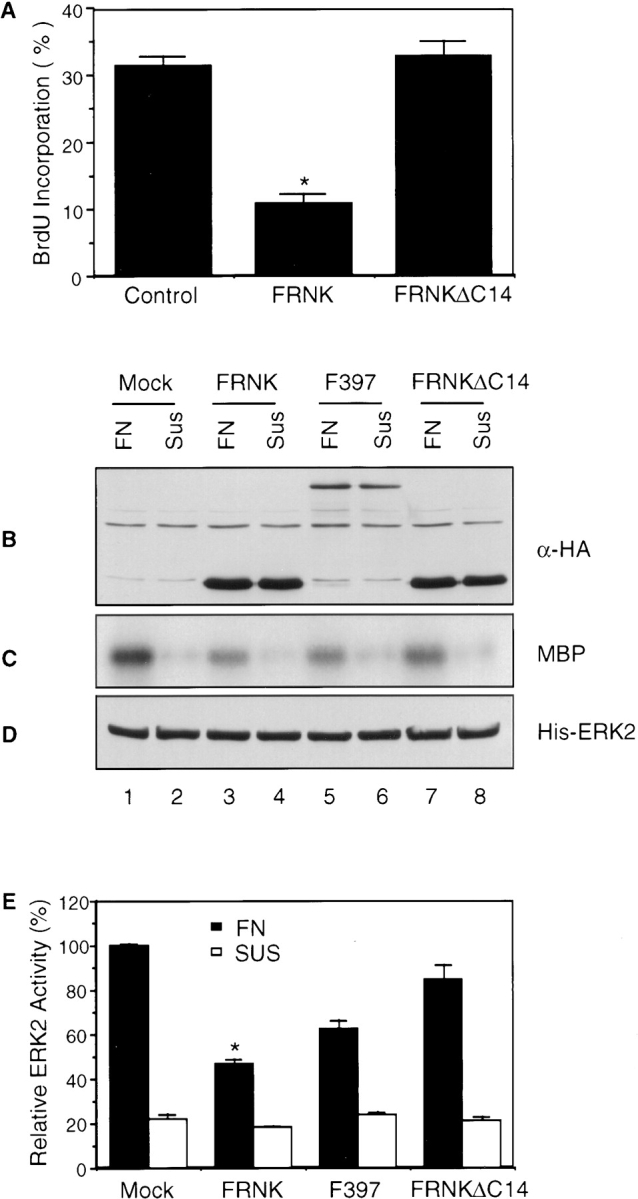
In this report, we have analyzed the potential role and mechanisms of integrin signaling through FAK in cell cycle regulation by using tetracycline-regulated expression of exogenous FAK and mutants. We have found that overexpression of wild-type FAK accelerated G1 to S phase transition. Conversely, overexpression of a dominant-negative FAK mutant DeltaC14 inhibited cell cycle progression at G1 phase and this inhibition required the Y397 in DeltaC14. Biochemical analyses indicated that FAK mutant DeltaC14 was mislocalized and functioned as a dominant-negative mutant by competing with endogenous FAK in focal contacts for binding signaling molecules such as Src and Fyn, resulting in a decreases of Erk activation in cell adhesion. Consistent with this, we also observed inhibition of BrdU incorporation and Erk activation by FAK Y397F mutant and FRNK, but not FRNKDeltaC14, in transient transfection assays using primary human foreskin fibroblasts. Finally, we also found that DeltaC14 blocked cyclin D1 upregulation and induced p21 expression, while wild-type FAK increased cyclin D1 expression and decreased p21 expression. Taken together, these results have identified FAK and its associated signaling pathways as a mediator of the cell cycle regulation by integrins.
在本报告中,我们通过使用四环素调控的外源性FAK及其突变体的表达,分析了整合素通过FAK信号传导在细胞周期调控中的潜在作用和机制。我们发现,野生型FAK的过表达加速了G1期到S期的转变。相反,显性负性FAK突变体DeltaC14的过表达在G1期抑制细胞周期进程,且这种抑制作用需要DeltaC14中的Y397。生化分析表明,FAK突变体DeltaC14定位错误,并通过在粘着斑中与内源性FAK竞争结合诸如Src和Fyn等信号分子而发挥显性负性突变体的作用,导致细胞粘附中Erk激活的减少。与此一致的是,在使用原代人包皮成纤维细胞的瞬时转染实验中,我们也观察到FAK Y397F突变体和FRNK,但不是FRNKDeltaC14,抑制了BrdU掺入和Erk激活。最后,我们还发现DeltaC14阻断了细胞周期蛋白D1的上调并诱导了p21的表达,而野生型FAK增加了细胞周期蛋白D1的表达并降低了p21的表达。综上所述,这些结果确定了FAK及其相关信号通路是整合素介导细胞周期调控的介质。