Becker F, Block-Alper L, Nakamura G, Harada J, Wittrup K D, Meyer D I
Department of Biological Chemistry and the Molecular Biology Institute, University of California, Los Angeles School of Medicine, Los Angeles, California 90024, USA.
J Cell Biol. 1999 Jul 26;146(2):273-84. doi: 10.1083/jcb.146.2.273.
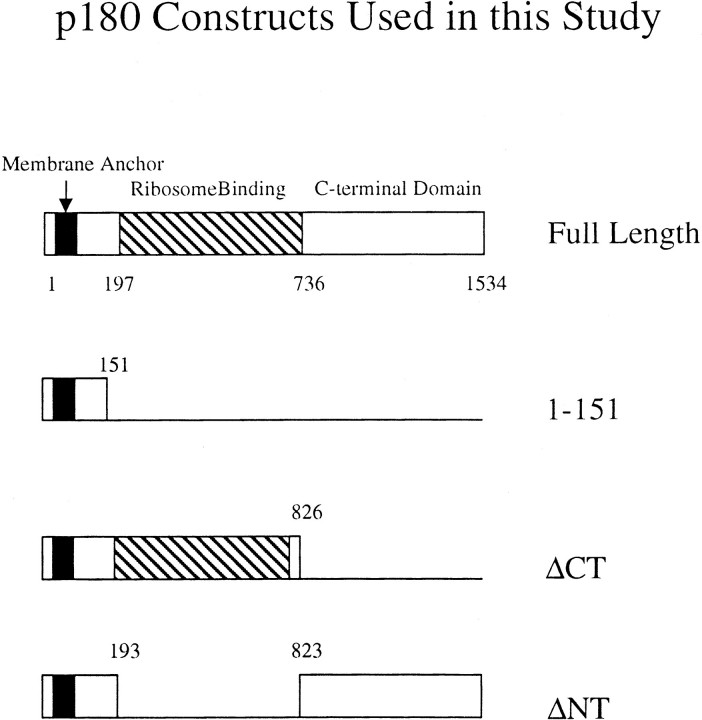
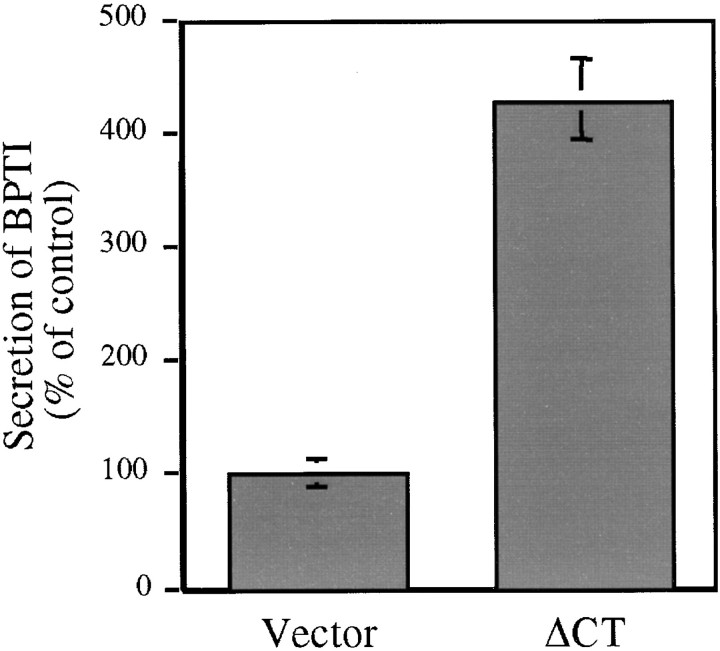
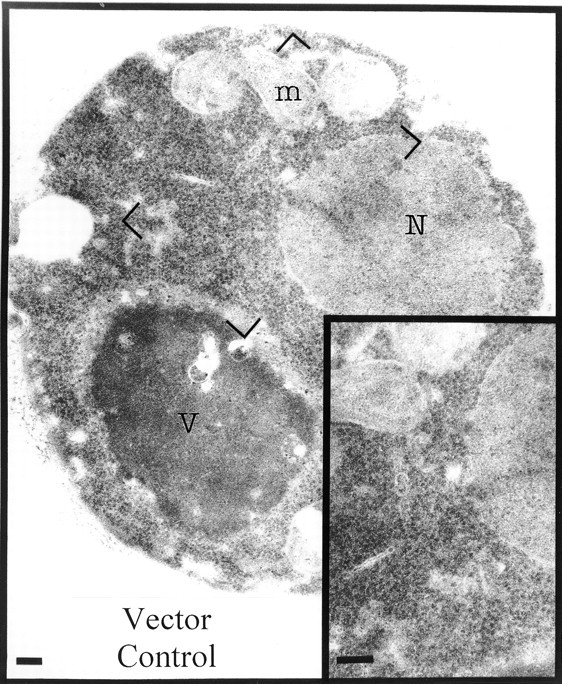
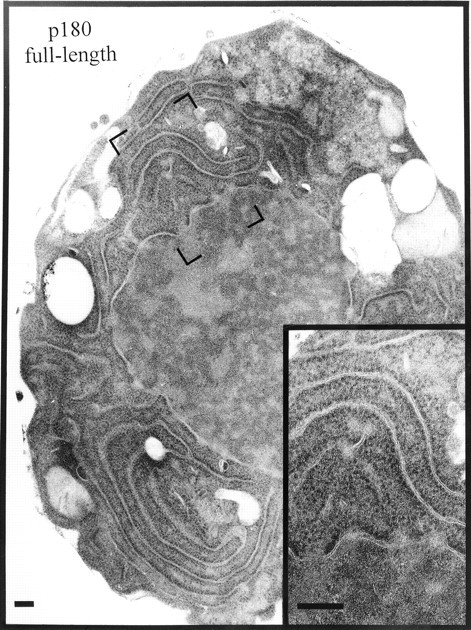
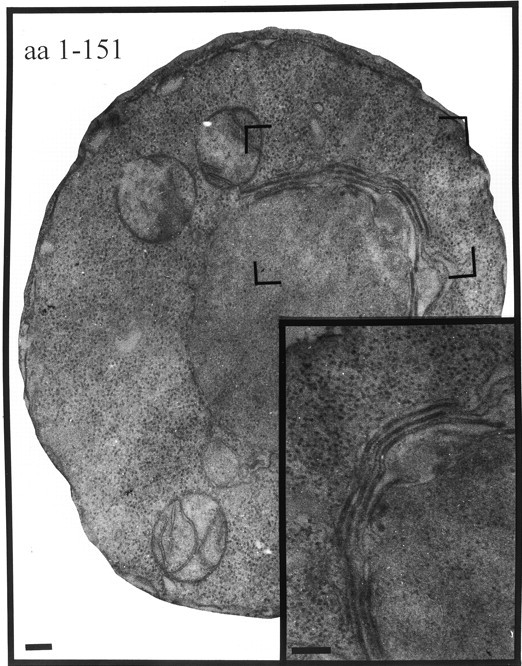
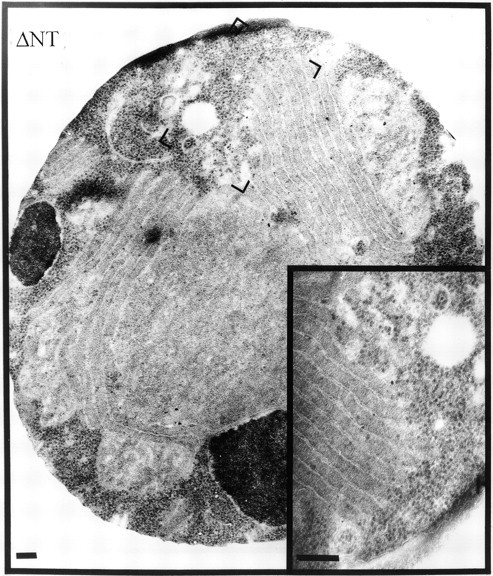
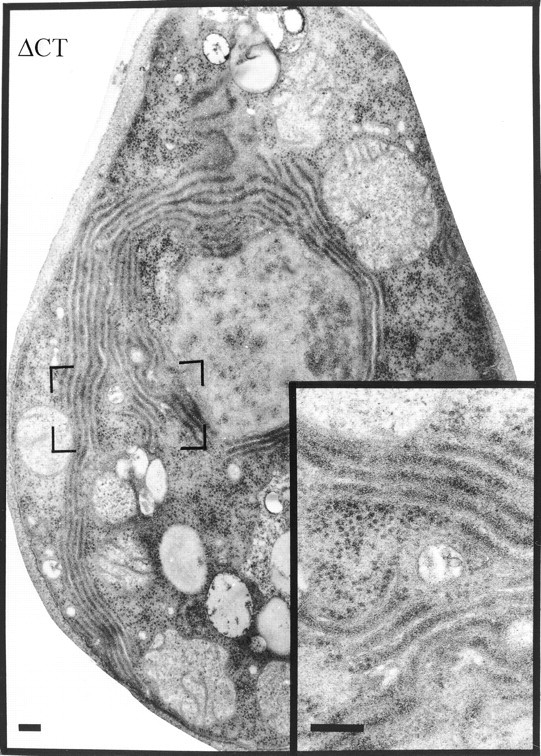
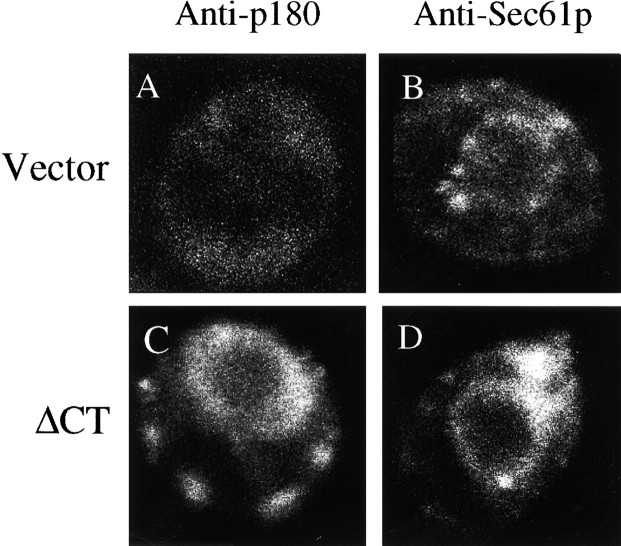
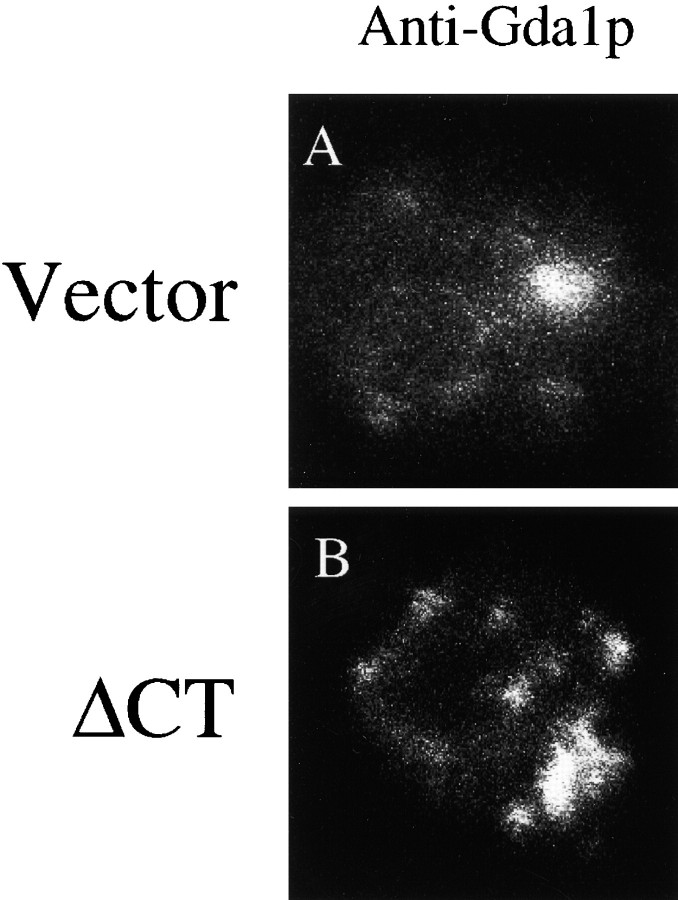
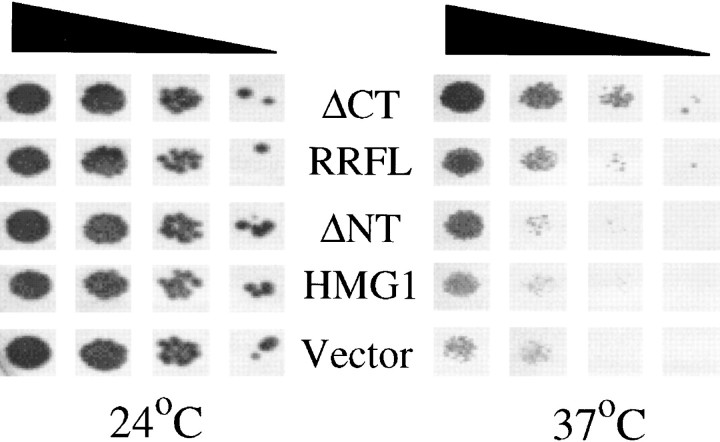
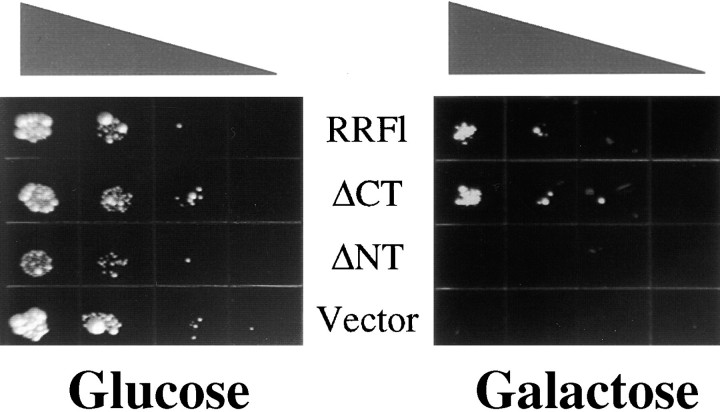
Expression of the canine 180-kD ribosome receptor (p180) in yeast cells resulted in a marked proliferation of intracellular membranes. The type of membranes observed varied with the expression of specific portions of p180. Rough membranes predominated when the ribosome binding domain of p180 was present, whereas expression constructs lacking this region resulted in smooth membranes. Northern analysis indicated that expression of the NH(2)-terminal 767 amino acids (DeltaCT), which include the ribosome binding domain, upregulated the transcription and translation of genes involved in exocytosis. The membranes that were proliferated were functional as these cells overcame a temperature-sensitive translocation defect. Most significantly, cells that overexpressed DeltaCT and proliferated rough endoplasmic reticulum exhibited severalfold higher levels of secretion of an ectopically expressed secretory protein. We conclude that p180 expression triggers a cascade of events leading to an increase in secretory potential akin to the terminal differentiation of mammalian secretory cells and tissues.
犬180-kD核糖体受体(p180)在酵母细胞中的表达导致细胞内膜显著增殖。观察到的膜类型随p180特定部分的表达而变化。当p180的核糖体结合结构域存在时,粗面内质网占主导,而缺乏该区域的表达构建体则导致光滑内质网。Northern分析表明,包含核糖体结合结构域的NH(2)-末端767个氨基酸(DeltaCT)的表达上调了参与胞吐作用的基因的转录和翻译。增殖的膜具有功能,因为这些细胞克服了温度敏感的转运缺陷。最显著的是,过表达DeltaCT并增殖粗面内质网的细胞异位表达的分泌蛋白分泌水平提高了几倍。我们得出结论,p180的表达引发了一系列事件,导致分泌潜能增加,类似于哺乳动物分泌细胞和组织的终末分化。