Nestle M, Jacobson M F
Department of Nutrition and Food Studies, New York University, NY 10012, USA.
Public Health Rep. 2000 Jan-Feb;115(1):12-24. doi: 10.1093/phr/115.1.12.
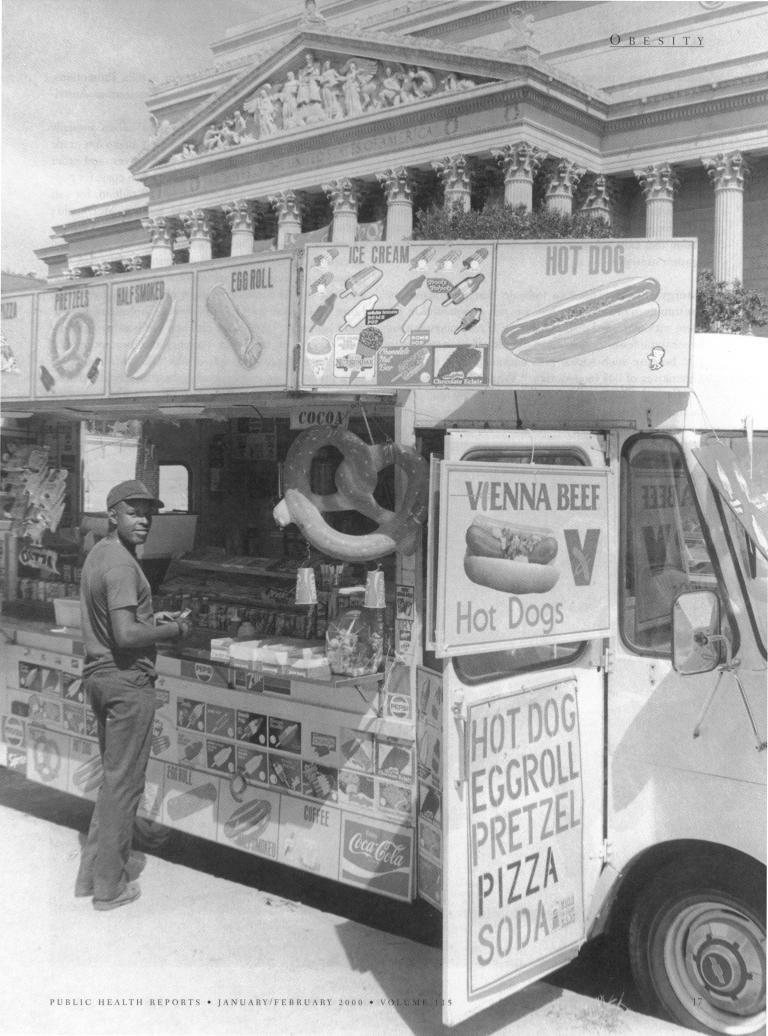
Traditional ways of preventing and treating overweight and obesity have almost invariably focused on changing the behavior of individuals, an approach that has proven woefully inadequate, as indicated by the rising rates of both conditions. Considering the many aspects of American culture that promote obesity, from the proliferation of fast-food outlets to almost universal reliance on automobiles, reversing current trends will require a multifaceted public health policy approach as well as considerable funding. National leadership is needed to ensure the participation of health officials and researchers, educators and legislators, transportation experts and urban planners, and businesses and nonprofit groups in formulating a public health campaign with a better chance of success. The authors outline a broad range of policy recommendations and suggest that an obesity prevention campaign might be funded, in part, with revenues from small taxes on selected products that provide "empty" calories-such as soft drinks-or that reduce physical activity-such as automobiles.
预防和治疗超重及肥胖的传统方法几乎总是聚焦于改变个人行为,然而正如这两种情况的发生率不断上升所表明的那样,这种方法已被证明严重不足。考虑到美国文化中诸多助长肥胖的因素,从快餐店的大量涌现到几乎普遍对汽车的依赖,扭转当前趋势将需要多方面的公共卫生政策举措以及大量资金。需要国家层面的领导来确保卫生官员和研究人员、教育工作者和立法者、交通专家和城市规划者,以及企业和非营利组织参与制定一个更有可能成功的公共卫生运动。作者概述了一系列广泛的政策建议,并指出肥胖预防运动部分资金可来自对某些提供“空”热量的产品(如软饮料)或减少身体活动的产品(如汽车)征收小额税款的收入。