Sperl G T, DeMoss J A
J Bacteriol. 1975 Jun;122(3):1230-8. doi: 10.1128/jb.122.3.1230-1238.1975.
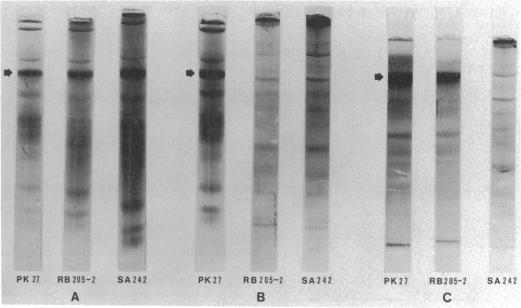
chlD mutants of Escherichia coli lack active nitrate reductase but form normal levels of this enzyme when the medium is supplemented with 10-3 M molybdate. When chlD mutants were grown in unsupplemented medium and then incubated with molybdate in the presence of chloramphenicol, they formed about 5% the normal level of nitrate reductase. Some chlD mutants or the wild type grown in medium supplemented with tungstate accumulated an inactive protein which was electrophoretically identical to active nitrate reductase. Addition of molybdate to those cells in the presence of chloramphenicol resulted in the formation of fully induced levels of nitrate reductase. Two chlD mutants, including a deletion mutant, failed to accumulate the inactive protein and to form active enzyme under the same conditions. Insertion of 99-Mo into the enzyme protein paralleled activation; 185-W could not be demonstrated to be associated with the accumulated inactive protein. The rates of activation of nitrate reductase at varying molybdate concentrations indicated that the chlD gene product facilitates the activation of nitrate reductase at concentrations of molybdate found in normal growth media. At high concentrations, molybdate circumvented this function in chlD mutants and appeared to activate nitrate reductase by a mass action process. We conclude that the chlD gene plays two distinguishable roles in the formation of nitrate reductase in E. coli. It is involved in the accumulation of fully induced levels of the nitrate reductase protein in the cell membrane and it facilitates the insertion of molybdenum to form the active enzyme.
大肠杆菌的chlD突变体缺乏活性硝酸还原酶,但当培养基中添加10⁻³ M钼酸盐时,该酶可形成正常水平。当chlD突变体在未添加钼酸盐的培养基中生长,然后在氯霉素存在的情况下与钼酸盐一起孵育时,它们形成的硝酸还原酶水平约为正常水平的5%。一些chlD突变体或在添加钨酸盐的培养基中生长的野生型积累了一种无活性蛋白,该蛋白在电泳上与活性硝酸还原酶相同。在氯霉素存在的情况下向这些细胞中添加钼酸盐会导致形成完全诱导水平的硝酸还原酶。两个chlD突变体,包括一个缺失突变体,在相同条件下未能积累无活性蛋白并形成活性酶。将⁹⁹Mo插入酶蛋白与激活过程平行;未证明¹⁸⁵W与积累的无活性蛋白相关。在不同钼酸盐浓度下硝酸还原酶的激活速率表明,chlD基因产物在正常生长培养基中发现的钼酸盐浓度下促进硝酸还原酶的激活。在高浓度下,钼酸盐在chlD突变体中规避了这一功能,并且似乎通过质量作用过程激活硝酸还原酶。我们得出结论,chlD基因在大肠杆菌硝酸还原酶的形成中发挥两个可区分的作用。它参与细胞膜中硝酸还原酶蛋白完全诱导水平的积累,并促进钼的插入以形成活性酶。