Wong E D, Wagner J A, Gorsich S W, McCaffery J M, Shaw J M, Nunnari J
Section of Molecular and Cellular Biology, University of California Davis, Davis, California 95616, USA.
J Cell Biol. 2000 Oct 16;151(2):341-52. doi: 10.1083/jcb.151.2.341.
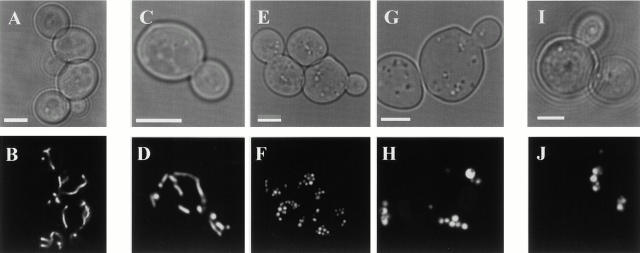
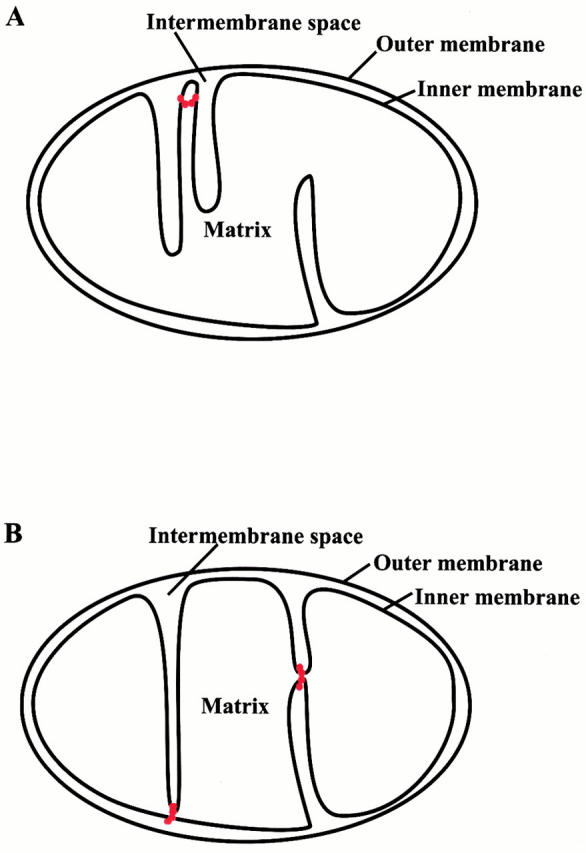
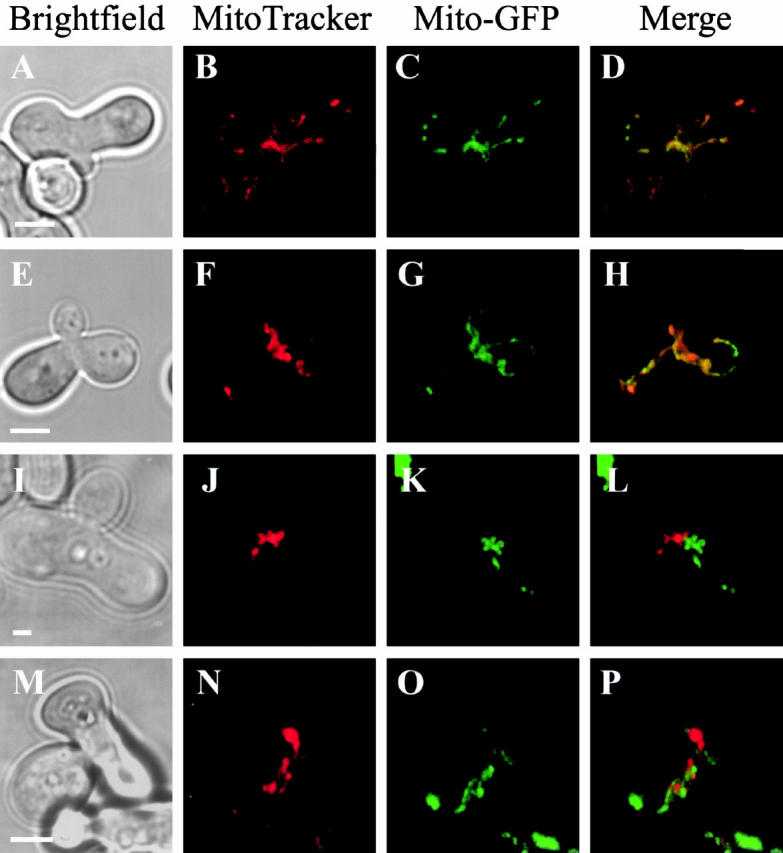
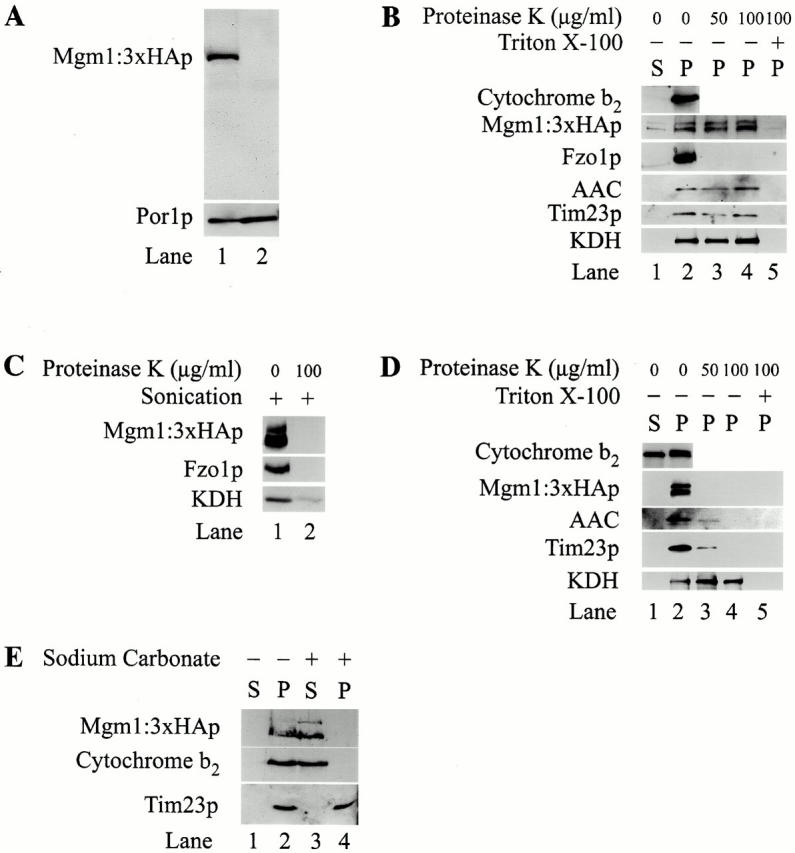
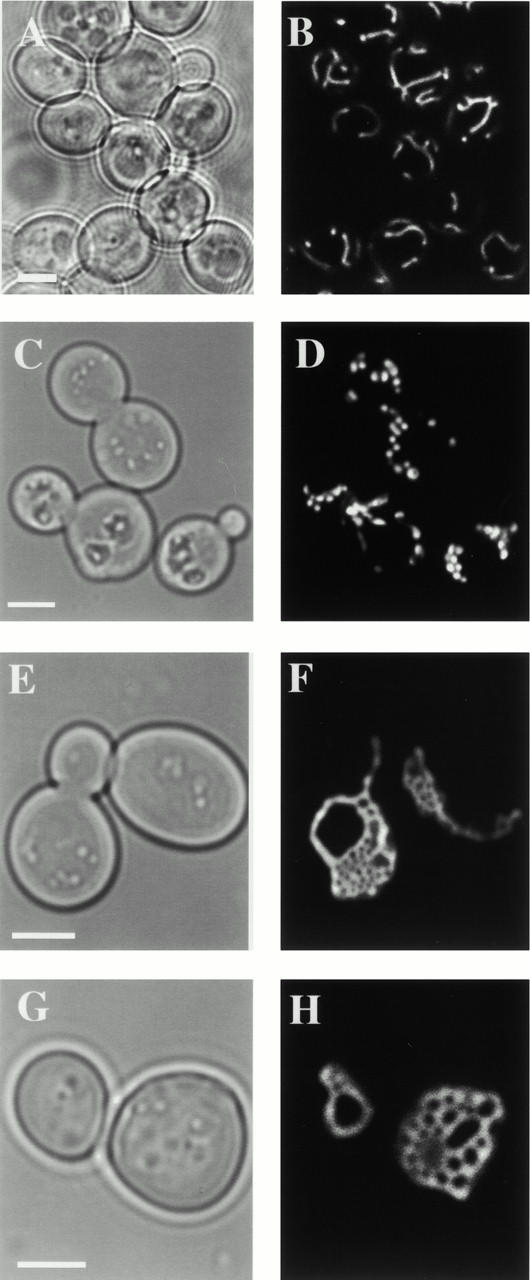
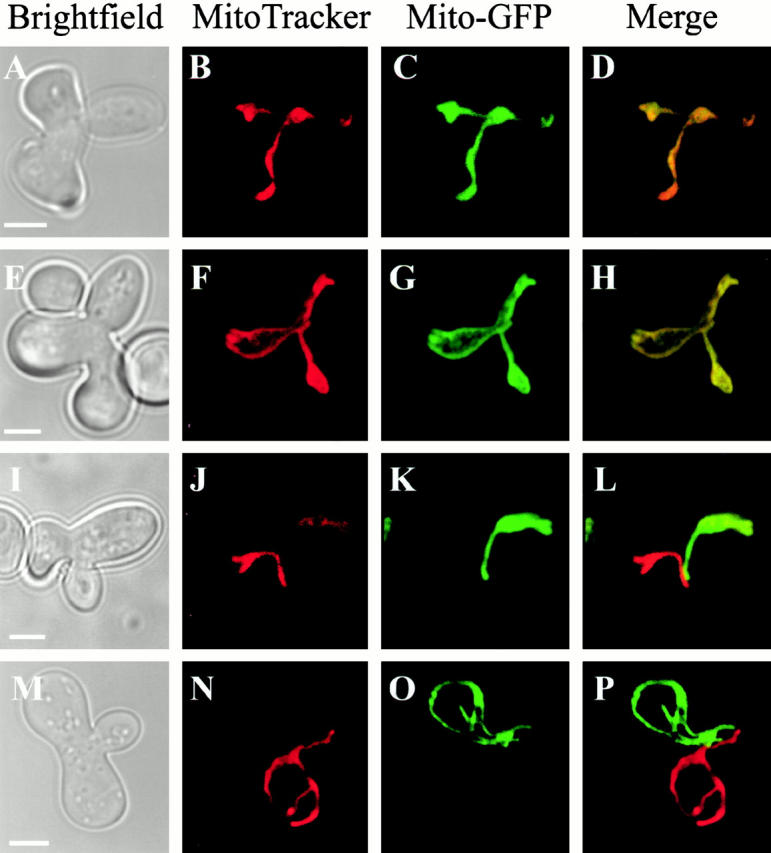
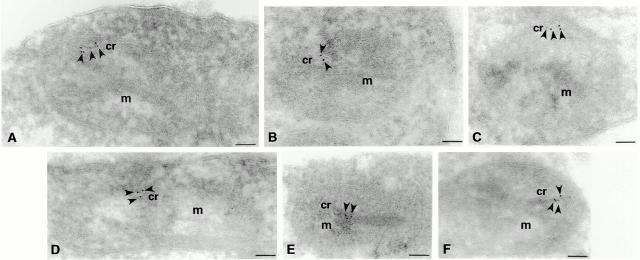
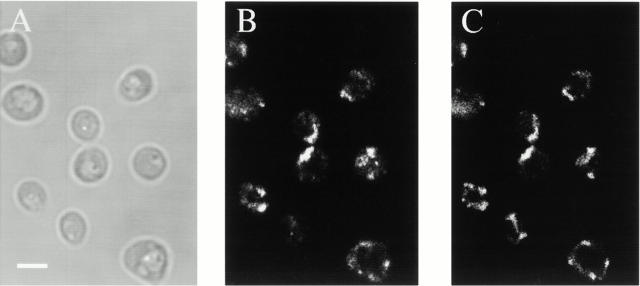
Mutations in the dynamin-related GTPase, Mgm1p, have been shown to cause mitochondrial aggregation and mitochondrial DNA loss in Saccharomyces cerevisiae cells, but Mgm1p's exact role in mitochondrial maintenance is unclear. To study the primary function of MGM1, we characterized new temperature sensitive MGM1 alleles. Examination of mitochondrial morphology in mgm1 cells indicates that fragmentation of mitochondrial reticuli is the primary phenotype associated with loss of MGM1 function, with secondary aggregation of mitochondrial fragments. This mgm1 phenotype is identical to that observed in cells with a conditional mutation in FZO1, which encodes a transmembrane GTPase required for mitochondrial fusion, raising the possibility that Mgm1p is also required for fusion. Consistent with this idea, mitochondrial fusion is blocked in mgm1 cells during mating, and deletion of DNM1, which encodes a dynamin-related GTPase required for mitochondrial fission, blocks mitochondrial fragmentation in mgm1 cells. However, in contrast to fzo1 cells, deletion of DNM1 in mgm1 cells restores mitochondrial fusion during mating. This last observation indicates that despite the phenotypic similarities observed between mgm1 and fzo1 cells, MGM1 does not play a direct role in mitochondrial fusion. Although Mgm1p was recently reported to localize to the mitochondrial outer membrane, our studies indicate that Mgm1p is localized to the mitochondrial intermembrane space. Based on our localization data and Mgm1p's structural homology to dynamin, we postulate that it functions in inner membrane remodeling events. In this context, the observed mgm1 phenotypes suggest that inner and outer membrane fission is coupled and that loss of MGM1 function may stimulate Dnm1p-dependent outer membrane fission, resulting in the formation of mitochondrial fragments that are structurally incompetent for fusion.
已表明,与发动蛋白相关的GTP酶Mgm1p中的突变会导致酿酒酵母细胞中的线粒体聚集和线粒体DNA丢失,但Mgm1p在线粒体维持中的具体作用尚不清楚。为了研究MGM1的主要功能,我们对新的温度敏感型MGM1等位基因进行了表征。对mgm1细胞中线粒体形态的检查表明,线粒体网状结构的碎片化是与MGM1功能丧失相关的主要表型,线粒体片段会继发聚集。这种mgm1表型与在FZO1中发生条件性突变的细胞中观察到的表型相同,FZO1编码线粒体融合所需的跨膜GTP酶,这增加了Mgm1p也参与融合的可能性。与此观点一致,在交配过程中mgm1细胞中的线粒体融合被阻断,而编码线粒体分裂所需的与发动蛋白相关的GTP酶的DNM1的缺失则阻断了mgm1细胞中的线粒体碎片化。然而,与fzo1细胞不同的是,mgm1细胞中DNM1的缺失恢复了交配过程中的线粒体融合。这一最后的观察结果表明,尽管mgm1和fzo1细胞之间观察到表型相似性,但MGM1在线粒体融合中并不起直接作用。尽管最近有报道称Mgm1p定位于线粒体外膜,但我们的研究表明Mgm1p定位于线粒体膜间隙。基于我们的定位数据以及Mgm1p与发动蛋白的结构同源性,我们推测它在内膜重塑事件中发挥作用。在这种情况下,观察到的mgm1表型表明内膜和外膜分裂是偶联的,MGM1功能的丧失可能会刺激Dnm1p依赖性的外膜分裂,导致形成在结构上无法融合的线粒体片段。