Venn R M, Hell J, Grounds R M
Department of Intensive Care, St George's Hospital, London, UK.
Crit Care. 2000;4(5):302-8. doi: 10.1186/cc712. Epub 2000 Jul 31.
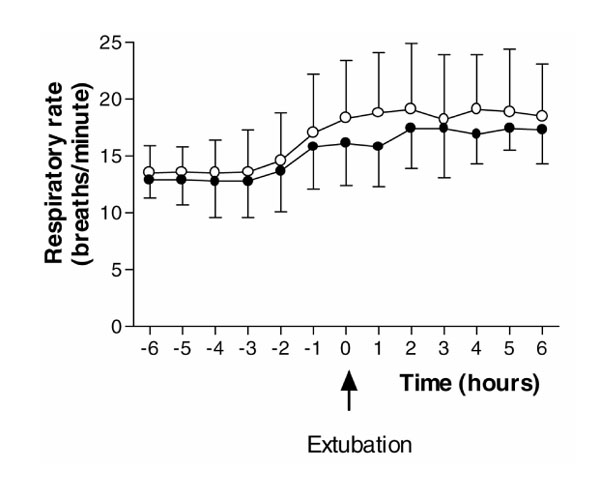
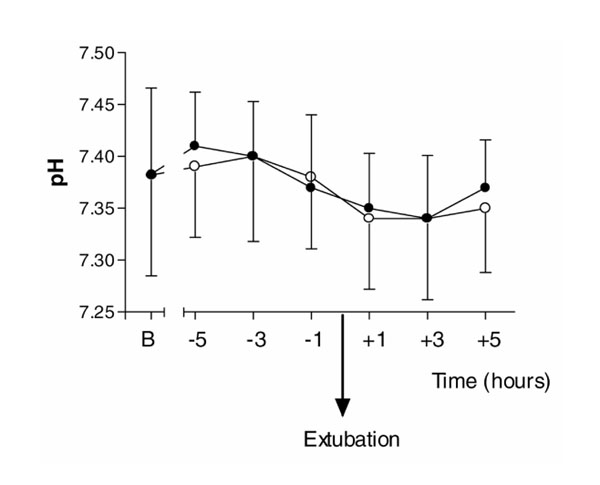
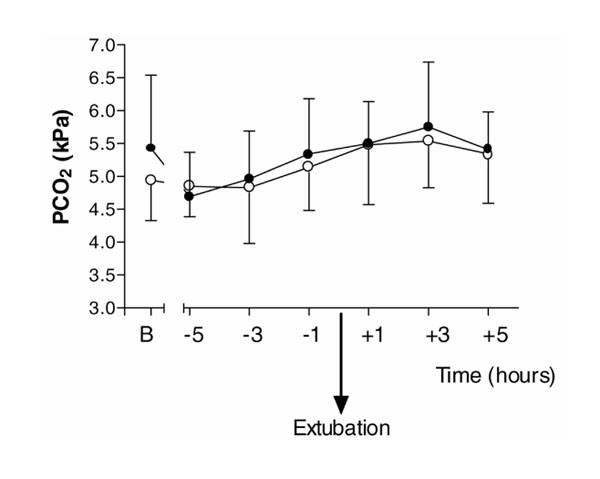
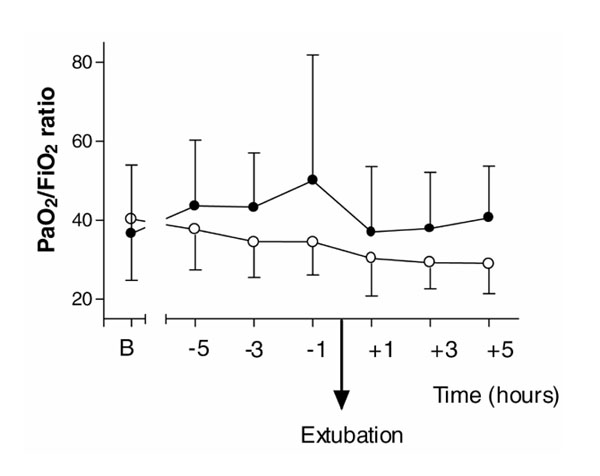
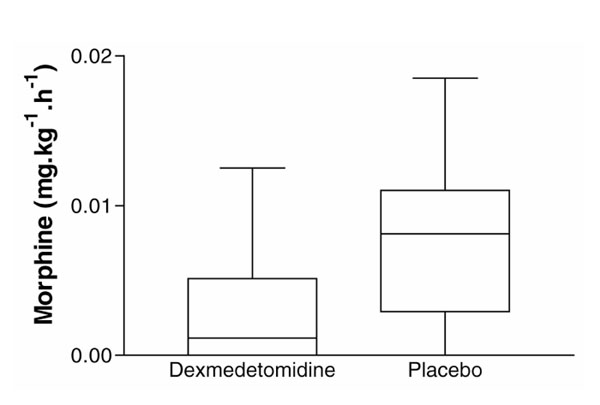
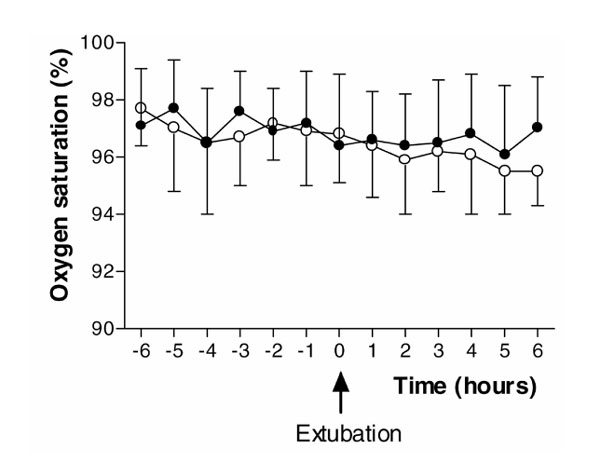
The respiratory effects of dexmedetomidine were retrospectively examined in 33 postsurgical patients involved in a randomised, placebo-controlled trial after extubation in the intensive care unit (ICU). Morphine requirements were reduced by over 50% in patients receiving dexmedetomidine. There were no differences in respiratory rates, oxygen saturations, arterial pH and arterial partial carbon dioxide tension (PaCO2) between the groups. Interestingly the arterial partial oxygen tension (PaO2) : fractional inspired oxygen (FIO2) ratios were statistically significantly higher in the dexmedetomidine group. Dexmedetomidine provides important postsurgical analgesia and appears to have no clinically important adverse effects on respiration in the surgical patient who requires intensive care.
在一项针对重症监护病房(ICU)拔管后进行的随机、安慰剂对照试验中,对33例术后患者的右美托咪定呼吸效应进行了回顾性研究。接受右美托咪定的患者吗啡需求量减少了50%以上。两组之间的呼吸频率、血氧饱和度、动脉pH值和动脉血二氧化碳分压(PaCO2)没有差异。有趣的是,右美托咪定组的动脉血氧分压(PaO2)与吸入氧分数(FIO2)之比在统计学上显著更高。右美托咪定可提供重要的术后镇痛,并且对于需要重症监护的手术患者,似乎对呼吸没有临床上重要的不良影响。