O'Hara R, Murphy E P, Whitehead A S, FitzGerald O, Bresnihan B
St Vincent's University Hospital, Dublin, Ireland.
Arthritis Res. 2000;2(2):142-4. doi: 10.1186/ar78. Epub 2000 Feb 24.
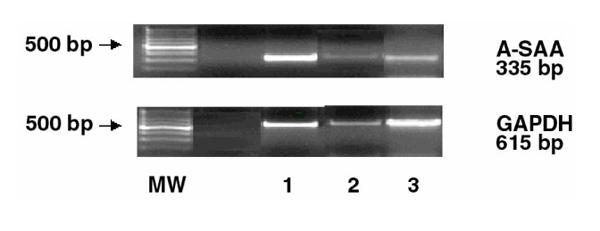
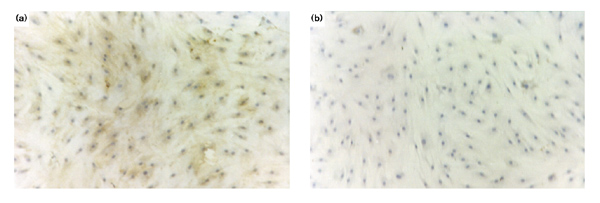
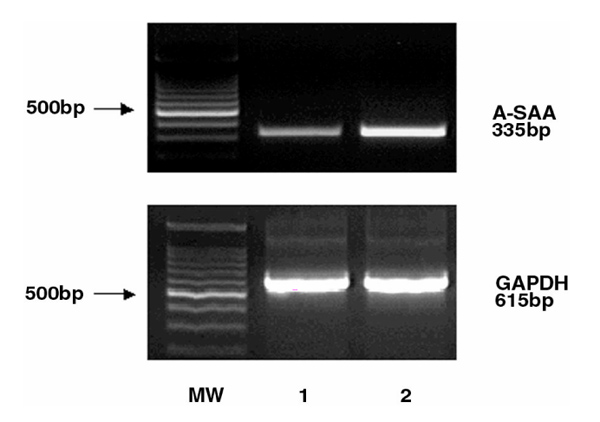
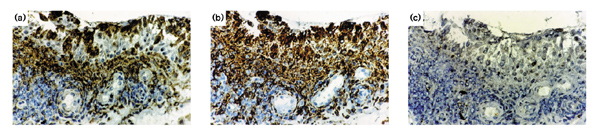
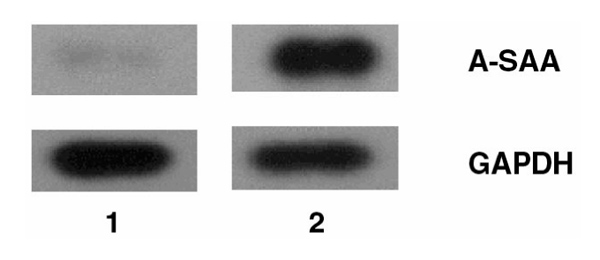
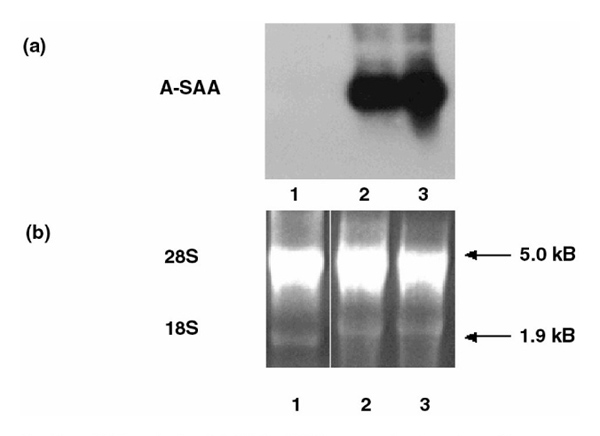
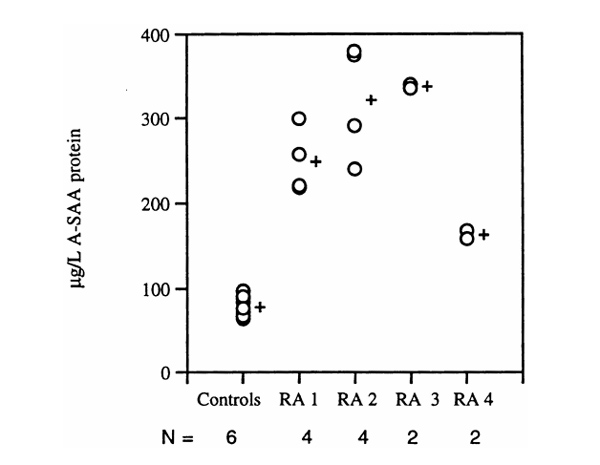
Acute-phase serum amyloid A (A-SAA) is a major component of the acute-phase response. A sustained acute-phase response in rheumatoid arthritis (RA) is associated with increased joint damage. A-SAA mRNA expression was confirmed in all samples obtained from patients with RA, but not in normal synovium. A-SAA mRNA expression was also demonstrated in cultured RA synoviocytes. A-SAA protein was identified in the supernatants of primary synoviocyte cultures, and its expression colocalized with sites of macrophage accumulation and with some vascular endothelial cells. It is concluded that A-SAA is produced by inflamed RA synovial tissue. The known association between the acute-phase response and progressive joint damage may be the direct result of synovial A-SAA-induced effects on cartilage degradation.
急性期血清淀粉样蛋白A(A-SAA)是急性期反应的主要成分。类风湿关节炎(RA)中持续的急性期反应与关节损伤增加有关。在所有从RA患者获得的样本中均证实有A-SAA mRNA表达,但在正常滑膜中未检测到。在培养的RA滑膜细胞中也证实有A-SAA mRNA表达。在原代滑膜细胞培养上清液中鉴定出A-SAA蛋白,其表达与巨噬细胞聚集部位以及一些血管内皮细胞共定位。得出的结论是,A-SAA由炎症性RA滑膜组织产生。急性期反应与进行性关节损伤之间已知的关联可能是滑膜A-SAA诱导软骨降解作用的直接结果。