Sibbald W J
Sunnybrook and Women's College Health Sciences Centre, Toronto, Ontario, Canada.
Crit Care. 2000;4 Suppl 2(Suppl 2):S8-S15. doi: 10.1186/cc970. Epub 2000 Oct 13.
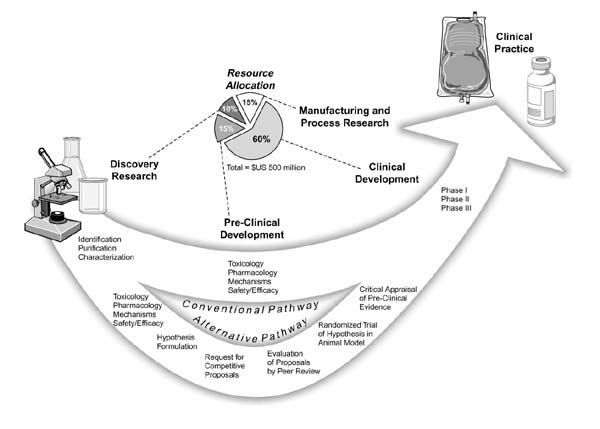
Recent meta-analyses have created uncertainties regarding the appropriate clinical role of colloid resuscitation fluids in critically ill patients and prompted changes in fluid management practice. Such changes may not be justified in view of methodological limitations inherent in the meta-analyses. Further research is nevertheless needed to resolve the questions raised concerning the relationship between choice of resuscitation fluid and patient outcome. Animal studies can play an important part by reliably indicating whether particular fluids are likely to prove effective and safe in clinical trials. It is important to avoid costly large-scale clinical trials that fail to demonstrate the clinical utility of the tested therapy, as resources expended in failed trials raise overall development costs and thereby restrict the range of therapies meeting criteria of commercial feasibility. Promising therapies may thus not be pursued, even though an urgent clinical need may exist. An alternative pathway of preclinical research may be of value in avoiding some of the major clinical trial failures of recent years, particularly in the area of sepsis. This alternative pathway commences with the formulation of hypotheses by therapeutics developers. Independent preclinical investigators are challenged, by means of a competitive request for proposals, to test the hypotheses in rigorous randomized studies employing clinically relevant animal models. Promising proposals would then be selected for further development with the aid of peer review. The results of the randomized animal studies, along with other preclinical data, could also be evaluated using accepted principles of 'critical appraisal' commonly applied to clinical trial results. This critical appraisal might, where appropriate, include meta-analysis of animal study findings. This alternative preclinical pathway to new product evaluation should be completed before the commencement of large-scale clinical trials.
近期的荟萃分析引发了关于胶体复苏液在重症患者中适当临床作用的不确定性,并促使液体管理实践发生了变化。鉴于荟萃分析中固有的方法学局限性,此类变化可能并无充分依据。然而,仍需要进一步研究来解决有关复苏液选择与患者预后之间关系所引发的问题。动物研究可以发挥重要作用,可靠地表明特定液体在临床试验中是否可能被证明有效且安全。重要的是要避免进行无法证明所测试疗法临床效用的昂贵大规模临床试验,因为在失败试验中投入的资源会提高总体研发成本,从而限制符合商业可行性标准的疗法范围。因此,即使可能存在紧迫的临床需求,有前景的疗法也可能不会被采用。一种替代的临床前研究途径可能有助于避免近年来一些主要的临床试验失败,尤其是在脓毒症领域。这种替代途径始于治疗方法开发者提出假设。独立的临床前研究人员会通过竞争性的提案征集活动受到挑战,要求他们在采用临床相关动物模型的严格随机研究中检验这些假设。然后,有前景的提案将在同行评审的帮助下被选中进行进一步开发。随机动物研究的结果以及其他临床前数据,也可以使用通常应用于临床试验结果的公认“批判性评价”原则进行评估。这种批判性评价在适当情况下可能包括对动物研究结果的荟萃分析。这种新产品评估的替代临床前途径应在大规模临床试验开始之前完成。