Schmedt C, Tarakhovsky A
Laboratory for Lymphocyte Signaling, The Rockefeller University, New York, New York 10021, USA.
J Exp Med. 2001 Apr 2;193(7):815-26. doi: 10.1084/jem.193.7.815.
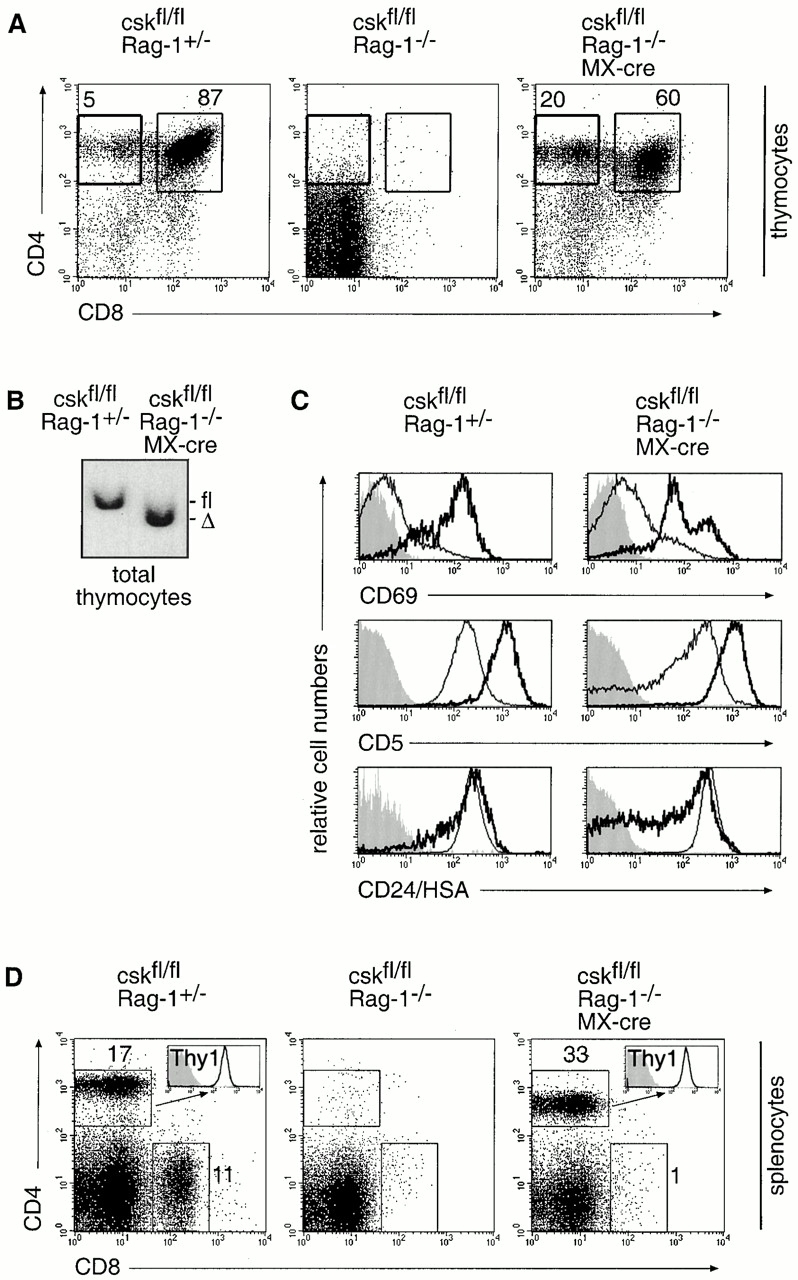
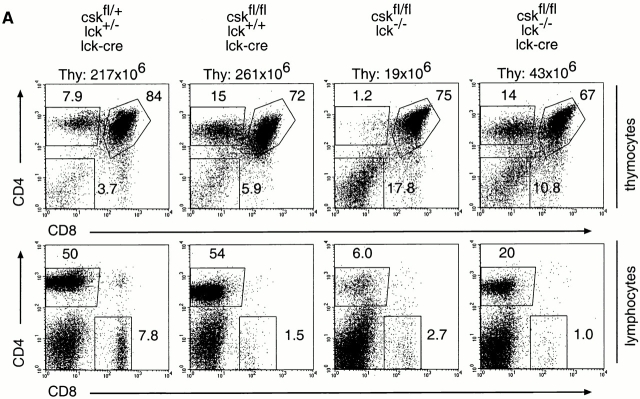
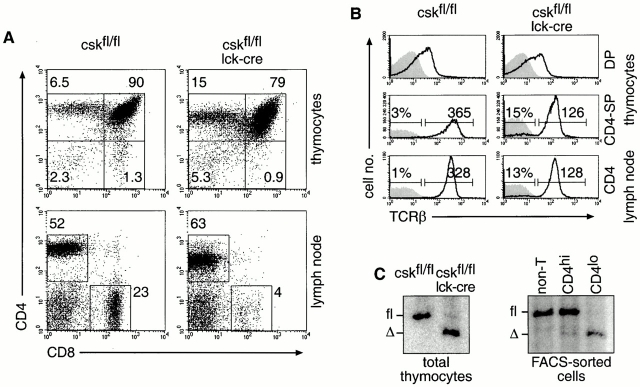
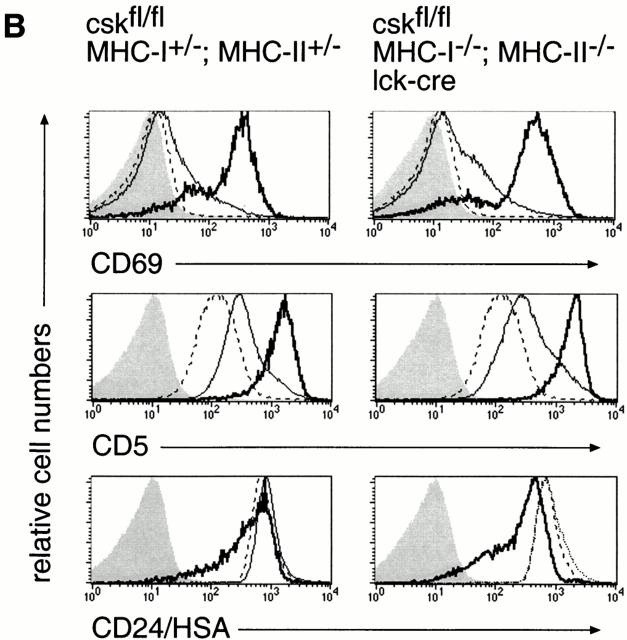
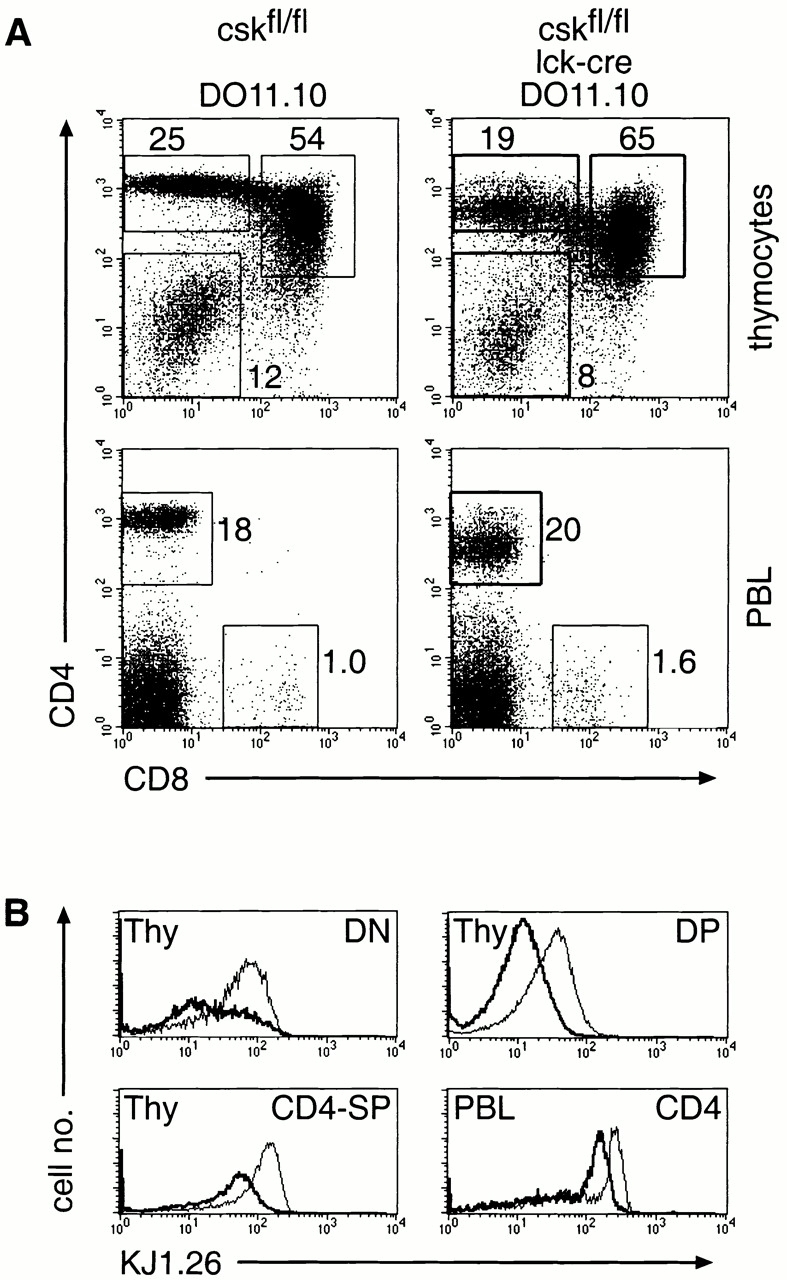
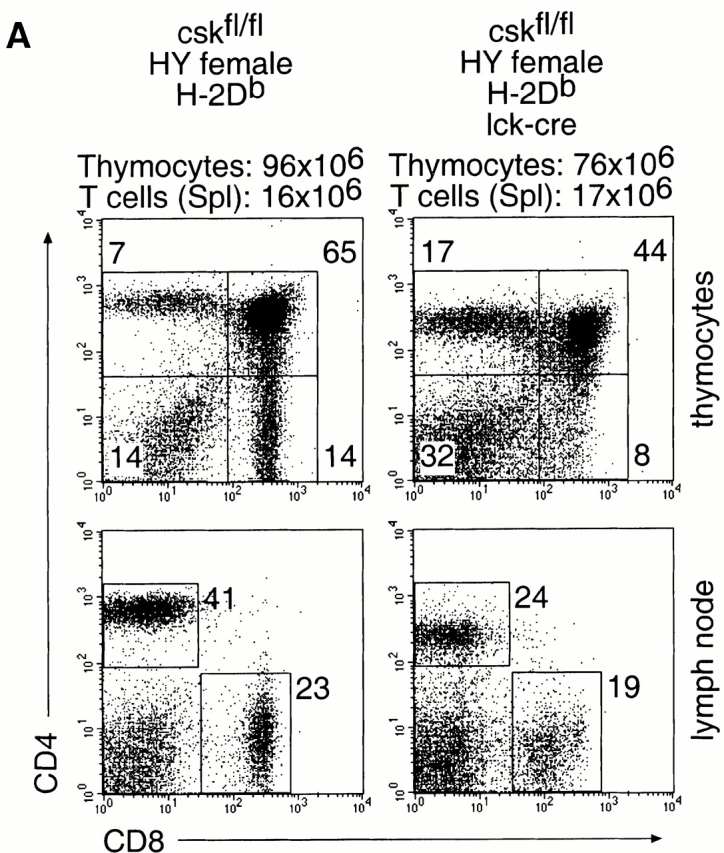
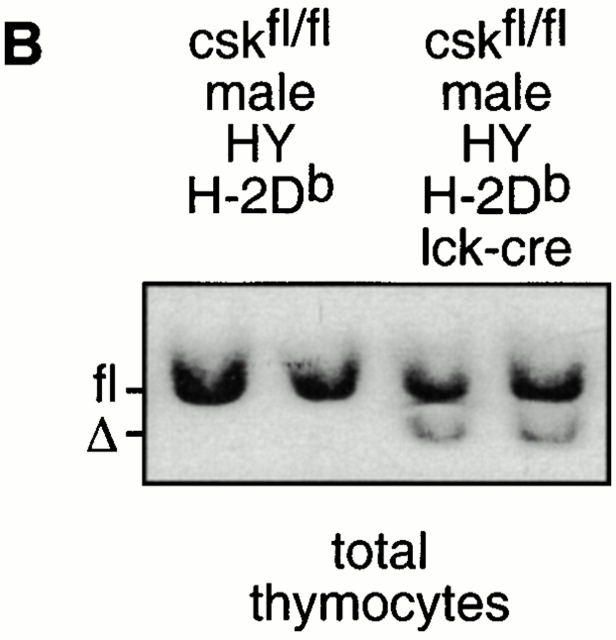
The deletion of COOH-terminal Src kinase (Csk), a negative regulator of Src family protein tyrosine kinases (PTKs), in immature thymocytes results in the development of alpha/beta T lineage cells in T cell receptor (TCR) beta-deficient or recombination activating gene (rag)-1-deficient mice. The function of Csk as a repressor of Lck and Fyn activity suggests activation of these PTKs is solely responsible for the phenotype observed in csk-deficient T lineage cells. We provide genetic evidence for this notion as alpha/beta T cell development is blocked in lck(-/)-fyn(-/)- csk-deficient mice. It remains unclear whether activation of Lck and Fyn in the absence of Csk uncouples alpha/beta T cell development entirely from engagement of surface-expressed receptors. We show that in mice expressing the alpha/beta TCR on csk-deficient thymocytes, positive selection is biased towards the CD4 lineage and does not require the presence of major histocompatibility complex (MHC) class I and II. Furthermore, the introduction of an MHC class I-restricted transgenic TCR into a csk-deficient background results in the development of mainly CD4 T cells carrying the transgenic TCR both in selecting and nonselecting MHC background. Thus, TCR-MHC interactions have no impact on positive selection and commitment to the CD4 lineage in the absence of Csk. However, TCR-mediated negative selection of csk-deficient, TCR transgenic cells is normal. These data suggest a differential involvement of the Csk-mediated regulation of Src family PTKs in positive and negative selection of developing thymocytes.
在未成熟胸腺细胞中,Src家族蛋白酪氨酸激酶(PTK)的负调节因子——羧基末端Src激酶(Csk)的缺失,会导致T细胞受体(TCR)β缺陷或重组激活基因(rag)-1缺陷小鼠中α/β T细胞谱系细胞的发育。Csk作为Lck和Fyn活性的抑制因子,其功能表明这些PTK的激活是csk缺陷型T细胞谱系细胞中观察到的表型的唯一原因。我们为这一观点提供了遗传学证据,因为在lck(-/-)-fyn(-/-)-csk缺陷型小鼠中,α/β T细胞的发育受阻。目前尚不清楚在没有Csk的情况下,Lck和Fyn的激活是否会使α/β T细胞的发育完全与表面表达受体的结合脱钩。我们发现,在csk缺陷型胸腺细胞上表达α/β TCR的小鼠中,阳性选择偏向CD4谱系,且不需要主要组织相容性复合体(MHC)I类和II类的存在。此外,将MHC I类限制性转基因TCR引入csk缺陷背景中,无论是在选择还是非选择的MHC背景下,都会导致主要携带转基因TCR的CD4 T细胞的发育。因此,在没有Csk的情况下,TCR-MHC相互作用对阳性选择和向CD4谱系的分化没有影响。然而,TCR介导的csk缺陷型TCR转基因细胞的阴性选择是正常的。这些数据表明,Csk介导的Src家族PTK调节在发育中的胸腺细胞的阳性和阴性选择中存在差异参与。