Zhong G, Fan P, Ji H, Dong F, Huang Y
Department of Microbiology, University of Texas Health Science Center at San Antonio, San Antonio, Texas 78229, USA.
J Exp Med. 2001 Apr 16;193(8):935-42. doi: 10.1084/jem.193.8.935.
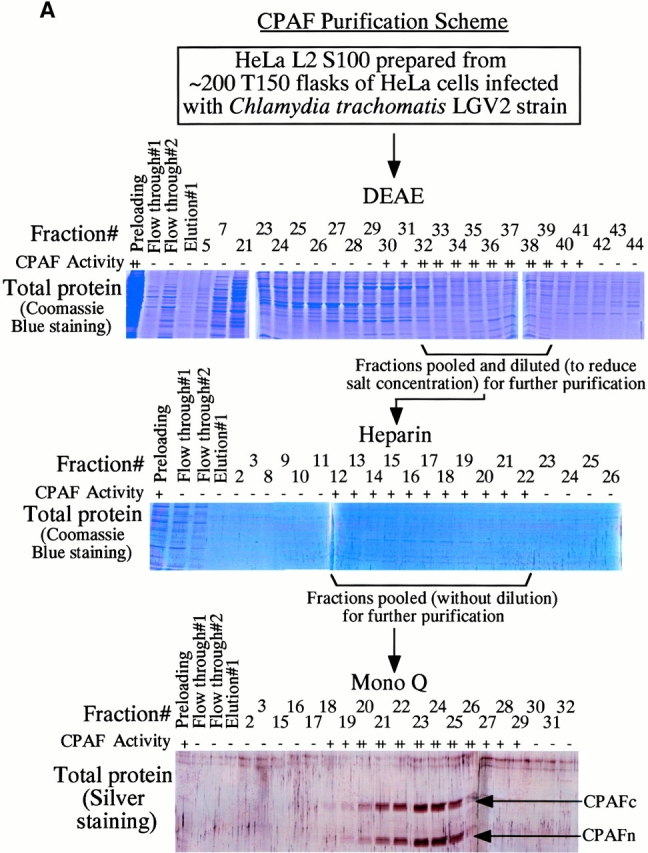
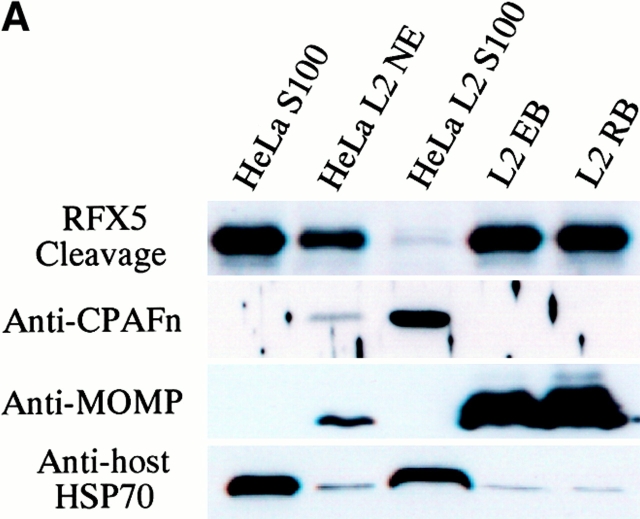
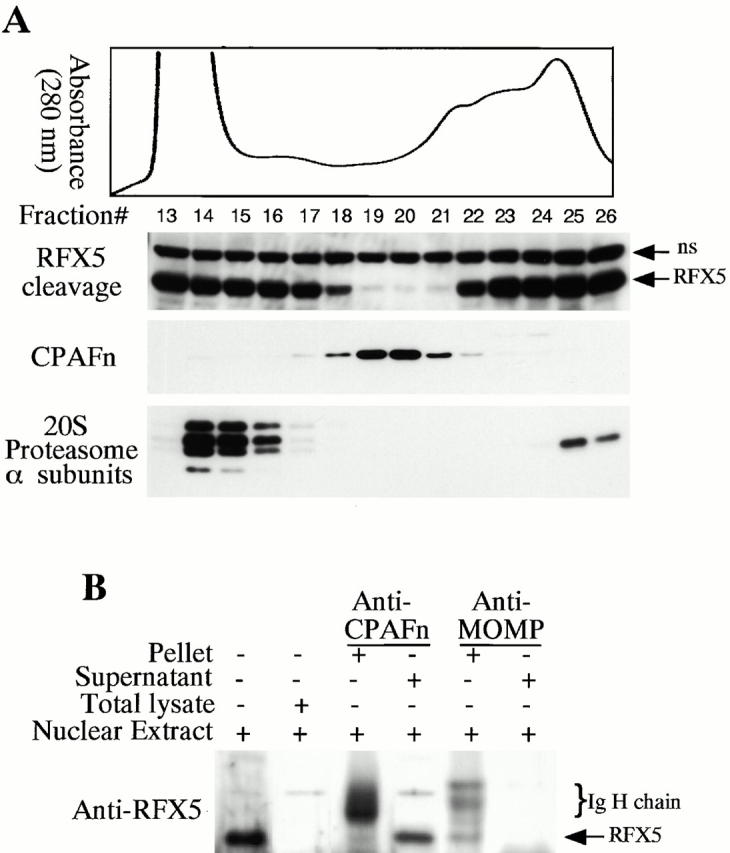
Microbial pathogens have been selected for the capacity to evade or manipulate host responses in order to survive after infection. Chlamydia, an obligate intracellular pathogen and the causative agent for many human diseases, can escape T lymphocyte immune recognition by degrading host transcription factors required for major histocompatibility complex (MHC) antigen expression. We have now identified a chlamydial protease- or proteasome-like activity factor (CPAF) that is secreted into the host cell cytosol and that is both necessary and sufficient for the degradation of host transcription factors RFX5 and upstream stimulation factor 1 (USF-1). The CPAF gene is highly conserved among chlamydial strains, but has no significant overall homology with other known genes. Thus, CPAF represents a unique secreted protein produced by an obligate intracellular bacterial pathogen to interfere with effective host adaptive immunity.
微生物病原体已进化出逃避或操纵宿主反应的能力,以便在感染后存活。衣原体是一种专性胞内病原体,也是许多人类疾病的病原体,它可以通过降解主要组织相容性复合体(MHC)抗原表达所需的宿主转录因子来逃避T淋巴细胞免疫识别。我们现已鉴定出一种衣原体蛋白酶或蛋白酶体样活性因子(CPAF),它被分泌到宿主细胞胞质溶胶中,对于宿主转录因子RFX5和上游刺激因子1(USF-1)的降解既是必要的也是充分的。CPAF基因在衣原体菌株中高度保守,但与其他已知基因没有明显的整体同源性。因此,CPAF代表了一种由专性胞内细菌病原体产生的独特分泌蛋白,用于干扰有效的宿主适应性免疫。