Brown K D, Hostager B S, Bishop G A
Medical Scientist Training Program, University of Iowa, Iowa City 52242, USA.
J Exp Med. 2001 Apr 16;193(8):943-54. doi: 10.1084/jem.193.8.943.
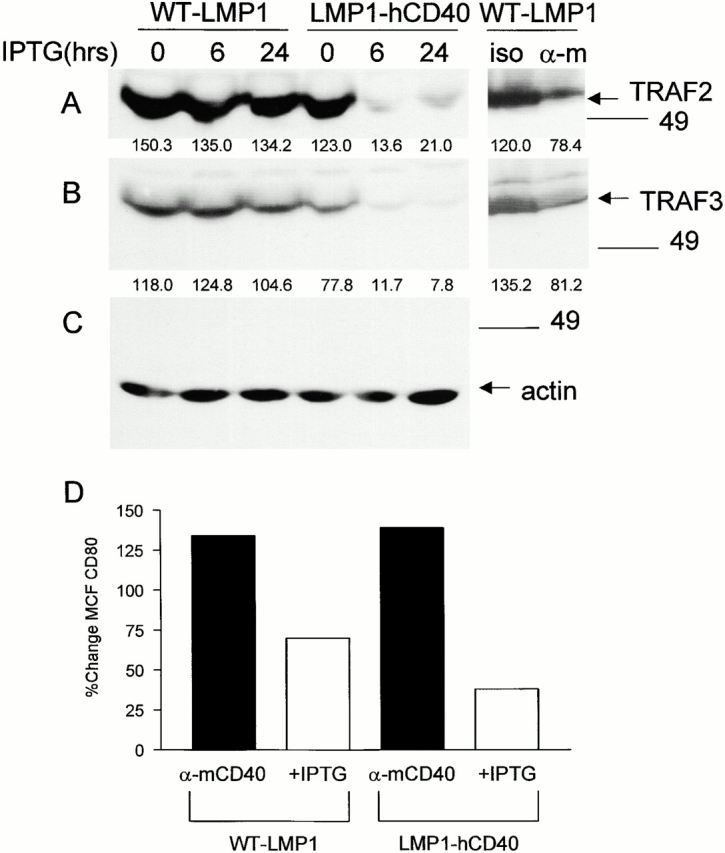
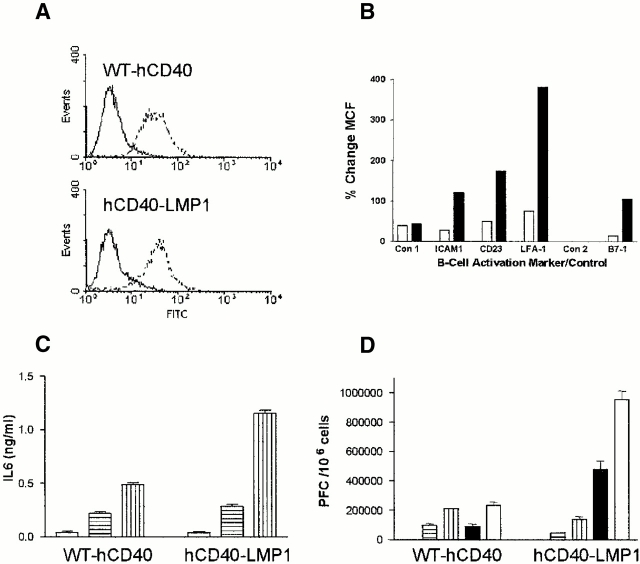
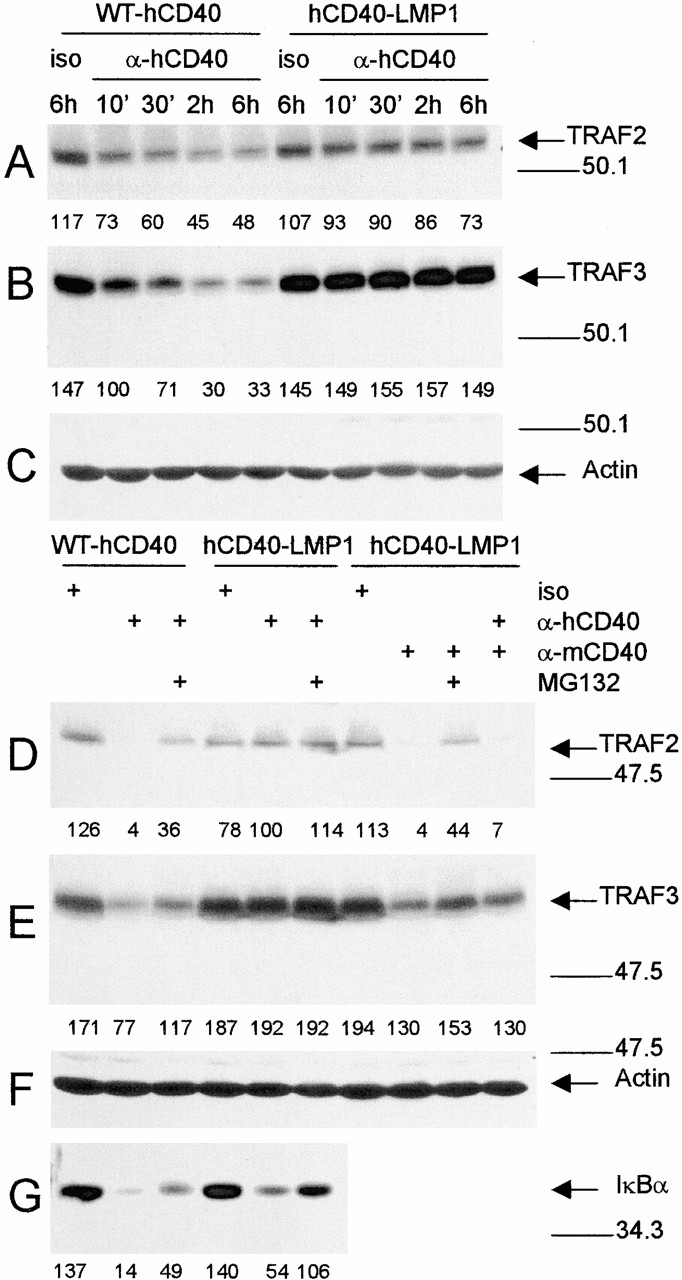
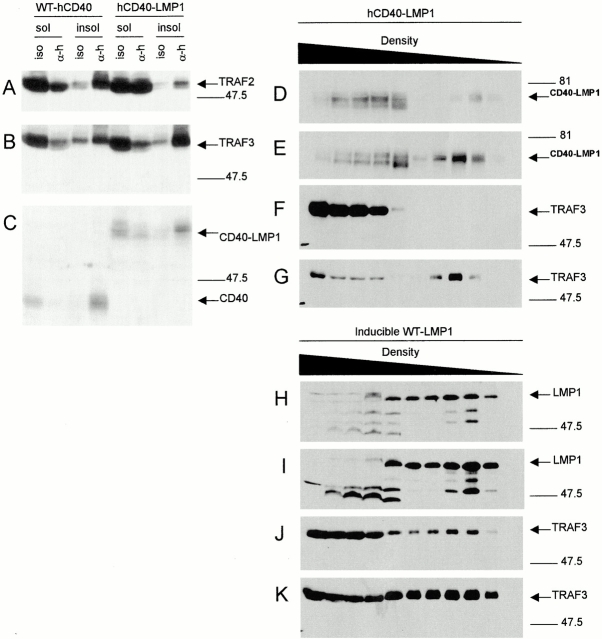
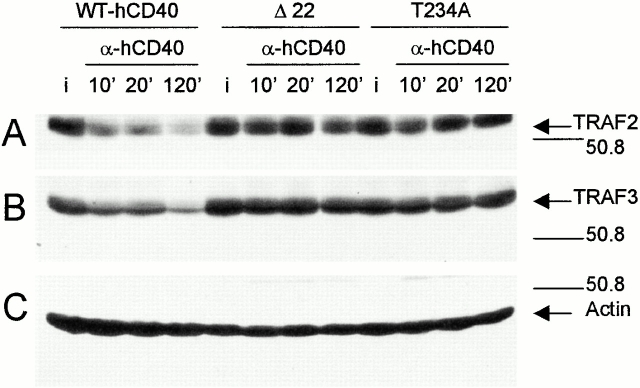
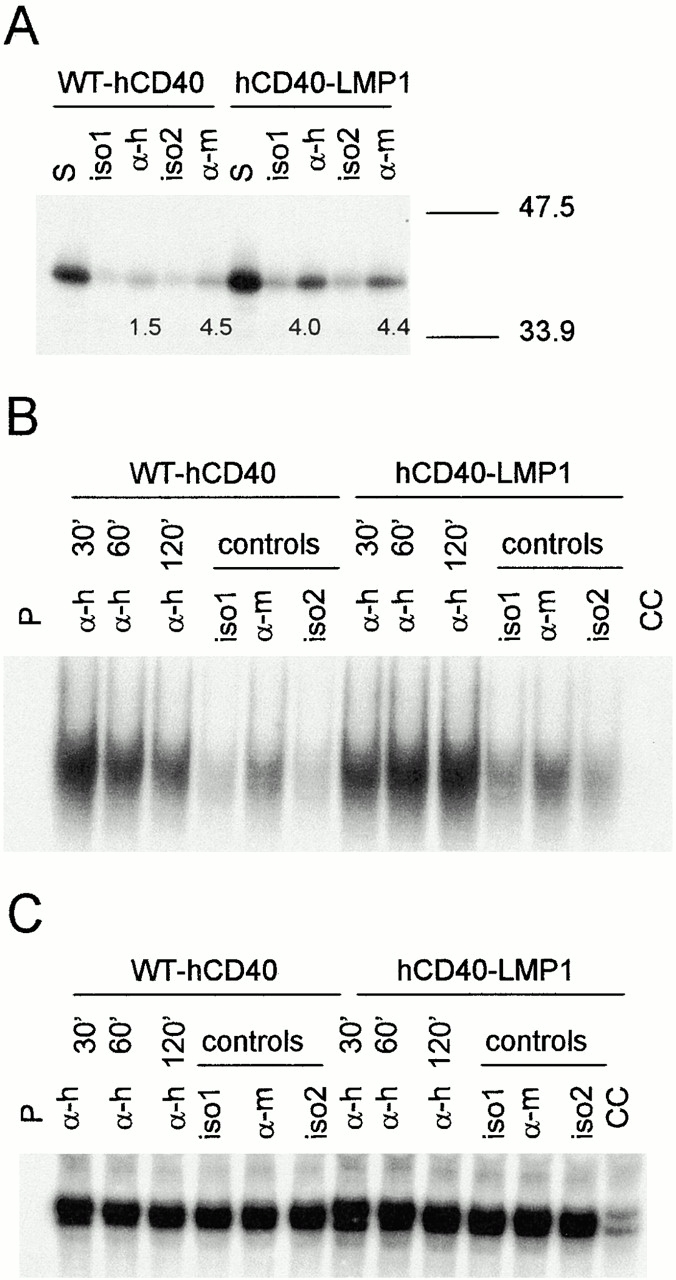
Latent membrane protein 1 (LMP1) plays a critical role in B cell transformation by Epstein-Barr virus (EBV) and appears to mimic a constitutively active CD40 receptor. Intracellular tumor necrosis factor (TNF) receptor-associated factor (TRAF) adapter proteins, shown to contribute to signaling by both CD40 and LMP1, were recruited by both molecules to lipid-enriched membrane rafts. However, we found that TRAFs 2 and 3 were subsequently degraded after CD40- but not LMP1-induced signaling. This degradation was proteasome-dependent and required direct TRAF binding by CD40. Using a model system designed to directly compare the signaling potency of the cytoplasmic domains of LMP1 and CD40 in B lymphocytes, we found that LMP1 more potently activates c-Jun kinase and nuclear factor kappaB and induces higher levels of several B cell effector functions than does CD40. This suggests that LMP1 utilizes a modified CD40 signaling pathway. Failure to regulate TRAFs may contribute to the enhanced capacity of LMP1 to activate B cells as well as promote B cell transformation.
潜伏膜蛋白1(LMP1)在爱泼斯坦-巴尔病毒(EBV)介导的B细胞转化中起关键作用,并且似乎模拟了持续激活的CD40受体。细胞内肿瘤坏死因子(TNF)受体相关因子(TRAF)衔接蛋白已被证明有助于CD40和LMP1的信号传导,这两种分子都将其招募到富含脂质的膜筏中。然而,我们发现TRAF2和TRAF3在CD40诱导而非LMP1诱导的信号传导后随后被降解。这种降解依赖于蛋白酶体,并且需要CD40直接结合TRAF。使用旨在直接比较LMP1和CD40的细胞质结构域在B淋巴细胞中的信号传导能力的模型系统,我们发现LMP1比CD40更有效地激活c-Jun激酶和核因子κB,并诱导更高水平的几种B细胞效应功能。这表明LMP1利用了一种修饰的CD40信号通路。无法调节TRAFs可能有助于增强LMP1激活B细胞以及促进B细胞转化的能力。