Font Fidel, Quinto Llorens, Masanja Honoraty, Nathan Rose, Ascaso Carlos, Menendez Clara, Tanner Marcel, Schellenberg Joanna, Alonso Pedro
Unidad de Epidemiologia y Bioestadistica, Hospital Clinic i Provincial, Villarroel 170, 08036 Barcelona, Spain.
BMC Int Health Hum Rights. 2002 Apr 30;2(1):4. doi: 10.1186/1472-698x-2-4.
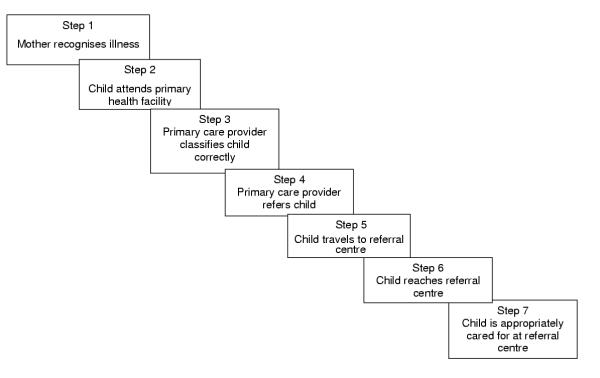
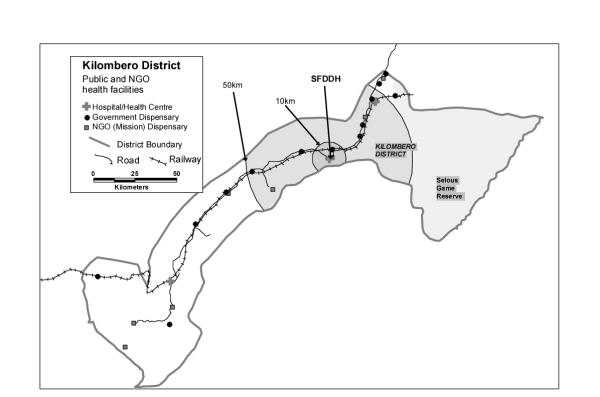
Referral is a critical part of appropriate primary care and of the Integrated Management of Childhood Illness (IMCI) strategy. We set out to study referrals from the aspect both of primary level facilities and the referral hospital in Kilombero District, southern Tanzania. Through record review and a separate prospective study we estimate referral rates, report on delays in reaching referral care and summarise the appropriateness of pediatric referral cases in terms of admission to the pediatric ward at a district hospital METHODS: A sample of patient records from primary level government health facilities throughout 1993 were summarised by age, diagnosis, whether a new case or a reattendance, and whether or not they were referred. From August 1994 to July 1995, mothers or carers of all sick children less than five years old attending the Maternal and Child Health (MCH) clinic or outpatient department (OPD) of SFDDH were interviewed using a standard questionnaire recording age, sex, diagnosis, place of residence, whether the child was admitted to the paediatric ward, and whether the child was referred. RESULTS: From record review, only 0.6% of children from primary level government facilities were referred to a higher level of care. At the referral hospital, 7.8 cases per thousand under five catchment population had been referred annually. The hospital MCH clinic and OPD were generally used by children who lived nearby: 91% (n = 7,166) of sick children and 75% (n = 607) of admissions came from within 10 km. Of 235 referred children, the majority (62%) had come from dispensaries. Almost half of the referrals (48%) took 2 or more days to arrive at the hospital. Severe malaria and anaemia were the leading diagnoses in referred children, together accounting for a total of 70% of all the referrals. Most referred children (167/235, 71%) were admitted to the hospital paediatric ward. CONCLUSIONS: The high admission rate among referrals suggests that the decision to refer is generally appropriate, but the low referral rate suggests that too few children are referred. Our findings suggest that the IMCI strategy may need to be adapted in sparsely-populated areas with limited transport, so that more children may be managed at peripheral level and fewer children need referral.
转诊是适当的初级保健以及儿童疾病综合管理(IMCI)战略的关键组成部分。我们着手从坦桑尼亚南部基洛梅罗区的基层医疗机构和转诊医院两个方面研究转诊情况。通过病历审查和另一项前瞻性研究,我们估算转诊率,报告获得转诊治疗的延迟情况,并就地区医院儿科病房收治的儿科转诊病例的适宜性进行总结。
对1993年全年政府基层医疗机构的部分患者病历样本按年龄、诊断结果、是否为新病例或复诊病例以及是否转诊进行了总结。1994年8月至1995年7月,使用标准问卷对所有前往SFDDH母婴健康(MCH)诊所或门诊部(OPD)就诊的5岁以下患病儿童的母亲或照料者进行了访谈,记录年龄、性别、诊断结果、居住地点、儿童是否被收治到儿科病房以及儿童是否被转诊。
通过病历审查,政府基层医疗机构中只有0.6%的儿童被转诊到更高一级的医疗机构。在转诊医院,每千名五岁以下服务人口中每年有7.8例被转诊。医院的母婴健康诊所和门诊部通常接待居住在附近的儿童:91%(n = 7166)的患病儿童和75%(n = 607)的住院患者来自10公里以内的地区。在235名被转诊儿童中,大多数(62%)来自诊疗所。几乎一半的转诊(48%)需要2天或更长时间才能到达医院。重症疟疾和贫血是被转诊儿童的主要诊断结果,共占所有转诊病例的70%。大多数被转诊儿童(167/235,71%)被收治到医院儿科病房。
转诊儿童的高收治率表明转诊决定总体上是适当的,但转诊率较低表明被转诊的儿童太少。我们的研究结果表明,在交通有限的人口稀少地区,可能需要调整IMCI战略,以便更多儿童能够在基层得到管理,需要转诊的儿童更少。