Okada Takaharu, Ngo Vu N, Ekland Eric H, Förster Reinhold, Lipp Martin, Littman Dan R, Cyster Jason G
Howard Hughes Medical Institute and Department of Microbiology and Immunology, University of California San Francisco, San Francisco, CA 94143, USA.
J Exp Med. 2002 Jul 1;196(1):65-75. doi: 10.1084/jem.20020201.
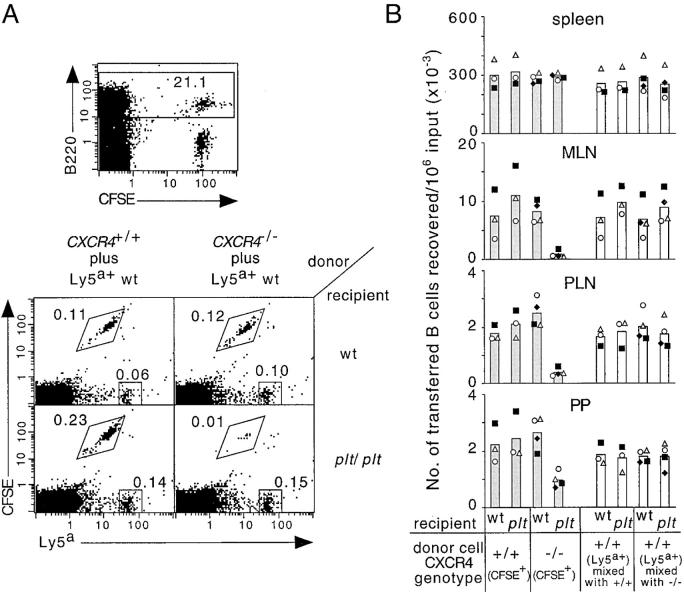
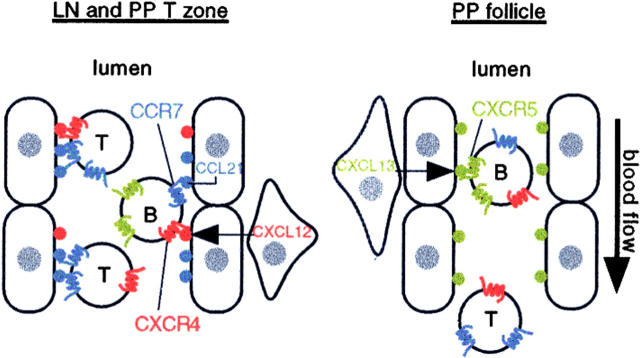
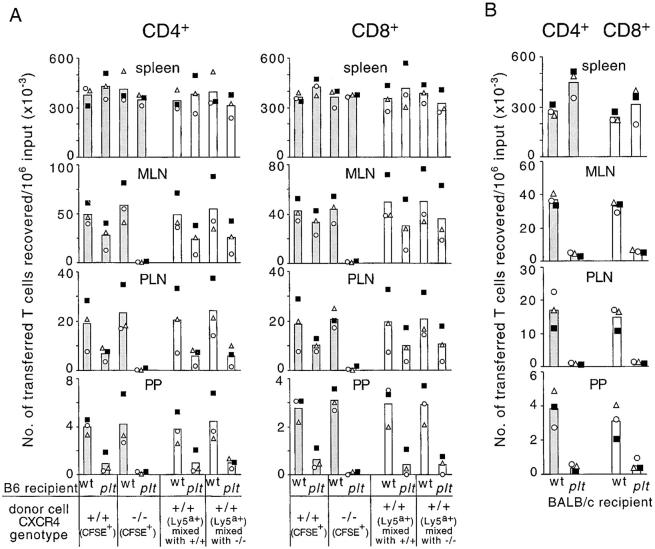
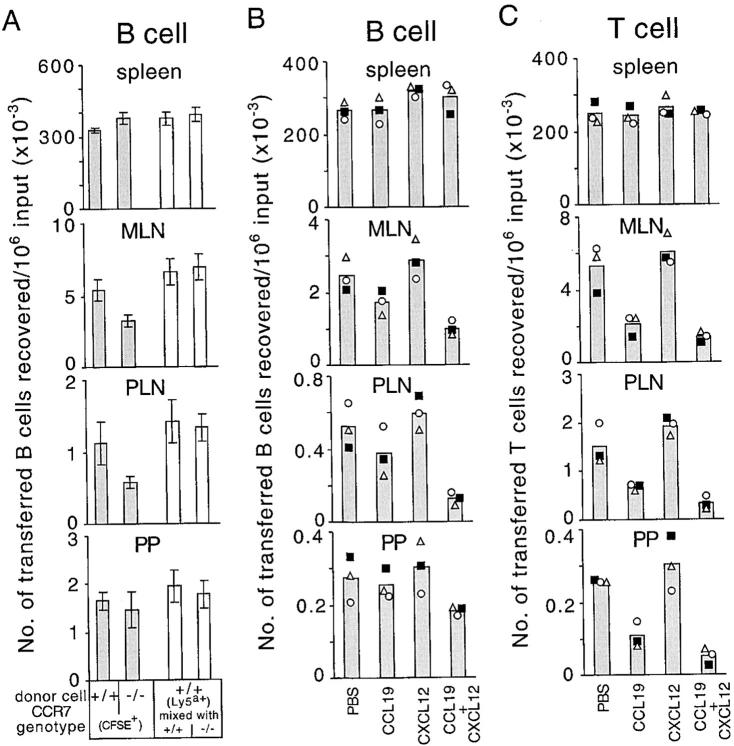
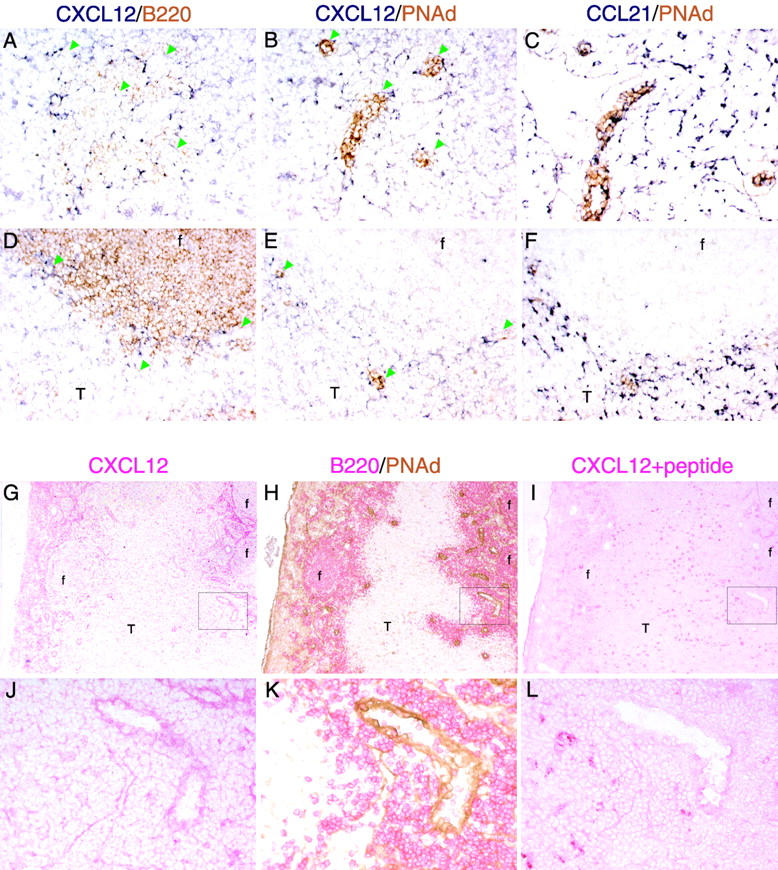
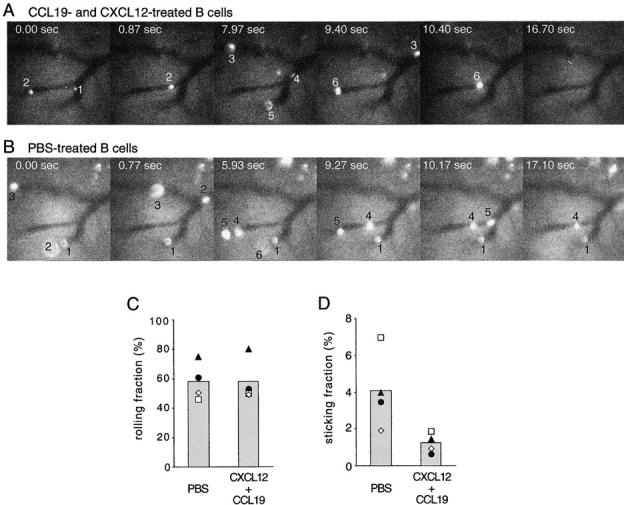
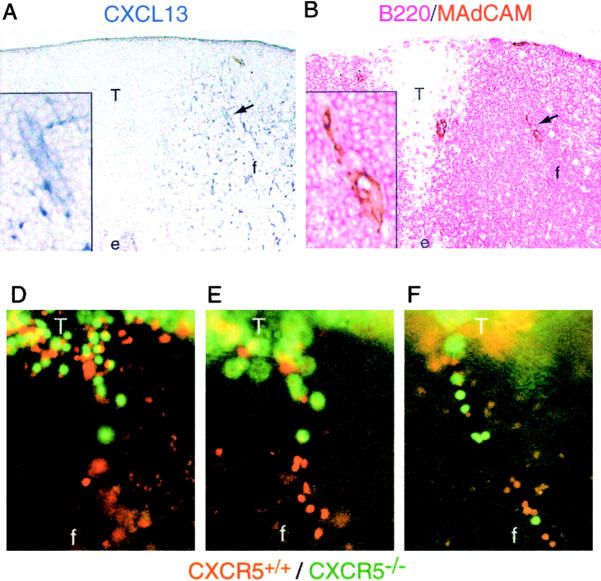
B cell entry to lymph nodes and Peyer's patches depends on chemokine receptor signaling, but the principal chemokine involved has not been defined. Here we show that the homing of CXCR4-/- B cells is suppressed in CCL19 (ELC)- and CCL21 (SLC)-deficient paucity of lymph node T cells mice, but not in wild-type mice. We also find that CXCR4 can contribute to T cell homing. Using intravital microscopy, we find that B cell adhesion to high endothelial venules (HEVs) is disrupted when CCR7 and CXCR4 are predesensitized. In Peyer's patches, B cell entry is dependent on CXCR5 in addition to CCR7/CXCR4. CXCL12 (SDF1) is displayed broadly on HEVs, whereas CXCL13 (BLC) is found selectively on Peyer's patch follicular HEVs. These findings establish the principal chemokine and chemokine receptor requirements for B cell entry to lymph nodes and Peyer's patches.
B细胞进入淋巴结和派伊尔结依赖于趋化因子受体信号传导,但其中涉及的主要趋化因子尚未明确。在此我们表明,在CCL19(ELC)和CCL21(SLC)缺陷的淋巴结T细胞缺乏小鼠中,CXCR4-/- B细胞的归巢受到抑制,但在野生型小鼠中则不然。我们还发现CXCR4有助于T细胞归巢。利用活体显微镜,我们发现当CCR7和CXCR4预先脱敏时,B细胞与高内皮微静脉(HEV)的黏附被破坏。在派伊尔结中,除CCR7/CXCR4外,B细胞进入还依赖于CXCR5。CXCL12(SDF1)广泛分布于HEV上,而CXCL13(BLC)则选择性地存在于派伊尔结滤泡性HEV上。这些发现确定了B细胞进入淋巴结和派伊尔结所需的主要趋化因子和趋化因子受体。