Piccirillo Ciriaco A, Letterio John J, Thornton Angela M, McHugh Rebecca S, Mamura Mizuko, Mizuhara Hidekazu, Shevach Ethan M
Laboratory of Immunology, National Institute of Allergy and Infectious Diseases, National Institutes of Health, Bethesda, MD 20892-1892, USA.
J Exp Med. 2002 Jul 15;196(2):237-46. doi: 10.1084/jem.20020590.
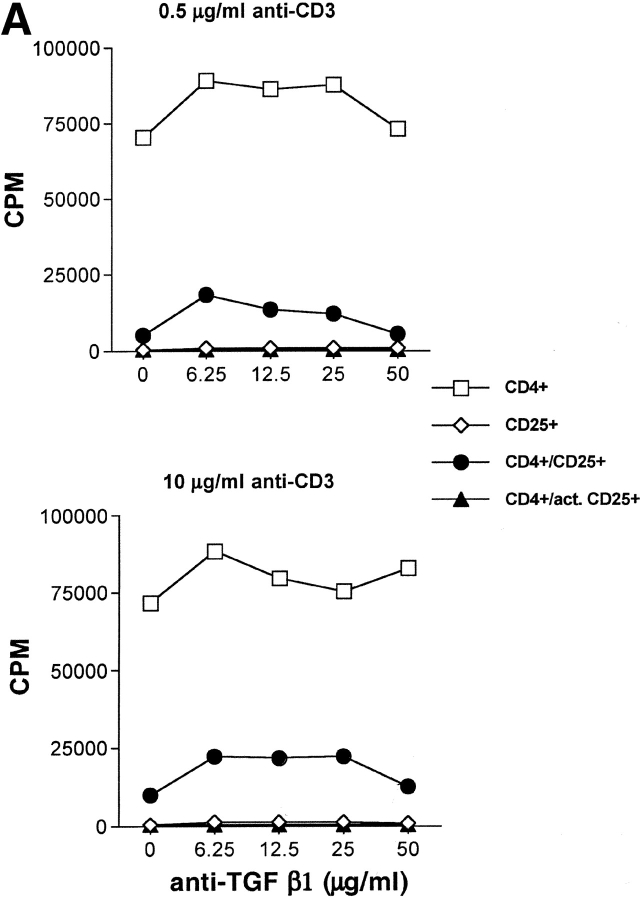
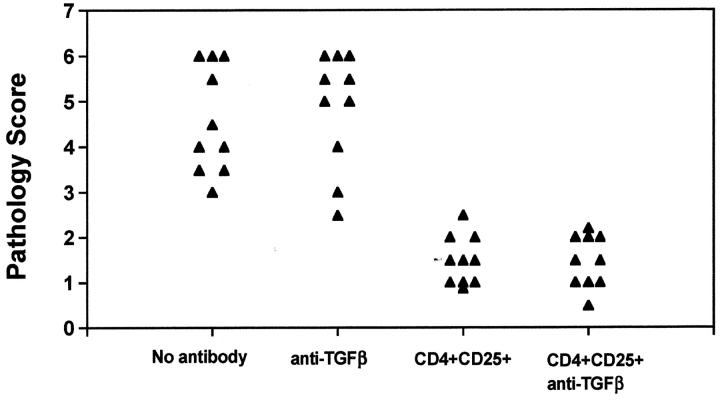
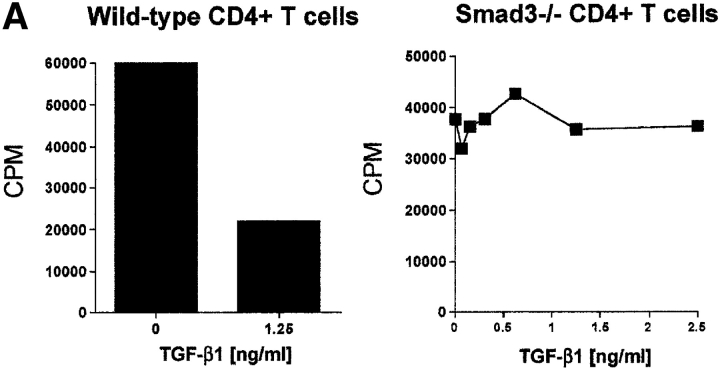
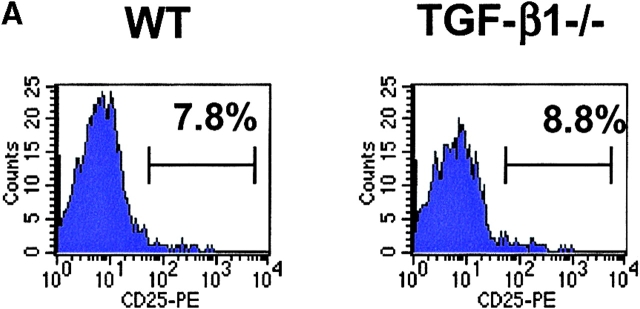
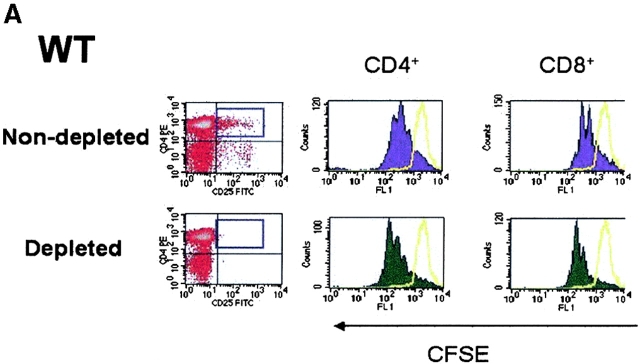
CD4(+)CD25(+) regulatory T cells inhibit organ-specific autoimmune diseases induced by CD4(+)CD25(-) T cells and are potent suppressors of T cell activation in vitro. Their mechanism of suppression remains unknown, but most in vitro studies suggest that it is cell contact-dependent and cytokine independent. The role of TGF-beta1 in CD4(+)CD25(+) suppressor function remains unclear. While most studies have failed to reverse suppression with anti-transforming growth factor (TGF)-beta1 in vitro, one recent study has reported that CD4(+)CD25(+) T cells express cell surface TGF-beta1 and that suppression can be completely abrogated by high concentrations of anti-TGF-beta suggesting that cell-associated TGF-beta1 was the primary effector of CD4(+)CD25(+)-mediated suppression. Here, we have reevaluated the role of TGF-beta1 in CD4(+)CD25(+)-mediated suppression. Neutralization of TGF-beta1 with either monoclonal antibody (mAb) or soluble TGF-betaRII-Fc did not reverse in vitro suppression mediated by resting or activated CD4(+)CD25(+) T cells. Responder T cells from Smad3(-/-) or dominant-negative TGF-beta type RII transgenic (DNRIITg) mice, that are both unresponsive to TGF-beta1-induced growth arrest, were as susceptible to CD4(+)CD25(+)-mediated suppression as T cells from wild-type mice. Furthermore, CD4(+)CD25(+) T cells from neonatal TGF-beta1(-/-) mice were as suppressive as CD4(+)CD25(+) from TGF-beta1(+/+) mice. Collectively, these results demonstrate that CD4(+)CD25(+) suppressor function can occur independently of TGF-beta1.
CD4(+)CD25(+)调节性T细胞可抑制由CD4(+)CD25(-)T细胞诱导的器官特异性自身免疫疾病,并且在体外是T细胞活化的有效抑制因子。它们的抑制机制尚不清楚,但大多数体外研究表明,其是细胞接触依赖性且不依赖细胞因子的。转化生长因子β1(TGF-β1)在CD4(+)CD25(+)抑制功能中的作用仍不清楚。虽然大多数研究未能在体外使用抗转化生长因子(TGF)-β1逆转抑制作用,但最近一项研究报道,CD4(+)CD25(+)T细胞表达细胞表面TGF-β1,并且高浓度的抗TGF-β可完全消除抑制作用,这表明细胞相关的TGF-β1是CD4(+)CD25(+)介导的抑制作用的主要效应因子。在此,我们重新评估了TGF-β1在CD4(+)CD25(+)介导的抑制作用中的作用。用单克隆抗体(mAb)或可溶性TGF-βRII-Fc中和TGF-β1,并未逆转静息或活化的CD4(+)CD25(+)T细胞介导的体外抑制作用。来自Smad3(-/-)或显性负性TGF-βII型受体转基因(DNRIITg)小鼠的反应性T细胞,这两种细胞均对TGF-β1诱导的生长停滞无反应,与野生型小鼠的T细胞一样容易受到CD4(+)CD25(+)介导的抑制作用。此外,新生TGF-β1(-/-)小鼠的CD4(+)CD25(+)T细胞与TGF-β1(+/+)小鼠的CD4(+)CD25(+)T细胞一样具有抑制作用。总的来说,这些结果表明,CD4(+)CD25(+)抑制功能可以独立于TGF-β1而发生。