Ishihara Junko, Sobue Tomotaka, Yamamoto Seiichiro, Yoshimi Itsuro, Sasaki Satoshi, Kobayashi Minatsu, Takahashi Tosei, Iitoi Yoji, Akabane Masayuki, Tsugane Shoichiro
Cancer Information and Epidemiology Division, National Cancer Center Research Institute.
J Epidemiol. 2003 Jan;13(1 Suppl):S134-47. doi: 10.2188/jea.13.1sup_134.
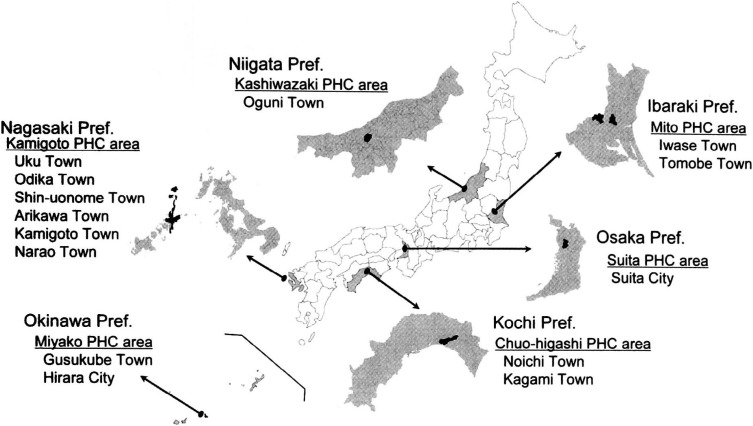
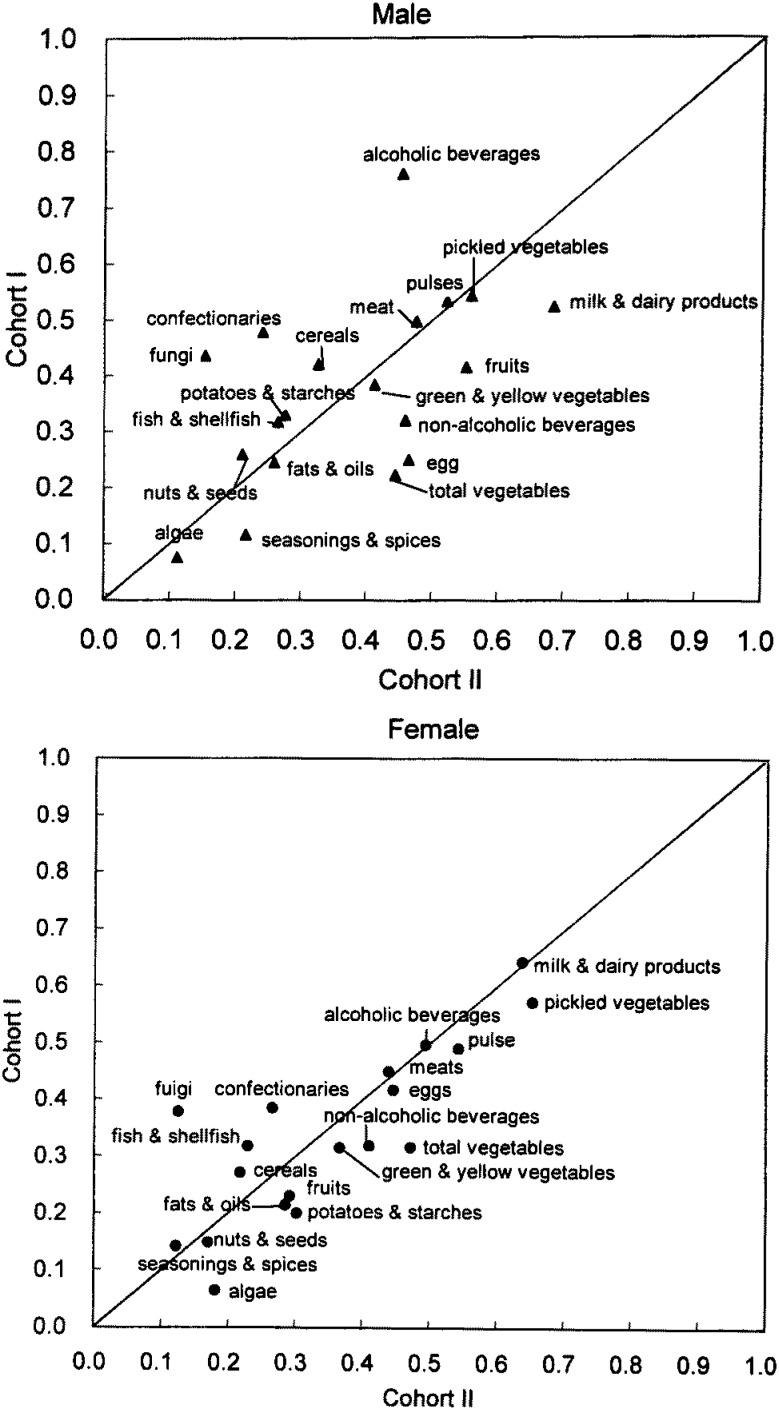
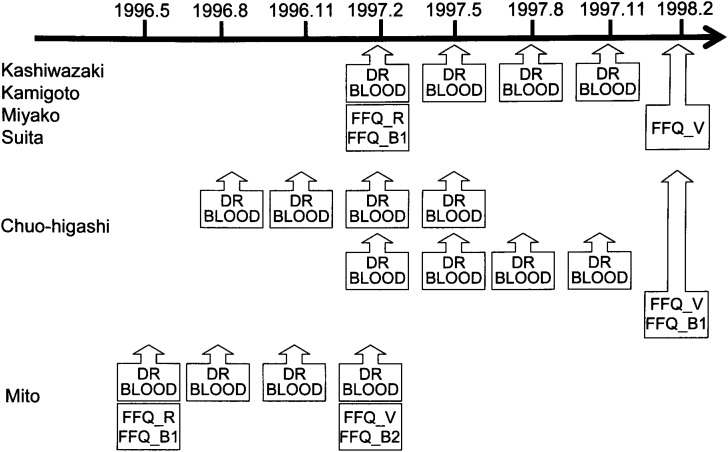
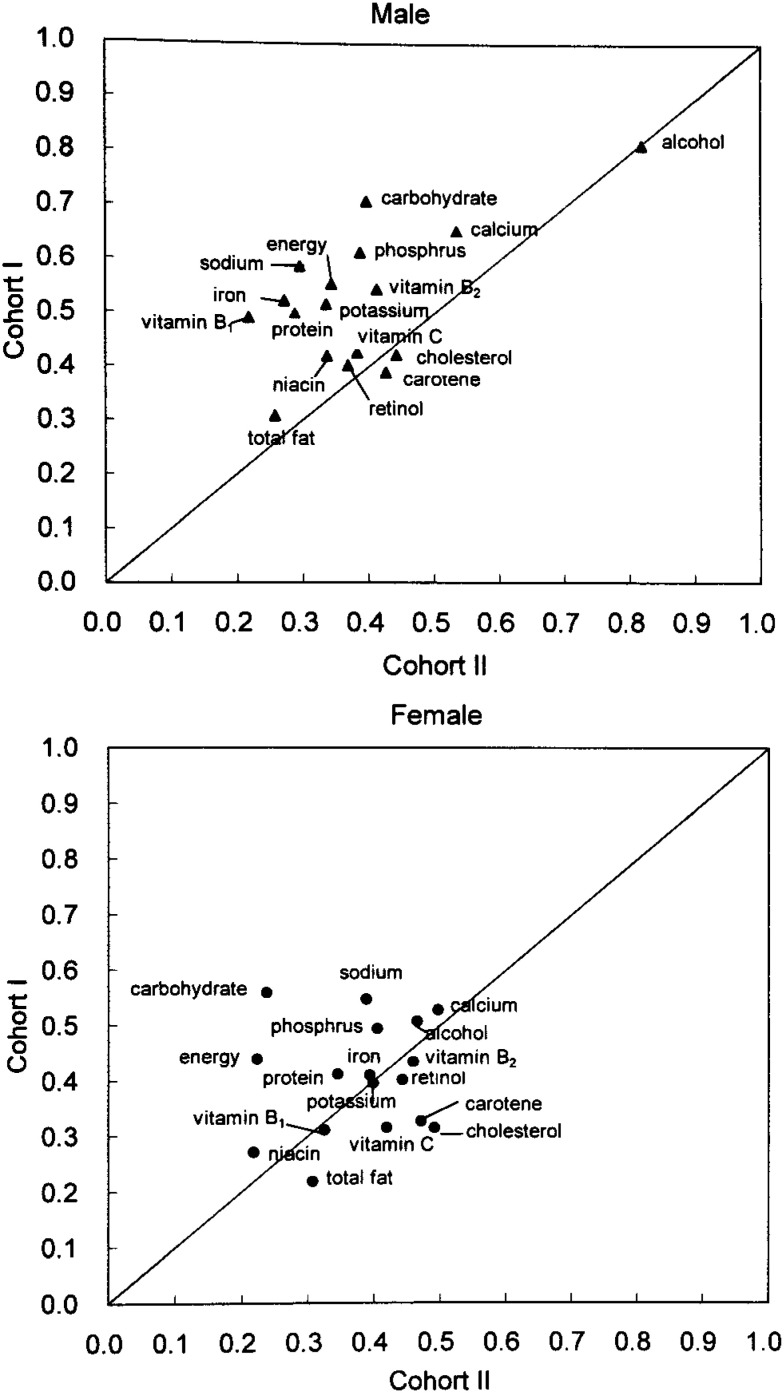
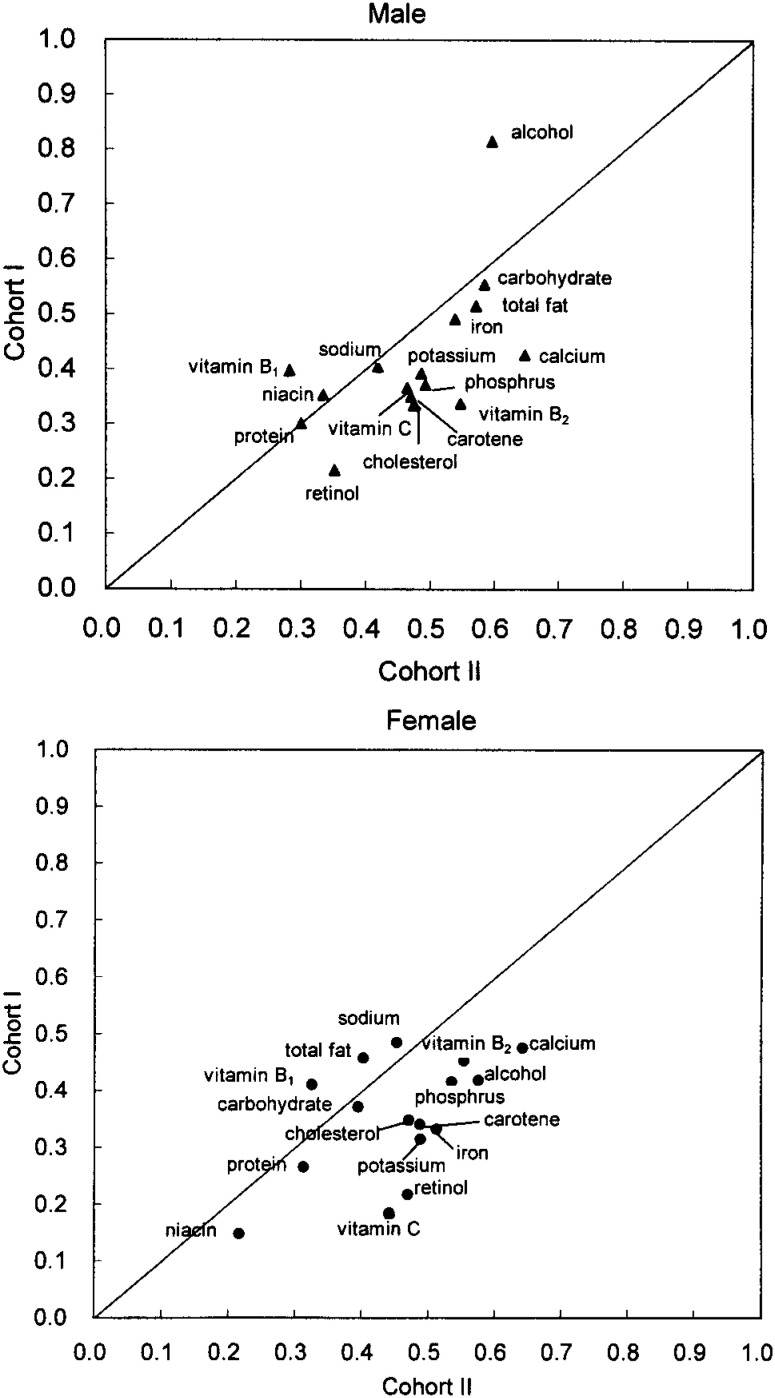
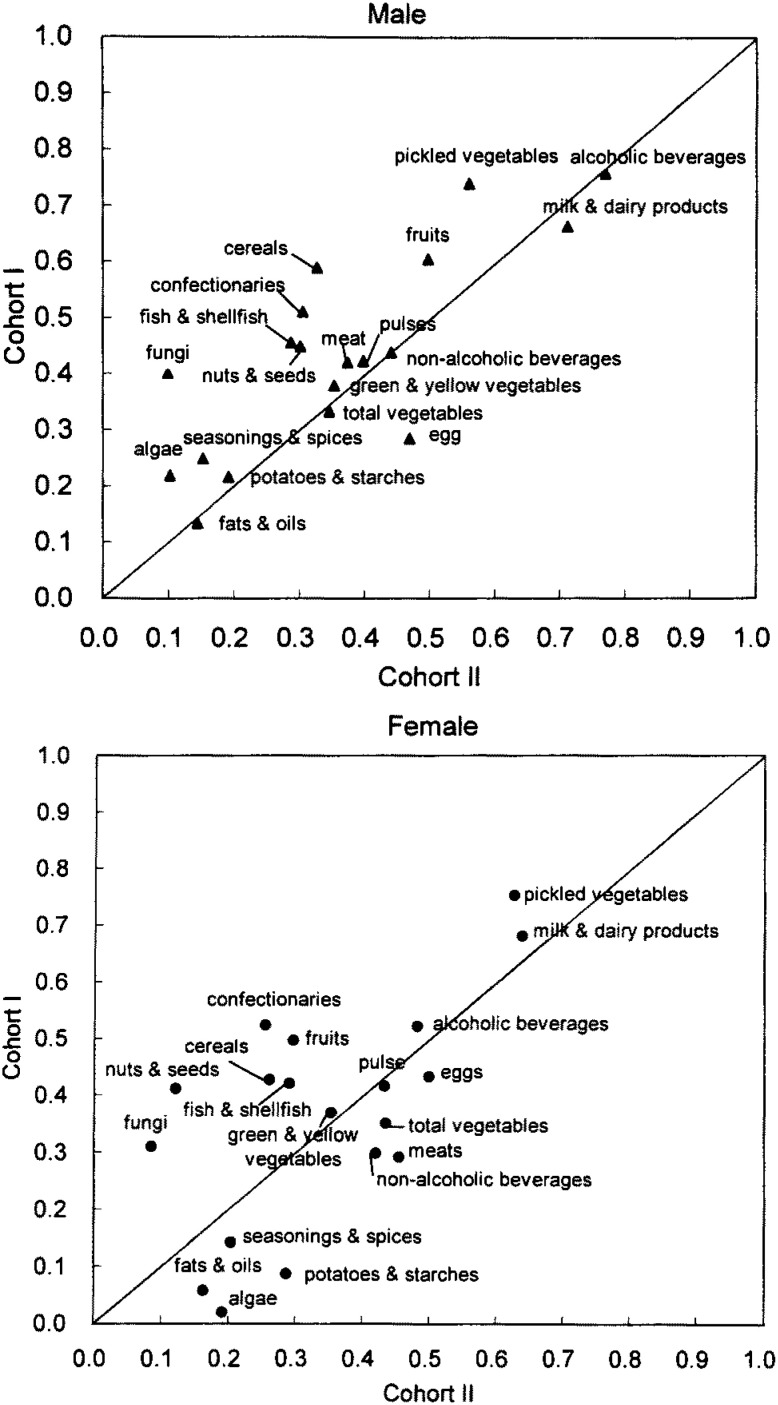
The objective of this study was to evaluate the validity and reproducibility of a self-administered food frequency questionnaire (FFQ) to estimate nutrient and food intake in the subjects of the Japan Public Health Center-based prospective Study on Cancer and Cardiovascular Diseases (JPHC Study Cohort II). The FFQ was originally developed to estimate intake in the JPHC Study Cohort I. A total of 392 subjects were recruited from the entire cohort participants in the 6 areas of Cohort II on a voluntary basis. The subjects completed the FFQ used for the 5-year follow-up survey twice at approximately a 1-year interval. Seven-day dietary records (DR) and blood samples were collected 4 times at 3-month intervals over a year. Daily nutrient and food intakes from FFQ and DR were estimated. The Spearman correlation coefficients for estimated intakes were calculated between FFQ and DR for validity, and between 2 identical FFQs for reproducibility. Correlation coefficients for the validity ranged from 0.09 to 0.82 among various nutrients and food groups. The correlation coefficients for most of the nutrients and food groups were improved to a level comparable to that of Cohort I by energy-adjustment. Correlation coefficients for reproducibility ranged from 0.42 to 0.82, similar to those of Cohort I.
本研究的目的是评估一份自填式食物频率问卷(FFQ)在日本公共卫生中心前瞻性癌症与心血管疾病研究(JPHC研究队列II)受试者中估计营养素和食物摄入量的有效性和可重复性。该FFQ最初是为估计JPHC研究队列I中的摄入量而开发的。从队列II的6个地区的全体队列参与者中自愿招募了392名受试者。受试者大约每隔1年完成两次用于5年随访调查的FFQ。在一年中每隔3个月收集4次7天饮食记录(DR)和血样。估计了FFQ和DR的每日营养素和食物摄入量。计算FFQ与DR之间估计摄入量的Spearman相关系数以评估有效性,计算两份相同FFQ之间的相关系数以评估可重复性。不同营养素和食物组的有效性相关系数在0.09至0.82之间。通过能量调整,大多数营养素和食物组的相关系数提高到了与队列I相当的水平。可重复性相关系数在0.42至0.82之间,与队列I相似。