Truong Kevin, Khorchid Ahmad, Ikura Mitsuhiko
Department of Medical Biophysics, University of Toronto, Toronto, M3N 1L6, Canada.
BMC Biotechnol. 2003 Jul 15;3:8. doi: 10.1186/1472-6750-3-8.
The engineering of fusion proteins has become increasingly important and most recently has formed the basis of many biosensors, protein purification systems, and classes of new drugs. Currently, most fusion proteins consist of three or fewer domains, however, more sophisticated designs could easily involve three or more domains. Using traditional subcloning strategies, this requires micromanagement of restriction enzymes sites that results in complex workaround solutions, if any at all.
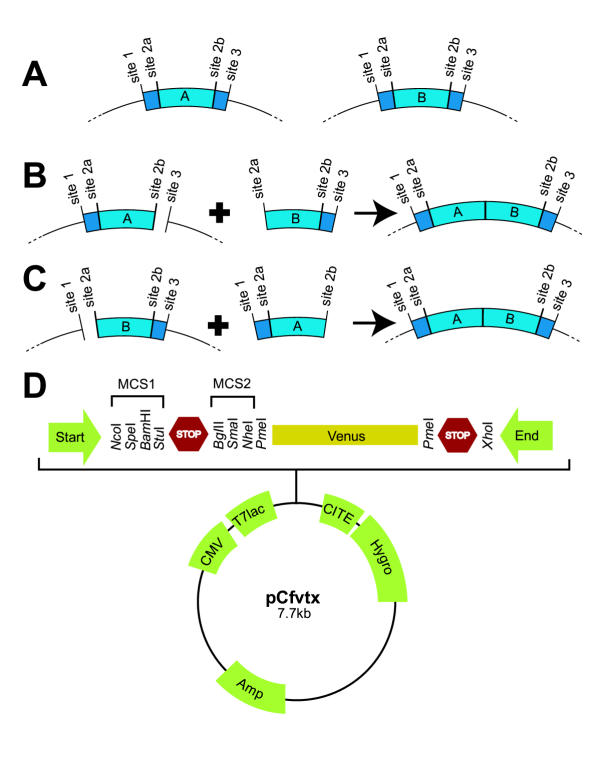
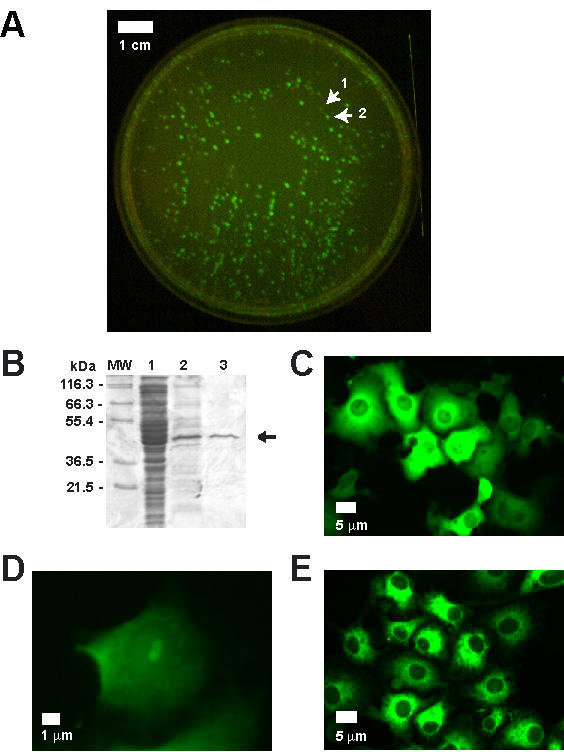
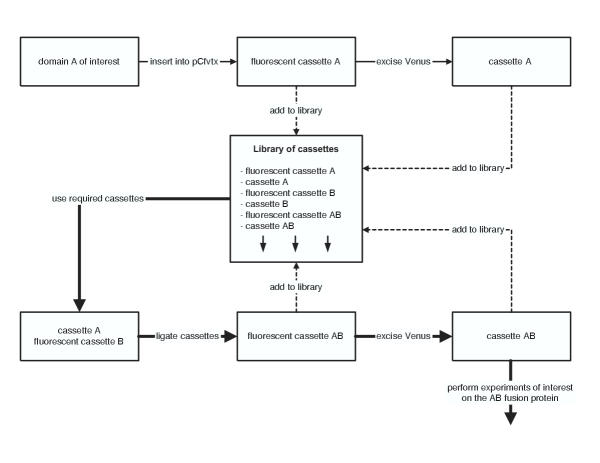
Therefore, to aid in the efficient construction of fusion proteins involving multiple domains, we have created a new expression vector that allows us to rapidly generate a library of cassettes. Cassettes have a standard vector structure based on four specific restriction endonuclease sites and using a subtle property of blunt or compatible cohesive end restriction enzymes, they can be fused in any order and number of times. Furthermore, the insertion of PCR products into our expression vector or the recombination of cassettes can be dramatically simplified by screening for the presence or absence of fluorescence.
Finally, the utility of this new strategy was demonstrated by the creation of basic cassettes for protein targeting to subcellular organelles and for protein purification using multiple affinity tags.
融合蛋白工程变得越来越重要,并且最近已成为许多生物传感器、蛋白质纯化系统和新型药物类别的基础。目前,大多数融合蛋白由三个或更少的结构域组成,然而,更复杂的设计可能很容易涉及三个或更多的结构域。使用传统的亚克隆策略,这需要对限制酶位点进行微观管理,而这会导致复杂的变通解决方案,甚至根本没有解决方案。
因此,为了帮助高效构建涉及多个结构域的融合蛋白,我们创建了一种新的表达载体,使我们能够快速生成一个盒式文库。盒式结构具有基于四个特定限制性内切酶位点的标准载体结构,并且利用平端或兼容粘性末端限制酶的微妙特性,它们可以以任何顺序和次数融合。此外,通过筛选荧光的有无,可以极大地简化将PCR产物插入我们的表达载体或盒式结构的重组过程。
最后,通过创建用于蛋白质靶向亚细胞细胞器和使用多个亲和标签进行蛋白质纯化的基本盒式结构,证明了这种新策略的实用性。